We are delighted to say that This is Cinema has so far raised £2,395 – or 80 per cent of its £3,000 target on LiveTree.
This leaves us with just £605 to raise in the 8 days that remain of our crowdfunding campaign.
All support is extremely welcome as we put together the latest Beg Steal Borrow film, which offers an intimate glimpse into the lives of the people studying and working at a small London university.
Starring Beg Steal Borrow regulars Alastair Trevill and Dennis Chua, This is Cinema will also feature performances from a range of newcomers to the Beg Steal Borrow fold – with stalwart cinematographer Tom Maine also lensing the production.
The campaign comes in the middle of the production of our short film, Sculptures of London and just before our documentary, Circle/Line, plays at the East End Film Festival in London.
If you want to support truly independent filmmaking, then please pledge your support for This is Cinema! The campaign also features all manner of goodies depending on how much you pledge.
A huge thank you to everyone who has so far helped in the backing of This is Cinema, the new film from Beg Steal Borrow and which will be shot in July 2017.
As of Friday 19 May, we have raised an impressive £2,240 of the £3,000 that we are aiming for through our crowd funding campaign on LiveTree. This amounts to just shy of 75 per cent of the desired money raised, leaving us with £760 to raise to meet our target in the next 15 days.
This is Cinema tells the story of Ben, a university lecturer who is grieving the loss of his wife and child. One day, his brother-in-law, Dennis, unexpectedly arrives on his doorstep with Radhika, a homeless woman who is fleeing an unhappy marriage.
Meanwhile, Latoya is a diligent and popular student taking one of Ben’s classes. Her brother, Wilhelm, is also in Ben’s class, but he hardly attends, preferring to sell weed on campus in a bid to finance his musical aspirations.
Things become complicated when Ben and Latoya get a match on a dating app while Ben is on a drunken night out. Furthermore, Ben’s world also unravels when he is threatened with redundancy for not being productive enough.
Tensions rise, then, as Dennis struggles to rearrange his life after losing his own marriage and falling into drink, while Latoya wrestles with depression and Wilhelm a mounting debt that sees him turn to dealing cocaine.
As Ben tries to work through his grief, and as all of the characters try to find meaning in their lives, This is Cinema explores the lives of two very different families as worlds collide in contemporary London.
The film is thus about those who desire intimacy and trust in a city where neither is easily forthcoming, and where traditional barriers must perhaps be broken down if trust is to be found.
Set against the backdrop of the neoliberalisation of British university education, This is Cinema will partially be shot in the areas of London where François Truffaut made his 1966 adaptation of Ray Bradbury’s famous 1953 novel, Fahrenheit 451. In this way, the film’s setting will echo Truffaut’s use of south west London spaces in order to investigate how in addition to politics, the very architecture of the city plays a role in placing the freedom of thought under threat.
Starring Al Trevill as Ben and Dennis Chua as Dennis, This is Cinema is set to feature performances from various Beg Steal Borrow stalwarts, while also featuring performances from brand new collaborators, including Radhika Aggarwal as Radhika, Cherneal Scott as Latoya and George Morgan as Wilhelm.
Shot by stellar cinematographer Tom Maine, we also look forward to sound recording from Julio Molina Montenegro, as well, hopefully, as musical contributions from many of our long-standing collaborators (Radhika is the drummer in Extradition Order for whom we have shot a couple of music videos).
This is Cinema thus looks set to be a wonderful addition to the Beg Steal Borrow canon. And if you are interested in supporting the film, then please take part in our crowdfunding campaign, a link to which is available here.
Our campaign to raise money for This is Cinema may be in full flow – having surpassed the 50 per cent mark, with £1,305 left to raise in 18 days – but there is no rest for the wicked as cinematographer Tom Maine and I headed out on 15 May 2017 to start work on a new short essay-film, Sculptures of London.
Tom Maine shoots some sculptures in Knightsbridge.
Sculptures of London offers the collective image that the city’s sculptures paint when we put them all alongside each other in a film. What is the story of the city and its people that the the city’s sculptures tell?
A map showing the locations of all of the different sculptures that we are going to shoot for Sculptures of London.
Having gone through thousands of sculptures in preparing for this film, we have narrowed the film shoot down to images of about 200 different pieces of work – dotted all over London. And so yesterday, we had our first day of filming, starting over in Southall Park, where we shot Rachel Silver’s Sculptural Mosaic Globe.
Rachel Silver’s Sculptural Mosaic Globe in Southall Park.
We then headed to the Hammersmith and Shepherds Bush area, where, among other things, we were saddened to see the Elliott Brook’s Goaloids had been removed from Shepherds Bush Green. We shall research what has happened to this sculpture!
George Frederick Watts’ Physical Energy.
We then did a stint in Kensington Gardens, looking in particular at George Frederick Watts’ Physical Energy and Henry Moore’s Arch – two sculptures that already feature prominently in Beg Steal Borrow’s The New Hope (in which Dennis attacks Physical Energy, mistaking it for a rancor).
Henry Moore’s Arch from across the Serpentine.
We then headed to Sloane Square, where we filmed some of the work in and around Belgrave Square and Cadogan Gardens. In the latter square, David Wynne’s Dancers and Girl with Doves sit in private gardens.
David Wynne’s Dancers in their private garden.
This begs the question about whether this art is public or not, since one can see it from the public space of the pavement, but one cannot approach it to see it in detail unless one is with a local resident.
Simon Gudgeon’s Search for Englightenment.
We then got in some shots of Jacob Epstein’s Rush of Green and Simon Gudgeon’s Search for Enlightenment at One Hyde Park, before heading around the park to Still Water by Nic Fiddian-Green, the horse’s head that stands near Marble Arch.
Still Water by Nic Fiddian-Green.
Finally, we headed to Edgware Road and Paddington, where we got reacquainted with Allan Sly’s Window Cleaner, a sculpture that also features in Circle/Line, which you can see at its premiere at the East End Film Festival on 3 June 2017 at 5pm at Old Spitalfields Market.
Standing Man and Walking Man by Sean Henry.
We then ended with a trip to see Paddington Bear himself inside the station – but not before going to see Sean Henry’s Standing Man and Walking Man by Sheldon Square.
We were sad to see that Jon Buck’s Family had also been removed. Perhaps the way in which sculptures can go walkabouts will merit another film at a later point in time!
Paddington!
But we shall keep you updated with this and other projects as we make them. Please do support Beg Steal Borrow’s efforts to make different and strange films…!
The film will play on Saturday 3 June at 5pm at Old Spitalfields Market, 16 Horner Square, London E1 6EW, UK. The screening is FREE!
Circle/Line involves asking people outside or near the stations of London Underground’s eponymous yellow line one deceptively simple question: are you happy?
Circle/Line is, then, a documentary comprised of vox pop interviews with ‘everyday’ people – from the homeless to the hopeful, from the ambitious to the activist, from task-driven Londoners to tourists.
Inspired by Jean Rouch and Edgar Morin’s classic documentary, Chronique d’un été/Chronicle of a Summer (France, 1961), Circle/Line is nonetheless an original work and a fascinating insight into the lives of people in contemporary London.
Shot by Beg Steal Borrow regular Tom Maine, the film is both a portrait not just of people, but also of the city of London itself.
Do come along to the screening, which looks set to the first of several summer screenings of Beg Steal Borrow films!
This blog is a written version of some of the things that I shall be discussing tonight (Wednesday 10 May 2017) at the British Film Institute in London, where there is a screening and panel commentary on Chinese Roulette as part of the BFI’s Philosophical Screens series, organised in association with the London Graduate School.
The film tells the story of the Christ family, which consists of Gerhard (Alexander Allerson), Ariane (Margit Carstensen) and their crippled daughter Angela (Andrea Schobel). Both Gerhard and Angela are having affairs and one weekend Gerhard claims to be going to Oslo and Ariane claims to be going to Milan on business, but instead both go with their lovers to the Christ mansion in the countryside.
As a result, when Gerhard comes back from a roll in the woods with his French lover Irene (Anna Karina), he walks in on Ariane in the arms of his colleague, Kolbe (Ulli Lommel). But they are not alone, for Angela then turns up with her mute Polish nanny, Traunitz (Macha Méril), implying that their daughter has engineered this confluence of partners and has come to observe the fallout.
What is more, events are also observed by the mansion’s housekeeper, Kast (Brigitte Mira), who has a mysterious connection with the family, and her son Gabriel (Volker Spengler), who fancies himself as something of a philosopher-poet.
What is set in action, then, is a lean eight-header, in which various tensions are unravelled and revealed in the mansion, which, together with the objects that fill it, plays a key role in the film, which culminates in a game of the eponymous Chinese Roulette. This is a guessing game in which one group asks questions to another group in order to discover which person from the first group the members of the second group are describing.
***Spoilers***
The game culminates in an act of violence – as Angela, Gerhard, Traunitz and Gabriel describes Ariane in various ways, including as a worm-eaten apple (if this person were a painting, what would feature in it?), a gilded mirror (what object would this person take to a desert island?), a whore (is this person a saint, a mother or a whore?), already dead (what might be an appropriate death for this person?), and the commandant of Bergen-Belsen (what role would this person have played in the Third Reich?).
Although Kast believes that they must be describing her, as do Irene, Kolbe and Ariane, when it is revealed by Angela that they are in fact describing her own mother, she flies into a fit of rage, takes out a gun from beneath a transparent chess set and aims it at her daughter… before shooting Traunitz.
All good melodramatic stuff!
But what makes Fassbinder’s film all the more interesting is not just what happens in it (which ultimately is not that much given the minimal settings and the restricted cast), but how it is put together.
For although Chinese Roulette only merits a few brief mentions in Thomas Elsaesser’s Fassbinder’s Germany: History, Identity, Subject, and while Christian Braad Thomsen seems positively to dislike the film, it is nonetheless a remarkable masterclass in mise-en-scène and cinematography, with the film being shot by Michael Ballhaus, also the director of photophraphy for Martin Scorsese’s Goodfellas (USA, 1990), which was discussed at Philosophical Screens earlier in the year.
(This is not to mention the strength of the acting in Chinese Roulette, which is superb.)
For, although somewhat spartan, the Christ mansion is filled with relatively elegant objects, including a prominent transparent drinks cabinet, which is matched by a second transparent cabinet that contains a high fidelity music system. These accompany the afore-mentioned transparent chessboard in which sits the gun used to shoot Traunitz.
Time and again, these objects take up space in the frame, the camera placing them prominently before us, together with a birdcage in which budgies tweet and flutter. While we are supposed to and in some senses can see through these objects (they are transparent), in some senses they also get in the way, mirroring, distorting, fragmenting the bodies that we see and the actions they perform.
That is, while transparent, they in fact also change our perspective on things, suggesting that any perspective, therefore, is skewed, inaccurate and not necessarily correct. That this takes place in a film lends to Chinese Roulette a self-consciousness that elevates it out of the realm of a typical fiction film, in which events are presented to us as if in an accurate, objective and reliable fashion, but instead a film in which it becomes hard to read what exactly is going on.
There are several things for us to pick apart, since these dimensions of the film relate to larger ideas concerning family, class, history, fascism and cinema itself.
For, if in Fassbinder’s mise-en-scène we get a sense of how all views are potentially distorted, then we also get a sense of how quite possibly we can never therefore access the truth. And yet, in a country that is going through the kind of self-analysis that Germany was doing in the aftermath of the Second World War, the need to get to the truth, the need for transparency is it were, is tantamount – such that is becomes a guiding myth for an entire nation.
The myth might be that in confronting its fascist past, Germany can perhaps move beyond it, becoming so open in its dealings that fascism will never be allowed to rear its ugly head. In some senses, this explains the Christs’ compulsion to ask about the role of the chosen person in the Third Reich: they must acknowledge that they, too, are capable of fascism.
And yet, when confronted by this fascism, Ariane (in this instance) cannot tolerate it, and she is compelled to let out her violent tendencies somewhere – in this instance on Traunitz.
For all of the desire to remove fascism via transparency, it creeps into everyday life in invisible ways. ‘Fascist,’ says Kast as another road user cuts her up as she drives home to the mansion near the start of the film.
Even in our cars, then, we have a sense of the human who separates themselves from the rest of the world, and thus begins to treat others not as fellow humans with whom one makes contact, but rather as people to use and abuse. That is, the seeds are sewn of seeing other humans as disposable, of the sort that we might thrown into a gas chamber.
If fascism is thus invisible, we might say that fascism is beyond the purview of cinema, that cinema cannot gain access to the inner recesses and the darkness that lurks within all human hearts. And yet, I am not sure that this is quite right – and we can explore this by returning to the transparent cabinets.
For, if the transparent cabinets in some senses get in the way and obscure the reality or truth of what it is that we see in Chinese Roulette, in order senses, those cabinets do not get in the way, but they are the way, with the distortions and reflections that they create not taking us away from a true vision of things, but being the true vision of things.
That is, distortion is the truth (that there is no truth). But more than this, a cinema that claims to offer us an undistorted or transparent image of the world such that we can begin to understand something like the Holocaust does not so much get beyond or allow us to recognise fascism, but it is fascism. In its supposedly objective presentation of the world, cinema is fascist as it reinforces the necessary separation of humans from the world and from each other that objectivity would by necessity require (to be objective, we have to be detached from the world).
If a would-be objective cinema is thus fascistic, then how do we get around this? Fassbinder does this precisely through his distortions, which thus become not so much distortions as a kind of Brechtian verfremdungseffekt that makes us aware that we are seeing not an objective truth, but precisely a constructed fiction.
I shall return to Fassbinder’s cinematography imminently. But here I want to discuss how it is not just cinema that typically separates humans from each other, but perhaps even the concept of family itself – even if family is of course supposed to unite people. For, while families are units, that they are units who seclude themselves off in larger or smaller domestic spaces – i.e. houses – shows how they separate themselves off from the world and then from each other.
On numerous occasions in Fassbinder’s film do we see chandeliers and various other objects (including the feet of a doll whom Angela seems at one point to have hung) jut down into the bottom of the frame. Not only do these render strange the images that we see, in that rather than being rectangular, the frame can take on different, indescribable shapes as these objects are visible only as darkness, but they also suggest the oppression that hems the Christs and their guests in.
This we can compare to Gerhard’s brief moment of happiness in the woods with Irene: he has escaped from the family hearth, but it will be back in the home and with is family that the fascism will recommence.
In other words, the characters of Chinese Roulette clearly want connection – otherwise they would not have lovers and so on. But they find such connection almost impossible to achieve, and the house bears in on them, constricting them to the point where they lash out in violence. Family, then, provides connection of a kind, but it is not enough, so constrained, for the characters to feel free.
Take the opening shots: we see Ariane in one window before we see Angela in another. The two seem to be in the same room as Gustav Mahler’s Uns Bleibt Ein Eidenrest plays on Angela’s record player. And yet it is revealed that in fact they are in separate rooms. Both clearly seek the freedom of the outside – hence being at the window; but they in fact are separate both from the outside and from each other – perhaps even wilfully.
But there is more than just a family in Chinese Roulette; there is also Kast and her son and Irene and Kolbe, after all. And yet there seems little connection even between these extended cast members. Separated by objects, seeing each other in reflections, rarely looking each other in the eye: the characters are together, but they cannot connect either, as is made clear when Kolbe, fully clothed, begins to strangle a topless Ariane in bed (although she curiously wears a hairnet), and by the class division that seems to separate Kast and son from the Christs and daughter. Various forms of separation, then, are all at play, suggesting an impossibility of freedom.
With its depictions of bodies, especially heads, in space, gazing off in different directions, Fassbinder’s film is very painterly, with the stasis of the characters here also suggesting in some senses their failure to connect (since they cannot move in order subsequently to connect).
Here Ballhaus’ roaming camera comes into its own. For, if the characters do not move so much, then Ballhaus’ camera roams freely. And if an objective cinema is fascistic, then the remarkable camera movements that Ballhaus has the camera perform may depict a world where people do not connect, but which endeavours and perhaps succeeds in creating a film with which we do connect.
It is important here, then, that these camera movements seem unmotivated – in order to remind us that we are seeing a film, rather than watching but not noticing these camera movements because they are integrated into a clear and objectively presented narrative.
In this way, we understand that if cinema is fascist, then this is because capital is also fascist. For the cinema of supposed objectivity, in which we should not be reminded that we are watching a film, but in which we should instead simply forget about the real world for a couple of hours, is also the cinema of making money, a cinema for profit rather than a cinema of art. If profit and thus capital are achieved through supposed objectivity and separation from the world, and if fascism is also predicated upon a perceived separation of self from world and others (such that one can treat those others as objects rather than as people), then capital is also fascistic, and the capitalist cinema a key tool in promoting this fascistic ideology.
Elsaesser describes how Chinese Roulette can best be understood by the title of an essay that Fassbinder wrote on Claude Chabrol. In ‘Insects in a Glass Case,’ the director criticises Chabrol for simply looking at but not really getting involved with his characters, with the result being that his work is superficial (much as Fassbinder otherwise likes the work). Compared to an objective view, then, Fassbinder shows how the case (the transparent cabinets, the house, the cars) shape the behaviour of the insects/his characters, while also not being afraid to have his camera move freely inside the case rather than simply observe from beyond.
And yet, if the characters pose as if in paintings, static and separate, perhaps it is because they want this. They want separation and they perhaps even want the humiliation of knowing that they want separation and can do little to overcome the tendency towards it. This is why the Christs laugh upon discovering each other’s affairs, as well perhaps as in how they supposedly started those affairs when it was revealed that Angela was a cripple: faced with an imperfection, they simply adopt an illusion in order to turn away from that imperfection.
And yet this imperfection only marks the imperfections, the fascisms, that lie within and which are embedded via a history of war and exploitation that extends far further back in time that World War Two.
The Christs are clearly wealthy and international jet setters: they travel for work, have a house in Munich, the mansion in the countryside and a place in the mountains (that Gerhard mentions at one point). As much is also made clear by the names of their business acquaintances, whom we also hear about as the film progresses. Gressmann, Farucci, Petrovich, Ali Ben Basset: this is an international lifestyle that they have.
But how did the Christs get here? For it is never quite clear how they make their money, although at one point Gerhard speaks with Kast about the murder of Ben Basset – seemingly a reference to Mehdi Ben Barka, the Moroccan freedom fighter who disappeared in Paris in 1965. ‘We are the only two left,’ he says to Kast, as if they were now the only dissidents remaining.
But what kind of dissident owns at least three houses, one of them a mansion? What would the Christs’ interest be in something like Moroccan independence?
Conceivably the answer might come in the form of Traunitz. Towards the end of the film, when Ariane has shot her daughter, Kast calls for an ambulance, telling it to come not to the Christ mansion but to the Traunitz mansion.
At the start of the film, Angela turns to Traunitz and says ‘your great-grandfather should have won the Battle of Katowice.’ It is unclear to which battle Angela is referring, while it is also unclear where exactly the mansion is – but one gets a sense that the Christs have acquired the mansion from the Traunitzes, much as Katowice historically was occupied by the Germans and then liberated by the Polish.
What is more, Macha Méril, who plays Traunitz, was born and died in Morocco, meaning that her mute subservience as Traunitz to the Christs obliquely speaks also of a history of North African colonialism and exploitation, which in turn suggests a world of capital in which the rich are empowered through exploitation, an act of separation from the exploited that the capitalist does consciously and for which they must therefore atone through occasional bouts of self-humiliation and abjection – the search for connection when they know that this will be fruitless because they cannot let go of their sense of superiority towards others as a result of their capitalist separation from them that is the necessary precondition for hierarchies.
It is fittingly cruel, then, that it is Traunitz who should pay for Angela’s insult to Ariane – since it reaffirms Traunitz’s role as a voiceless victim to this history of exploitation – even if the film’s closing gunshot over a frozen image of the exterior of the mansion suggests another act of violence, perhaps Ariane now shooting Angela or shooting herself.
Fassbinder opens the essay on Chabrol with a quotation from Theodor Fontane, whose novel Effi Briest Fassbinder later famously adapted (West Germany, 1974).
‘Every debt must be paid on this earth, even that of showing shadows or half-shadows as human beings,’ the quotation reads (although I do not know its source).
Fassbinder would seem to suggest, then, that the debt owed by exploiters to the exploited may one day have to be repaid – perhaps here with the blood of Ariane, who cannot in the end tolerate the prison that she has made for herself in separating herself from the world.
More than this, in discussing the presentation of shadows as human beings, Fontane also predicts cinema as a debt – the fascistic tendencies of cinema that must also at some point be paid back. In his self-conscious cinema, Fassbinder would seem to foretell a cinema that does pay back this debt, or which at the very least shows us not shadows as human beings, but shadows as shadows. More: it is not that the shadow is separate from the human being such that one can be presented as and taken for the other. Rather, the shadow is perhaps always with the human, entangled and touching each other, much as the human is not separate from the world and from other humans, but inevitably also entangled and touching, even if we deny it and even if we deny denying it in such a way that our separation becomes unbearable, leading from repression to abject release and self-humiliation.
The LiveTree crowd funding campaign created by Beg Steal Borrow Films to help produce This is Cinema has got off to a fantastic start, with over £800 of the desired £3,000 raised within 48 hours of the campaign’s launch.
Nonetheless, we still have plenty of ground to cover in order to reach – and perhaps go beyond – our target over the next 28 days.
This is Cinema tells the story of Ben, a university lecturer who is grieving the loss of his wife and child. One day, his brother-in-law, Dennis, unexpectedly arrives on his doorstep with Radhika, a homeless woman who is fleeing an unhappy marriage.
Meanwhile, Latoya is a diligent and popular student taking one of Ben’s classes. Her brother, Wilhelm, is also in Ben’s class, but he hardly attends, preferring to sell weed on campus in a bid to finance his musical aspirations.
Things become complicated when Ben and Latoya get a match on a dating app while Ben is on a drunken night out. Furthermore, Ben’s world also unravels when he is threatened with redundancy for not being productive enough.
Tensions rise, then, as Dennis struggles to rearrange his life after losing his own marriage and falling into drink, while Latoya wrestles with depression and Wilhelm a mounting debt that sees him turn to dealing cocaine.
As Ben tries to work through his grief, and as all of the characters try to find meaning in their lives, This is Cinema explores the lives of two very different families as worlds collide in contemporary London.
The film is thus about those who desire intimacy and trust in a city where neither is easily forthcoming, and where traditional barriers must perhaps be broken down if trust is to be found.
Set against the backdrop of the neoliberalisation of British university education, This is Cinema will partially be shot in the areas of London where François Truffaut made his 1966 adaptation of Ray Bradbury’s famous 1953 novel, Fahrenheit 451. In this way, the film’s setting will echo Truffaut’s use of south west London spaces in order to investigate how in addition to politics, the very architecture of the city plays a role in placing the freedom of thought under threat.
Starring Al Trevill as Ben and Dennis Chua as Dennis, This is Cinema is set to feature performances from various Beg Steal Borrow stalwarts, while also featuring performances from brand new collaborators, including Radhika Aggarwal as Radhika, Cherneal Scott as Latoya and Femi Wilhelm as Wilhelm.
Shot by stellar cinematographer Tom Maine, we also look forward to sound recording from Julio Molina Montenegro, as well, hopefully, as musical contributions from many of our long-standing collaborators (Radhika is the drummer in Extradition Order for whom we have shot a couple of music videos).
This is Cinema thus looks set to be a wonderful addition to the Beg Steal Borrow canon. So if you are interested in supporting the film, then please take part in our crowdfunding campaign, a link to which is available here.
Monies raised by the campaign will ensure that the film’s significant cast and crew can be fed during the production, while also perhaps covering the hire of a gimble for interior sequences, ensuring that we have enough hard drive space to back up video and audio recordings, film festival submission fees, and perhaps even recompensing various of the many participants in the film.
Running until 3 June, the campaign is being hosted by LiveTree, and is hoping to raise £3,000 to support the production of This is Cinema, the 11th Beg Steal Borrow feature.
If you are interested in supporting the film, then please sign up to the campaign here.
The film tells the story of Ben, a university lecturer who is grieving the loss of his wife and child. One day, his brother-in-law, Dennis, unexpectedly arrives on his doorstep with Radhika, a homeless woman who is fleeing an unhappy marriage.
Meanwhile, Latoya is a diligent and popular student taking one of Ben’s classes. Her brother, Wilhelm, is also in Ben’s class, but he hardly attends, preferring to sell weed on campus in a bid to finance his musical aspirations.
Things become complicated when Ben and Latoya get a match on a dating app while Ben is on a drunken night out. Furthermore, Ben’s world also unravels when he is threatened with redundancy for not being productive enough.
Tensions rise, then, as Dennis struggles to rearrange his life after losing his own marriage and falling into drink, while Latoya wrestles with depression and Wilhelm a mounting debt that sees him turn to dealing cocaine.
As Ben tries to work through his grief, and as all of the characters try to find meaning in their lives, This is Cinema explores the lives of two very different families as worlds collide in contemporary London.
The film is thus about those who desire intimacy and trust in a city where neither is easily forthcoming, and where traditional barriers must perhaps be broken down if trust is to be found.
Set against the backdrop of the neoliberalisation of British university education, This is Cinema will partially be shot in the areas of London where François Truffaut made his 1966 adaptation of Ray Bradbury’s famous 1953 novel, Fahrenheit 451. In this way, the film’s setting will echo Truffaut’s use of south west London spaces in order to investigate how in addition to politics, the very architecture of the city plays a role in placing the freedom of thought under threat.
Starring Al Trevill as Ben and Dennis Chua as Dennis, This is Cinema is set to feature performances from various Beg Steal Borrow stalwarts, while also featuring performances from brand new collaborators, including Radhika Aggarwal as Radhika, Cherneal Scott as Latoya and Femi Wilhelm as Wilhelm.
Shot by stellar cinematographer Tom Maine, we also look forward to sound recording from Julio Molina Montenegro, as well, hopefully, as musical contributions from many of our long-standing collaborators (Radhika is the drummer in Extradition Order for whom we have shot a couple of music videos).
This is Cinema thus looks set to be a wonderful addition to the Beg Steal Borrow canon. And if you are interested in supporting the film, then please take part in our crowdfunding campaign, a link to which is available here.
Spoilers – although since this film is based on a true story, revealing its outcome should not be too traumatic for readers (if there are any).
The Happiest Day in the Life of Olli Mäki is about a boxer, Olli (Jarkko Lahti), who in 1962 has a world title fight against Davey Moore (John Bosco Jr) in Helsinki. He loses. Easily.
I shall return to the final fight itself.
But really I only want to talk about a couple of things that feature prominently in this film, the main one of which is moments of play.
Olli is in love with Raija (Oona Airola) – and while he is keen on fighting, he is perhaps more interested in being with her, even ditching his training at one point in order to travel home to Kokkola, his hometown, in order to be with her.
This, together with Olli’s lackadaisicalness in general, exasperates his coach, Elis (Eero Milonoff), who has a lot of money riding on bringing a world title fight to Finland, having himself also been a competitive boxer and who travelled to the USA (where he claims he became friends with Frank Sinatra).
This is not, though, a tale of how preferring to be with women destroys the boxer’s competitive edge. Or if it is, then Juho Kuosmanen’s film certainly does not condemn Olli for this. Rather, The Happiest Day… is about not just about how love for a woman is perhaps more pleasing than fame and fortune obtained via pugilism. It is also in some senses about a more general kind of love that is characterised by play.
There are two key moments that signify Olli’s love of play. The first is when he skims stones across a lake with Raija and the second is when he discovers a kite stuck up a tree while on a run. We see Olli climb over a fence and begin to try to shake down the kite – before the film cuts to a long shot of a smiling Olli running through a field, the kite flying not far behind him.
These moments signal play because there is ‘no point’ to them. Olli is not trying to skim his stones further than Raija, and the flying of the kite is not for any reason than some sort of childish enjoyment of simply flying the kite.
In other words, play here is defined as a moment when one steps outside of the demands of capital, and instead enjoys things not for the purposes of making money, but the sheer joy of it.
Play is in this sense very different from sport, which is play subsumed for the demands of capital: play is not now playing for no good reason, but it is playing to win, with winning itself equalling economic and other benefits.
Play is a form of love because it expects nothing back from what it encounters – much as love itself should be disinterested and not so much about possession (capital) as about sharing, enjoyment and fun. Nothing is demanded in return in order to close off a deal; it is open and open-ended.
Sport, meanwhile, is about returns and about control. Indeed, Olli is no longer allowed to be who he is now that he is a professional boxer. Instead, he must modify his appearance, be that by purging his body of excess weight in order to achieve the appropriate size for a featherweight (57 kilograms), or standing on a stool in order to advertise a suit (Olli is shorter than the female model, played by Pia Andersson, who accompanies him in the photo, thereby clearly demonstrating the constructed nature of patriarchy as superior in the system of profit-seeking capital).
In an early scene, we see how Olli literally would not hurt a fly, while he also storms away from his training after Elis gets him to beat up a sparring partner against his will. It is not that he is without boxing skill; but he lacks the killer instinct.
What is more, during a sequence in which Elis has to find more money ahead of the bout in order to keep his life – and Olli’s title campaign – solvent, he goes to a sort of Masonic institution, where the sponsors of the campaign question that Olli might be a communist.
It is not that Olli need be a card carrying party member; rather, his is a world defined not by work, but by play, but a sense of equality in life, and also by associations with nature. Indeed, Olli seems happiest when training without the attention of the media and just for himself.
Widely reported for being shot on 16mm, the film would also seem in its form to suggest that it is playful: using equipment that is now obsolete, The Happiest Day… would want to tell us that filmmaking itself should be ‘useless.’
That said, the film nonetheless constructs a somewhat romantic or mythological version of Olli’s life and of Finland more generally. While Elis and others are clearly in life for the money, Olli and Raija are smiling, peace-loving characters who never seem to get too angry, while Olli’s most successful training seems to take place not just in nature, but also in a specifically Finnish sauna. That is, the film suggests that play, nature, communism and a lack of competitive, capitalist edge, is somehow a core and rural Finnish value.
While it is admirable that the film suggests that no one is a failure (since success and failure mean nothing) in the realm of play, it nonetheless provides us with a canny performance of failure, which in turn conceivably undermines the reliability of the film in terms of its moral message: the film wants to perform failure as actually success, but really this is a deliberate strategy, along with the nostalgic use of 16mm black and white photography, in order to give to the film a paradoxical use- and exchange-value, i.e. so that it can make money and thus serve the purposes of capital.
Nonetheless, perhaps at this point we can return to the final bout itself. It is so heavily anticlimactic that Olli’s naïveté is thoroughly exposed. But more than this: Moore’s ‘killer instinct’ does not seem to come from his arch-desire to make money (even if this was in real life the case), but more born from an understated sense of the suffering and anger experienced by a black American in 1962.
That is, Olli gets his arse handed to him in the fight as his comfortably Finnish life is confronted by the reality of trying to escape life under historical slavery – where the ‘escape route’ is not a retreat back into the country, but by explicitly hardening and disciplining one’s body in order to become a fighting machine that destroys Olli with ease. For, fighting is not for this boxer fun or play (and the film’s Moore seems to have none of the performed enmity for Mäki that we might expect from contemporary belligerents). As a result, Moore’s body becomes precisely a weapon in order to escape a reality in which there is no room left for either fun or play.
This in some senses also involves an occultation of history. For, Moore went on to be killed within a year of his fight with Mäki in a contest against Cuban-Mexican boxer, Sugar Ramos. Meanwhile, Mäki went on to have a relatively successful and certainly a long career as a boxer.
The Moore’s death at the hands of Ramos suggests that Moore is to Ramos as Mäki is to Moore. Where Mäki is too privileged a westerner really to be any good at fighting, so might Moore be not violent enough in his bid to break American history when faced with the fighter who expresses the extended violence of the continent that lies to the south of the USA. Read this way, Moore might fight to free himself from a history of slavery, but Ramos fights in order to try to break the monotony of capital world wide. That said, Moore’s death (and the violence of Ramos, who killed more than one boxer in the ring during his career) suggests the sad logic of boxing as a spectacle of pugilism, a latter day gladiatorial combat in which most participants fight for ‘freedom’ (riches) because they are not otherwise free to play, coming instead from deprivation and thus attuned to an everyday violence the suddenness of which takes Mäki completely by surprise. The film’s Olli has never experienced anything like it – and is not cut out for this violent world, even as the classed violence of the fighters is brought under the control of spectacle as opposed to contributing to a genuine revolution.
In other words, at its edges and in its framing of history, The Happiest Day… cannot help but betray its own privilege: the world of play is beautiful and in some senses outside of capital, and in a world full of love and play. But it is also a world of love and play that is precisely inside capital since only certain people can afford it.
In this way, the film’s performance of failure – the Olli Mäki of the film is not cut out for boxing – is really an expression of power – as perhaps the film’s circulation in art house cinemas rather than in multiplexes (where we get to see the boxing fantasies of the Rocky franchise and/or films like Bleed for This, Ben Younger, USA, 2016, regardless of whether they like The Happiest Day… are based on true stories or not). This does not make the film any less charming, nor any less valid in its critique of sport and its praise of play.
Nonetheless, we might bear in mind some of these contradictions that are – pun perhaps intended – at play as we watch this otherwise beautiful film.
There are numerous pleasures to be had watching Neruda, including some fantastic performances, an excellent script and some stunning cinematography. Up until now, I have basically enjoyed all of Pablo Larraín’s films (of those that I have seen)… but Neruda seems to function on a whole different level.
For this post, though, I am going to limit myself only to a few comments, which will focus primarily on a key moment that takes place towards the end of the film (although I would not consider anything that I am going to say as really constituting a spoiler).
The film is about the impeachment and then the flight into exile from Chile of the poet and politician Pablo Neruda (Luis Gnecco). In this process, Neruda comes to be pursued by Óscar Peluchonneau (Gael García Bernal), a policeman who may or may not be a figure of Neruda’s imagination.
After various attempts to leave Chile, the film ends with Neruda leaving for the south of the country with Peluchonneau in pursuit. There follows a continuation and a culmination of the cat-and-mouse game that has begun between the two – even though Delia del Carril (Mercedes Morán), the then-wife of Neruda, has told Peluchonneau before he leaves for the south that he is simply a fictional construct of Neruda’s mind.
I mention this because the journey south constitutes an important trope in Latin American fiction, especially in the writing of Jorge Luis Borges, a writer who himself was obsessed with detective fiction, as well as with a sort of postmodern blurring between fantasy and reality (about which more later). Indeed, the spirit of Borges seems to haunt Neruda on many levels, even though the film is about the Chilean poet and not the Argentine poet and short story writer.
Now, you will have to forgive my poor memory and the fact that I seem not to be able to find a ready answer to the identity of the author on the usual search engines, but I remember many years ago reading an essay about Borges, in which the journey south was understood to signify the journey away from reality and into fiction.
For many years, I have wondered what this really means: why does a journey south constitute a journey into fiction? It is only while watching Larraín’s film that I feel that I can make some sense of this idea – as Peluchonneau heads south in pursuit of Neruda.
For, hoping not to say anything too idiotic, in Larraín’s film we get a sense of how Latin America is defined by ‘southernness’ as a counter to its relationship to the American (or what we refer to nowadays as the global) north. That is, Chile under Gabriel González Videla (Alfredo Castro) was a country that ended up cementing ties with and economic dependency on the north. If to be Latin American was to be anything, then, it was to be not-northern, i.e. to be southern. And so the journey to the south was to be the journey into the ‘real’ Latin America, here Chile.
But what does this journey south mean?
Neruda declares that the chase that we are to see, as Peluchonneau follows him south, will be salvaje, or wild. And, indeed, in contradistinction to the the ordered space of the city (Santiago) that we see in much of the film, the south is ‘wild’ – defined by snow, coldness, trees and other natural phenomena.
(Perhaps this appeal to the salvaje thus also helps us to understand the relevance of this term as ‘southern’ – or as non-northern – in films like Relatos salvajes/Wild Tales, Damián Szifrón, Argentina/Spain, 2014, and La región salvaje/The Untamed, Amat Escalante, Mexico/Denmark/France/Germany/Norway/Switzerland, 2016 – even if a wilful promotion of ‘wildness’ runs the risk of being deliberately ‘exotic’ for the purposes of pleasing western audiences.)
If the journey south is also a journey into ‘fiction,’ then what does this journey south mean when it is also a journey into the wilderness?
I shall propose that the link between ‘fiction’ and ‘wilderness’ can be understood as follows. The global north is defined by a history of dryness, reason, order and control. In short, then, it is a history of quantification and science, one that is determined not by things like fiction, but by facts, which are hard, permanent and immutable.
If the history of Empire in the twentieth century is a history of the imposition of the hard, and the imposition of the idea that this hardness is permanent and unchanging, then in order to resist this, one must embrace the soft, the ephemeral and the mutable. One must reject ‘science’ and ‘facts’ and instead embrace fiction.
By this rationale, no wonder it is that the Latin American ‘boom’ authors like Gabriel García Márquez and Carlos Fuentes (with Borges coming earlier still) basically invented postmodernism some 20 years before Robert Venturi and his colleagues started writing about the term in relation to architecture in Learning from Las Vegas (1972), and some 25 years before Jean-François Lyotard spoke of The Postmodern Condition (1979) in France.
That is, if the postmodern is a sort of aesthetic blend between fact and fiction – such that the two become hard to tell apart – when it is written about as an oppositional movement in the global north, it is conversely a kind of political reality in Latin America, where to create an identity that rejects the north, and an identity that therefore ‘heads south’ is precisely to create self-conscious works that blur fiction and history, fantasy and reality, as per the deeply political rejection of the north and its values, which increasingly come to be imposed upon a country like Chile as it heads towards the ‘rational’ extermination of dissidents under Augusto Pinochet.
As Neruda and Peluchonneau head south, then, fiction and history begin to blur, as the ‘chaos’ and ‘insanity’ of the wilderness come to take over from the order and ‘sanity’ of the city. Life becomes art here, as opposed to life as business – just as reality when not controlled takes on a poetic dimension, in that things grow in unexpected directions, rather than in readily established, preordained directions (poiesis, meaning ‘making’ or ‘formation’).
(Perhaps it is no coincidence that a writer like Paul Auster, also a postmodernist of sorts, is himself named after the south, auster being the term for south from which the austral, as in Australia, takes its name.)
There is probably more to say about the ‘south’ and its links also to ideas like communism (a common thread in Neruda), animal logics, and the ethos of connection and change as opposed to that of separation and control.
Nonetheless, this foray into how the Chilean south plays a political role in Neruda serves not just to help us to understand an aspect of Larraín’s film – namely that in its blurring of fiction and history and in its journey south in a rejection of the ‘north’ – but also perhaps to understand Latin America more generally, an understanding that we can reach through one of Neruda‘s clear cinematic intertexts.
For as Neruda heads south, Peluchonneau (who stands for the rigid law) is as mentioned told that he is a fictional character by del Carril. However, this scene is not the first time that Gael García Bernal and Mercedes Morán have interacted in cinema.
Indeed, Morán played García Bernal’s mother in the earlier Diarios de motocicleta/Motorcycle Diaries (Walter Salles, Argentina/USA/Chile/Peru/Brazil/UK/Germany/France, 2004), a film that involves a young Ernesto Guevara heading north from Argentina on his way to realising the pernicious effects of the north on Latin America, and thus taking part in various independence struggles as he transitions from Ernesto to ‘Che’ Guevara.
In particular, that film involves a sequence as Ernesto and best friend Alberto Granado (Rodrigo de la Serna) cross Lake Temuco from Argentina and into Chile. “Chile!” Alberto shouts as they make the journey. “¡Que viva, Chile, bo!”
Cut to sequences of Alberto and Ernesto in the Andes as they ride on their titular motorcycle, which eventually breaks down, meaning that they have to push it across the border (with Ernesto and Alberto getting into an argument as the latter accuses the former of being a Yankee stoolie as he will travel to Miami to buy American nickers for his girlfriend – a journey that, needless to say, Ernesto never completes).
The iconography of these moments is repeated with some exactitude in Larraín’s film, as Neruda crosses a lake (not identified as Temuco) in his journey towards exile (an exile that will then be ‘documented’ in Michael Radford’s film, Il Postino, Italy/France/Belgium, 1994) – and as Peluchonneau pursues them on a motorbike that eventually breaks down, and which he pushes, before finally ending up travelling through the snowy Andes on foot. Larraín’s film also involves a kind of joyful shouting out at the vast expanses that surround Neruda and Peluchonneau, much as Alberto shouts out in Salles’ film.
It is not simply that Neruda offers a reversal of The Motorcycle Diaries, in that Neruda and Peluchonneau are heading south while Ernesto and Alberto are heading north. Indeed, such a comparison would only reaffirm the australity/southernness of Latin/South America: Neruda heads south to escape the north, while it is only by going north that Ernesto becomes aware of what it means to be from the south.
More than this, though, is the idea that if the journey south is a journey into fiction, and if García Bernal is indelibly associated with Guevara (whom he has played on several occasions), then it is not simply that Peluchonneau discovers that he is a fictional character, but that Guevara might well be one, too.
This is not a denial of the reality of Che Guevara. But hopefully what we can gain from this analysis is that the creation of an independent Latin America involves the creation of an identity that in some senses does not exist yet, and which being non-existent is therefore in some senses fictional. This is also reflected in the transition of Ernesto Guevara (a real person) into Che Guevara (an icon). It is not that one is more real than the other, but that part and parcel of Latin American independence involves the rejection of a strict insistence on a single and unified identity, like that demanded of the north as people who do not ‘fit’ with the dominant vision of what Chile is supposed to be are forced into exile.
The ability to invent one’s own identity – to create a Latin American identity rather than to have Latin American identity imposed by the north – and perhaps even to challenge the very notion of identity, is therefore part of the political struggle involved in independence. No wonder that Neruda, too, switches identities several times, especially between Neruda and Ricardo Eliécer Neftalí Reyes Basoalto, his birth name.
This switching between fiction and reality is also reflected in Larraín’s editing and mise-en-scène: the film repeatedly shows scenes that cut between different takes, creating not jump cuts exactly, but rather a sense that many different versions of each scene exist and that they are all, therefore, somehow real (rather than there being one final and ‘true’ cut of a scene or of the film more generally).
This is also reflected in how the film involves various scenes that cut between different locations, even as the characters continue to talk as if no time had elapsed and no jump in location had taken place. Finally, it is also reflected in Larraín’s insistent use of rear projection, especially during travel sequences involving cars and motorbikes: space is not single and unified, but multiple and full of ambiguity.
This rejection of a unified space and time is also a rejection of the conception of the world imposed by the north. ‘We shall eat in the bedroom and fornicate in the kitchen,’ says Neruda (or words to that effect) to a female fan in a restaurant in Santiago. That is, he will not do what he is supposed to do in spaces the meaning of which and the things to do in which are determined from without. We can do whatever we want in whatever space we want and even to be dirty (‘improper’) is to reject the northern notion of cleanliness (in French propre), which in turn is tied not to the connection of spaces and wilderness but to the separating off of spaces in the form of property.
In this way, Larraín’s film counters the official history of Neruda by blurring history with fiction – not least because to write official history, or to believe that there can be an official history, is not a southern but a north American concept. Perhaps this also helps us to understand the disruption of history that Larraín has undertaken in both Jackie (Chile/France/USA/Hong Kong, 2016) and No (Chile/France/Mexico/USA, 2012), as well as the way in which fiction influences reality in a film like Tony Manero (Chile/Brazil, 2008).
By showing us a kind of reversal of The Motorcycle Diaries, Larraín’s film nonetheless shows us how being southern, heading south, and rejecting the fixed world of fact, preferring instead to embrace the malleable world of fiction mixed with fact, is a political gesture that aims to establish something like a Latin American identity, or non-identity, and to elude control/to achieve independence in an era when a country like Chile was under the ongoing control of the north and split between those factors within the country that sought control through violence (à la Pinochet) and those that sought freedom from control.
It is not that Larraín’s film does not chart some of the contradictions of the educated and well-travelled poet who nonetheless somehow connects with ‘the people.’ Nonetheless, as Larraín blurs fiction and history in his playful and beautiful (re?)telling of Latin America’s past, he does this not so much to know the future of Latin America in general and perhaps Chile in particular, but in order to create a future that remains a future precisely because it is not known and perhaps not knowable (for to know the future is to destroy the future, since to render the future as in effect having already happened is to make the future like the past, thereby depriving it of its very futurity).
If anyone knows the name of the writer on Borges who discusses the role of the south and fiction in his stories, then do please let me know. Otherwise, I hope that this blog has given something to think about in relation to Larraín’s film. It is really thought-provoking and well worth watching.
This is a slightly extended version of a paper that I gave last week (on Wednesday 8 March) at the University of Reading. It was part of a symposium called Reconsidering Movie Special Effects: Aesthetics, Reception, and Remediation, organised by Lisa Purse (University of Reading) and Lisa Bode (University of Queenland). My thanks to them for inviting me to give the paper…
—
While there have been various high profile and big budget special effects movies coming out of Africa in the recent past – with Neill Blomkamp being a chief player in this move with films like District 9 (South Africa/USA/New Zealand/Canada, 2009) and CHAPPiE (USA/South Africa, 2015) – digital special effects have also been on the rise in other, lower budget African productions.
Indeed, in this paper I shall discuss the role that digital special effects play in Who Killed Captain Alex? (Nabwana I.G.G., Uganda, 2010), a film made for the princely sum of US$200, and which comes from Wakaliwood, the piecemeal film industry run by Nabwana in Wakaliga, a suburb of Kampala, Uganda.
I shall argue that the film’s raw aesthetic – but perhaps especially its lo-fi digital special effects – follow what Achille Mbembe, after Mikhail Bakhtin, might classify as an attempt to embrace ‘obscenity and the grotesque’ in a bid to ‘undermine officialdom by showing how arbitrary and vulnerable is officialese and by turning it all into an object of ridicule’ (Mbembe 2001: 103-104). Except that here, rather than officialdom and officialese being the language of the ruling classes in Cameroon, the object of Mbembe’s study, here officialdom and officialese are mainstream cinema and mainstream film aesthetics.
As we shall see, the adoption of lo-fi digital special effects in Who Killed Captain Alex? can be understood politically, then, as an attempt to give expression to a Ugandan sense of disempowerment in postcolonial Africa – not because the film aspires to be ‘cinematic’ by adopting digital special effects in the first place, but because the film is deliberately ‘imperfect’ or ‘non-cinematic.’
In this way, Who Killed Captain Alex? allows us to bridge the gap between the ‘perfection’ of contemporary mainstream digital special effect blockbusters and the impoverished if still digital lives of contemporary Ugandans.
Who Killed Captain Alex? tells the story of a crack commando, the titular Captain Alex (William Kakule), who is seeking to shut down the criminal Tiger Mafia organisation, which controls Kampala and which has at its head a man called Richard (Ernest Sserunya, who also did the props for the film).
During an early skirmish between Alex’s commandos and a group of Richard’s mercenaries, Richard’s brother, Martin (Farooq Kakouza), is captured and taken into custody. Bent on revenge, Richard dispatches his right-hand man, Puffs (Puffs G.), to kill Alex – except that Alex has already been killed by the time Puffs and his men get there, meaning that Puffs can only take hostage two of Alex’s soldiers.
Alex’s unnamed brother (Charlse Bukenya), a kung fu master, turns up to try to find his brother’s killer, while the soldiers themselves bring in a famous commando, Rock (Dauda Bisaso), to help them defeat Richard and the Tiger Mafia.
All hell breaks loose as Richard sends one of his henchmen to steal a police helicopter and to bomb Kampala, as Alex’s brother arrives at the Tiger Mafia camp and starts fighting with some of Puffs’ newly-acquired mercenaries. The commandos also attack – both on foot and by assault helicopter – and a bloody battle ensues until Richard is shot and taken into custody.
A news report featuring archive footage repurposed for Nabwana’s film tells us that order is restored in Kampala thanks to the imposition of martial law, but… we still never discover who killed Captain Alex.
If the plot of the film sounds a bit silly – a kind of African mash-up of 1980s hard bodied American action films and kung fu movies from Hong Kong in the 1970s – then the style of the film is what we might term ‘raw’ at best. The sound is all recorded on location, meaning that many lines of dialogue are inaudible, while the film has blotchy digital images that generally are captured handheld and seemingly often on the fly – with a spot just right of centre near the top of the frame clearly staining the camera lens, and thus the images captured, for much of the film.
In an early scene where Alex’s men relax in a local bar after setting up camp in Wakaliga, it seems clear that those performing the soldiers are improvising, not least through the awkwardness of their movements. Indeed, the acting is on the whole ‘atrocious,’ and the physical performances of Alex’s brother – who is not bad at martial arts at all – are clearly of far more importance to director Nabwana that any emotional connection that we might develop with the film’s characters.
That said, Who Killed Captain Alex? does have an array of interesting stylistic features, including some canny editing in order to make stunts seem more impressive than perhaps they were (a mercenary leaps into the air; cut to Alex’s brother with some feet striking his head; cut back to the mercenary landing on the ground), some innovative cross-cutting between the different strands of the action (Alex’s brother, the commandos, the helicopter attack on Kampala), and slow motion, freeze frames and other techniques that demonstrate some engagement with film form above and beyond ‘straight’ storytelling.
However, perhaps most noteworthy and celebrated about Who Killed Captain Alex? is the film’s use of super low-budget digital special effects, especially enormous spurts of blood as soldiers and criminals are shot, wafts of smoke, bursts of flame from the muzzles of various of the (wooden prop) guns that the characters fire, and the helicopters that destroy Kampala, the Tiger Mafia camp and the surrounding jungle.
I shall return to these effects shortly, but there is one other technique that I ought in some detail to discuss, namely the inclusion in the film of its own commentary.
Who Killed Captain Alex? is violent and certainly open to critique from the perspective of gender. There are women soldiers in the film, but on the whole the female characters are untrustworthy, including Vicky (Ssekweyama Babirye), who is a soldier in Richard’s pay, and one of Richard’s multiple unnamed wives, who betrays Richard by helping Alex’s brother to break into his camp. While these are serious charges to level against Captain Alex, it nonetheless aspires to be something of a knockabout film, as is perhaps made most clear by the mainly English-language commentary that we hear throughout the film from VJ Emmie Bbatte.
Where normally we might think of a VJ as a video jockey (an audiovisual equivalent of a disc jockey), in the context of Ugandan cinema, a VJ is a ‘video joker.’ Since cinema theatres are rare in Uganda, most people go to watch movies in video halls. Indeed, where Lizabeth Paulat says that there were only three dedicated cinemas in Kampala in 2013 (see Paulat 2013), The Economist reports that there were 374 video halls in Kampala alone in 2012 (M.H. 2012) – a ratio of 1:124 (which is not to mention video libraries, of which there are supposedly over 650 in Kampala). It is very common practice in video halls for a VJ not only to explain and to interpret what is happening in the film, but also to comment upon the action – often ironically and amusingly.
As two interviewees explain in the report in The Economist: ‘most people don’t want to concentrate and follow the movie, so the translator interprets the movie, making it easier for them to follow… [and] I watch translated movies because of the dramatic expressions the guys add in their descriptions, making them fun to watch’ (M.H. 2012).
In other words, the practice suggests that viewers do not necessarily pay that much attention to the films. As a result, film-viewing in Kampala shares similarities with the ‘cinema of interruptions’ of Bollywood, in that people come and go during the course of a movie (see Gopalan 2002). What is more, it also resembles early silent cinema, which equally made use of narrators (commonly referred to in Japan as benshi) in order to make sense of events on screen for the audience.
This echo of early silent cinema that is found in contemporary Kampala perhaps also opens up space for us to think about special effects cinema – and perhaps cinema as a whole – as a form of spectacle as much if not more than it is a form of narrative.
But more importantly for present purposes, the version of the film that exists on the ‘official’ Wakaliwood YouTube channel includes commentary provided by VJ Emmie, meaning that his words are not so much an unofficial layer added post hoc to the film during a screening, but they have become an important part of the film itself.
There are several issues to pick apart here.
Firstly, for Who Killed Captain Alex? to include its own voice over commentary in the film is a self-reflexive step that suggests that, far from being ‘primitive’ (a term that occasionally is applied to early silent cinema), Captain Alex is as ‘post-modern’ in its self-reflexivity as anything that Hollywood (as per Deadpool, Tim Miller, USA, 2016) or someone like Michael Winterbottom (think A Cock and Bull Story, UK, 2005) would dare to produce.
Secondly, that the voice over from VJ Emmie is so parodic means that the text of the film itself is destabilised. For example, when Alex conducts a press conference early on in the film, Emmie suggests that all of the female reporters love him, only for Emmie to slip into being the voice of Alex’s consciousness, declaring ‘I like men.’ Equally, when Alex’s brother later encounters Richard’s wife, VJ Emmie says, as if he were also a voice inside the brother’s head, ‘I’ve never seen a woman.’ Although possibly problematic in its reference to homosexuality, the commentary – now an official part of the film – undermines the otherwise masculinist narrative that is being put forward. That is, the film undermines its own authority as it goes along.
To be clear, Emmie’s explanations are sometimes very helpful. When Alex’s brother turns up at a warehouse, fights three men, and then has a conversation with another man about how he wants revenge, it is only really thanks to Emmie that we know that we are at the dojo of Alex’s brother’s kung fu master (Ivan Ssebanja) – even though Emmie cannot help but also undermine the master’s authority by calling him ‘fat.’
On the whole, though, Emmie’s comments are intended as amusing and self-conscious. For example, when the wife of Richard who is now helping Alex’s brother remembers how she came to marry Richard, the film flashes back via black and white images to a sequence in which another woman, presumably another of Richard’s wives, throws water over her, having offered her the ultimatum of marrying Richard or dying. ‘She was caught watching Nigerian movies,’ Emmie comments as we see the wife being ‘tortured.’ ‘This is Uganda,’ Emmie continues. ‘We watch Wakaliwood.’ At other moments, Emmie also plugs subsequent Nabwana productions, such as Bad Black (Nabwana I.G.G., Uganda, 2016), while enthusiastically preparing the audience for action as we near combat sequences: ‘Movie movie movie… One hell of a movie!’
While creating some ironic distance from the action that we are seeing (as well as guiding us through narrative lacunae), Emmie’s commentary also possesses a political dimension. When we meet Alex’s brother, Emmie describes him as the ‘Ugandan Bruce Lee,’ and even names this otherwise unnamed character ‘Bruce U.’ This appeal to Bruce Lee would suggest that Who Killed Captain Alex? is endeavouring to embody the same principles of anti-imperialism that have been read into that actor’s star image (see, for example, Prashad 2003).
In other words, the violence of the film is related to a postcolonial desire to be taken seriously on the world stage, to throw off colonial/imperial oppression and not just to be recognised but in some respects also to enact some sort of revenge – even if the master of Alex’s brother says that revenge is not the aim of martial arts. That is, the reference to Bruce Lee would suggest a desire to be or to become cinematic.
As far as Charlse Bukenya’s martial arts prowess is concerned, Who Killed Captain Alex? is utterly cinematic: he is skilled and graceful. However, on another level, the film fails entirely to be cinema.
This is not simply a case of Captain Alex not screening in cinemas, but rather in video halls, where the ‘video joker’ makes clear how from a ‘western’ perspective a film like Captain Alex might be considered a ‘joke’ (which is not to mention how audience members will not be concentrating on the film very much, thereby consistently ‘interrupting’ the film, as suggested earlier).
Nor is it strictly related to the fact that director Isaac Nabwana has ‘never set foot inside a movie theatre’ – instead watching films himself on television and/or ‘seeing’ films based upon oral accounts of what happens in them (see Park 2016).
Rather, we can see Captain Alex as failing to be cinema as a result of its sheer cheapness, as made clear by the film’s clunky and blocky digital special effects, which are more reminiscent not of movies but of video games.
The issue of Captain Alex not being cinema, or, put more positively, being non-cinema, relates to the status of Uganda on the world stage. For, if there are only three cinemas in Kampala, then Uganda itself is a nation that rarely if ever achieves recognition in cinema, a lack of recognition that mirrors the lack of recognition for Uganda in a geopolitical sense.
Uganda is not a nation where cinema thrives. But what does thrive in Uganda is non-cinema, with Nabwana’s non-cinema nonetheless being explicitly tied to the nation when Emmie declares the brilliance of Wakaliwood and when he shouts ‘Uganda!’ during the action scenes.
‘Tell everyone that Uganda is crazy,’ Emmie implores at the end of the film, with sanity thus being linked to cinematic prowess, and Captain Alex and Uganda more generally thus being vaunted precisely for not being sane, or cinematic, but for being crazy or non-cinematic.
In other words, Uganda on the whole lies beyond the purview of cinema; as a nation created by colonial powers, we might understand that cinema is the preserve of the nations of the First and Second Worlds, but not the Third World. Being a Third World film, Who Killed Captain Alex? can thus be read via the tradition of ‘imperfect cinema’ established by the late Julio García Espinosa, who proclaimed that
[i]mperfect cinema is no longer interested in quality or technique. It can be created equally well with a Mitchell or with an 8mm camera, in a studio or in a guerrilla camp in the middle of the jungle. Imperfect cinema is no longer interested in predetermined taste, and much less in ‘good taste.’ It is not quality which it seeks in an artist’s work. The only thing it is interested in is how an artist responds to the following question: What are you doing in order to overcome the barrier of the ‘cultured’ elite audience which up to now has conditioned the form of your work? (García Espinosa 1979)
Nabwana’s film may seem to be an old-fashioned action movie, but it is also a film that gives expression to the way in which not just a Ugandan but also a global ‘“cultured” elite’ has erected a barrier whereby Ugandan cinema (and by extension Uganda itself) does not really exist, not least because it does not exist (or only rarely exists) on cinema screens both in Uganda and in the rest of the world.
When García Espinosa writes that imperfect cinema should ‘above all show the process which generates the problems,’ he may not necessarily be talking about a film that exposes corruption or which explores the history of Idi Amin, Milton Obotwe or Yoweri Museveni, who since 1986 has been leading Uganda.
Rather, Nabwana and Emmie show how cinema is what Jonathan Beller (2006) might describe as the embodiment of capital, and that cinema itself is thus a process that generates problems, by generating the distinction between the included visible, who are thus cinematic, and the excluded invisible, who are thus non-cinematic.
That is, Who Killed Captain Alex? demonstrates little to no interest in exposing specifically Ugandan problems or Ugandan history, not least because ‘[m]ost Ugandans (including every RFP actor except one) grew up long after the violence of Idi Amin and the civil war’ (McPheeters 2015).
Nonetheless, it does expose how cinema and colonialism both functioned as tools for a capitalism that has created Uganda as such and yet which has also rendered Uganda incapable of being the equal of the First and Second World, incapable of being cinematic – even if Nabwana’s film clearly conveys a defiant appetite for cinema.
Who Killed Captain Alex? may thus fit García Espinosa’s paradigm of imperfect cinema, but it is not exactly an example of Third Cinema in the classic sense defined by Fernando Solanas and Octavio Getino.
For, the film does not eschew the entertainment of First (North American) Cinema and the artistry of Second (European) Cinema in a bid to create a new, political ‘Third’ cinema that gives expression to postcolonial political realities and which seeks to overthrow imperial oppression (see Solanas and Getino 1976).
Rather, Captain Alex embraces action cinema and attempts to provide a film that is spectacular. It is in the knowing disparity between the imperfect special effects of this film and the special effects extravaganzas provided by Hollywood, however, that the film’s power lies: Uganda aspires to a spectacular, cinematic existence, but it simply cannot afford one.
In this way, it is not that Captain Alex is worse than a Hollywood film; in some senses it is every bit the equal of a Hollywood film, if not significantly more impressive given the resources and budget with which Nabwana and colleagues are working (this is not intended as a case of presenting a condescending appreciation for the film, thereby repeating a neo-colonial claim to power over the Third World text).
Instead, with Captain Alex being the equal of a Hollywood blockbuster, we can understand that all films are equal. If all films are equal, then what distinguishes films is not quality (a measure that has been destabilised thanks to thinking ‘philosophically’ about Nabwana’s film) so much as the amount of money that they have, with the amount of money that they have determining in some respects the amount of money that they can make. In cinema as in life under globalised neoliberal capital, the rich live in a different world from the poor.
To refer back to Mbembe, Captain Alex suggests an obscene and grotesque assault upon the ‘official’ language of cinema, where the cost of an image is conflated with how ‘official’ it is perceived to be. That is, the ‘official’ language of cinema is the language of capital: cinema is legitimated by money, not by cinema itself. By undermining this process through its proud display of cheap special effects, Who Killed Captain Alex? points to wider economic imbalances, as also conveyed by the existence of Captain Alex (and Uganda more generally) outside of cinemas, even if Captain Alex is cinematic (albeit cheap).
The lack of resolution in the film here comes to the fore. Never finding out who killed Captain Alex might function as a mirror of the Hollywood franchise film that equally must never be fully resolved for the purposes of creating sequels and spin-offs. But in some senses it also presents a mystery regarding the injustices of global economic disparities: what is the reason for Uganda not to be recognised as a legitimate nation with a legitimate cinema?
Captain Alex, as the hope for establishing order and justice in Wakaliga, is killed – but we do not know by whom. Not only might this constitute an unresolved mystery suggesting the chaotic nature of the universe as per the films of Michelangelo Antonioni, for example, but it also points to the impossibility of Uganda to achieve economic equality and to receive justice for its colonial exploitation – as instead the film demonstrates a chaotic world of male-dominated violence (undercut by Emmie’s commentary), and in which martial law is the only way of restoring domestic order.
If Who Killed Captain Alex? does not, in its bid to entertain, fit the classical paradigm of Third Cinema, it also does not fit the definition of a powerful and entertaining First Cinema that Solanas and Getino suggested conveyed bourgeois values to a passive audience.
Emmie’s commentary would suggest an active audience that is encouraged to engage with the political dimension of the film’s digital aesthetics, rather than for the film’s digital aesthetics seducing its audiences into forgetting about politics.
If the film is not an example of First Cinema, it is also not quite an example of ‘supercinema,’ which I have defined elsewhere as being a digitally-enabled cinema that seeks philosophically to democratise space, time and identity (see Brown 2013).
For, Captain Alex is defined as much by its self-conscious failure to achieve big budget special effects as it is by any success in rivalling a Hollywood film production. And yet, if Captain Alex is as much a manifestation of digital special effects cinema as a Hollywood spectacle, then perhaps Who Killed Captain Alex? functions as a film, and Wakaliwood as a space, where supercinema meets non-cinema.
That is, the potential of digital cinema to open us up to new ways of thinking as a result of how it can depict space, time and identity, comes up against the realities of a world – also digital – in which disparities of wealth, mobility and visibility, as well as political injustice, continue to be part of the fabric of everyday life.
Supercinema may elevate us beyond the cinematic divisions and boundaries that are typical of the society of the spectacle; non-cinema, meanwhile, validates the obscene and the grotesque, it validates difference, in a bid for us democratically to understand that, even if Isaac Nabwana cannot afford high end special effects, all films and thus all humans (and perhaps even non-humans) are not necessarily the same (they are different), but they are also equal.
Mbembe, Achille (2001) On the Postcolony (trans. A.M Berrett, Janet Roitman, Murray Last and Steven Rendall), Berkeley: University of California Press.
Solanas, Fernando, and Octavio Getino (1976) ‘Towards a Third Cinema’ (trans. Julianne Burton), in Movies and Methods: An Anthology (ed. Bill Nichols), Berkeley: University of California Press, pp. 44-64.
 Meanwhile, Latoya is a diligent and popular student taking one of Ben’s classes. Her brother, Wilhelm, is also in Ben’s class, but he hardly attends, preferring to sell weed on campus in a bid to finance his musical aspirations.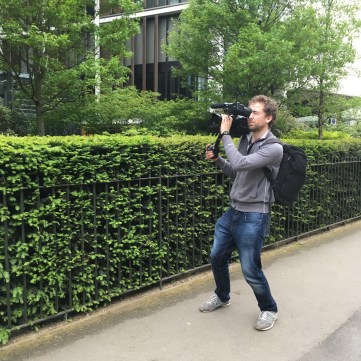


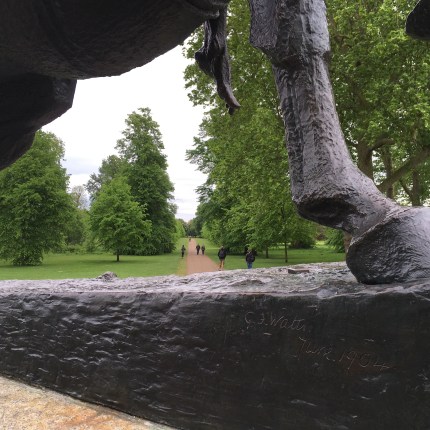

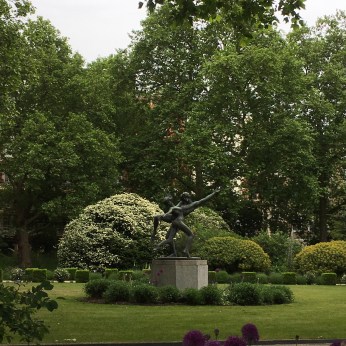


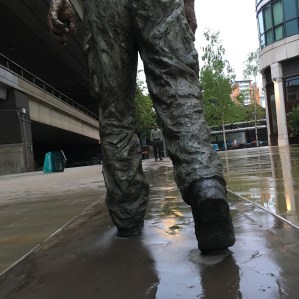



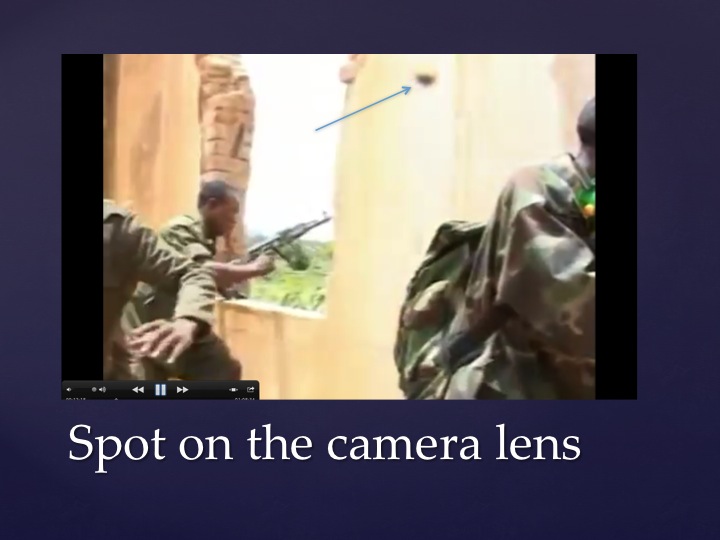
 begstealborrowfilms.com