Films of 2018

Blogpost, Film reviews, Uncategorized

I saw roughly 406 films for the first time in 2018.

I say ‘roughly’ because this figure is not entirely accurate, since there are a couple of films that I went to watch only to realise that I had seen them before, or at the very least to suspect that I had seen them before (In Praise of Nothing being a case in point).

What is more, there are some films that I saw at the Strange Days exhibition at London’s 180 Strand, but which are not listed here (Pipilotti Rist’s 4th Floor to Mildness functions as a stand-in for all of the ones that I did see).

On that topic, there are two gallery/installation films that I enjoyed a lot, but which I did not get to see in full, those being Christian Marclay’s The Clock at Tate Modern and Ragnar Kjartansson’s A Lot of Sorrow at the Strange Days exhibition. Of the former, I managed to see from 10:02 through to about 18:00 – although there is one final all-night session in January 2019 that may allow me to see the film in its entirety provided that I go and that I stay awake for it. And of the latter, I only managed about half an hour, but it was hypnotising and I would like to see more (it is available on YouTube, but I have not had a chance to see it).

Beyond that, I saw 220 films at the cinema this year, making it the most common venue for my film viewing. This was followed by 144 films that I saw online, 22 films that I saw on DVD, VHS or from a file, 11 films that I saw on an aeroplane, 7 listed here that I saw at galleries, and two that I saw on television.

This includes various short(er) films.

The distinction between cinema and online continues to be eroded, in that many films are readily available online at the same time that they are in theatres. I would say that when I see a film like Bird Box, and I can see the image blur as the internet connection wavers, or when I see a film like Mudbound and I can see streaks of grey (as well as my own reflection) in the black of a nocturnal scene as my laptop cannot handle the tonality of darkness… then I feel that the theatre is still the best venue for watching films.

I fell asleep during a relatively large number of films this year, but I did not keep a record. That said, I did sense that I was beginning to fall asleep on occasion during mainstream films, which previously was only a very rare occurrence. Perhaps I need more sleep, or to change my lifestyle in numerous ways (drink less, stop smoking, do more exercise, watch fewer films, not work so hard, learn to be an adult, and so on). All the same, though, maybe blockbusters are having less of an effect on grabbing my attention than they used to.

I also noted that I would check and answer messages on my phone more regularly during film screenings. I am not sure how to stop the endless tide of messages or the insistent compulsion to answer them. In part this may be because watching films can sometimes still feel like skiving.

There are a few filmmakers by whom I saw several films this year, and these include Ingmar Bergman (as part of the retrospective of his work at the British Film Institute), Alia Syed and Kamran Shirdel (as part of events organised through the Birkbeck Institute of the Moving Image), and then Philippe Garrel, Krzysztof Zanussi, Mark Cousins, Angela Schanelec, Rick Alverson, Kevin Jerome Everson, Barbara Hammer, Annemarie Jacir, John Torres, Lou Ye, Gérard Courant, John Carpenter, Douglas Sirk, James Marsh and Christoph Schlingensief. These latter are mainly as a result of retrospectives on MUBI, although some are also a result of me wanting to catch various of their films out of a sense of failure at not having seen them already (Carpenter), or simply because they seem to have been productive (Mark Cousins and James Marsh, who, via The Mercy and King of Thieves, seemed this year to begin a trend of Brit-film mediocrity that I hope does not last too long).

Of these, the work of Jacir and Everson was in particular a pleasant discovery, while my engagement with Torres was more a case of finally reaching a destination that I had been meaning to visit for a few years. I enjoy but continue not to be blown away by Garrel, while Schlingensief is (or rather was) perhaps one of the most interesting and subversive European filmmakers of the contemporary era. Indeed, without wishing to sound too much like an arrogant c-unit, Schlingensief and Torres would in particular make excellent case studies of what I term ‘non-cinema,’ and about which I published a book this year.

On this note, I also saw a handful of South African films this year (Love The One You LoveThe Wound, We Are Thankful, Revenge, Girl from Nowhere, as well as a couple of experimental shorts not listed below by Jyoti Mistry and Nobunye Levin), some that I preferred more than others… but of which Love The One You Love and We Are Thankful struck me as really strong low-budget pieces of work (and which thus might qualify as what I term ‘non-cinema’). In particular I’d in the future look out for work by Jenna Bass, the director of the former, as well as further work by Mistry and Levin.

Other films that I saw (but which might not necessarily be new), and which might qualify as good examples of ‘non-cinema’ (and which for me were memorable viewing experiences) include Joséphine Ndagnou’s Paris à tout prix, Eric Eason’s Manito, Li Ning’s Tape, Khoa Do’s The Finished People and Josh Appignanesi’s Female Human Animal.

What was also interesting for me was to think about my conceptualisation of non-cinema in relation to the work of Kevin Jerome Everson mentioned above. Briefly put, non-cinema is a way of thinking about low-budget, anti-hegemonic filmmaking (read, work that critiques or offers alternatives to white, heteronormative patriarchy), and which at times is wilfully (but not necessarily) anti-commercial. In particular the argument tries to work productively with the idea that the digital is in some senses not cinema anymore in terms of production (celluloid) and distribution (theatres). And so if for various reasons it is ‘not cinema,’ then maybe we can positively say that it is ‘non-cinema.’

Should anyone ever read the book, one of the issues that they might have with it is that I want or insist that filmmakers who do not belong to white, heteronormative patriarchy somehow should or must produce ‘non-cinema,’ meaning that the wonders of cinema remain the preserve of the powerful.

This is not the intention behind my argument at all and I do try in the book to make clear that ‘non-cinema’ is still (or at least can still be) ‘cinematic’ (whatever that means), while also (perhaps without articulating it in so many words) wishing to encourage film viewers to consider that various of the things that they might consider to be ‘bad’ or ‘not even’ cinema are not necessarily a result of inferior filmmaking abilities (which is to create hierarchies of power), but that they might be positive choices, expressions of difference, perhaps especially expressions of a lack of access to power (especially money-as-power since many filmmakers simply cannot afford to make films that are as pristine as a Hollywood production), and thus aesthetically innovative should we have the eyes and ears to think about them in that way.

In other words, non-cinema is a tool to try to level the playing field of film aesthetics, which in turn might help to level the playing field of our political world, not least because aesthetics play such a central role in our political thinking (the political message is perhaps not as important as how it is presented, i.e. its aesthetic dimension; in cinema, he who makes the most noise and who has the flashiest colour palette is often/in many popular quarters considered to be the winner).

From this, it hopefully would be clear that one can make ‘cinema’ and still be anti-hegemonic (nothing necessarily precludes this, although the closer one gets to cinema there may well yet be a tendency to have to make films that try to make money simply because of how much it costs to make a film). Indeed, to make cinema can still be subversive, and this to me is the power of Everson’s films.

For, by regularly using polyester film stock to portray the everyday lives of working African Americans, Everson surely does ask viewers to consider his subjects to be equally as cinematic/as worthy of cinema as the figures that we see in mainstream, commercial cinema. This gesture is profound and powerful, and I would hope that it works in tandem with filmmakers who embrace non-cinema (low budget digital filmmaking) in order equally to level the playing field. Both are, I hope, working towards creating a more just and democratic world.

Perhaps it does not merit mention in the year after Get Out that African American filmmaking appears to be especially strong, with Black Panther being a necessary film to mention given its status as the first ‘black’ superhero movie (even if I personally had some issues with the film, as I have issues with superhero fantasies more generally, and even if I feel that the Saturday Night Live episode of ‘Black Jeopardy’ with Chadwick Boseman as T’Challa was not only one of the most enjoyable audiovisual experiences that I had in 2018, but also politically one of the most astute and powerful).

Nonetheless, one thing that struck me about the films that I saw in 2018 concerning the African American experience (if I can put it that way) is the legacy of Spike Lee. This is not to disregard other figures in the rich history of African American filmmaking, nor is it to disregard Boots Riley’s criticism of Lee concerning the latter’s BlacKkKlansman. But films like Riley’s Sorry to Bother You and Carlos López Estrada’s Blindspotting seem to carry strong traces of Lee’s influence, with Lee’s work itself remaining relevant and which, when considered as a whole, is relentlessly brave, even if personally I can sometimes find it derivative and testing. One thing is for sure: he continues to experiment and to push himself as a filmmaker, and in this respect he is nothing less than admirable (if that is not too condescending a thing to say).

Lee’s influence can also be seen in films like Justin Chon’s Gook, which tells the tale of American Korean Angelinos, and the turn to which also helps us to consider how currently there is equally a growing visibility of Asian Americans in contemporary cinema – with John Cho being a central figure in this growth as he begins to hold together films as varied as internet rescue film Searching and architecture essay-film Columbus.

(Can one summarise 2018 without mentioning Crazy Rich Asians…? Maybe this single mention is enough.)

I did also see two films by Steven Spielberg in 2018, those being The Post and Ready Player One, the latter of which was my first 4DX experience, and which ideologically annoyed me quite a lot – but so be it. I was also mildly disappointed by some of the Netflix films that did not get (much in the way of) theatrical releases in the UK, including Alex Garland’s Annihilation and Julius Onah’s The Cloverfield Paradox.

But rather than linger on disappointments, perhaps one might instead celebrate achievements, and in this sense 2018 saw a fair amount of what I would consider to be strong American films coming out. Among these I might include I, Tonya (a hangover from 2017), the afore-mentioned BlindspottingBlacKkKlansman and Sorry to Bother You, ColumbusLeave No TraceAmerican AnimalsMid90s, TullyLuckyThe Old Man and the GunRalph Breaks the Internet and Assassination Nation (which nearly sustained its headfuck aesthetic until the end).

Indeed, while I shall list below my ‘proper’ favourites of the year (these ones that I am discussing currently being points of interest and ever-so-nearly my favourites), I was worried that American filmmaking might run away with it this year, not least because a whole bunch of films by big-name world auteurs (including by non-Americans) were fine, but did not quite do it for me in the way that some of their earlier work has done. By this I mean that while I saw films by the likes of Jia Zhangke (Ash is Purest White), Lars von Trier (The House that Jack Built), Kore-eda Hirokazu (The Third Murder and Shoplifters), Pawel Pawlikowsi (Cold War), Steve McQueen (Widows), Fatih Akin (In the Fade), Corneliu Porumboiu (Infinite Football), Lucrecia Martel (Zama), Ruben Östlund (The Square), Jafar Panahi (3 Faces), Andrei Zvyagintsev (Loveless) and Paul Thomas Anderson (Phantom Thread), these did not quite do it for me (even though I liked a good number of these films a lot).

A list of films that really came quite close to doing it for me include Jacir’s Wajib, Mohammad Rasoulof’s A Man of Integrity, Naomi Kawase’s Radiance, Robin Campillo’s 120BPM, Jonas Carpignano’s A Ciambra, Frederick Wiseman’s Ex-Libris: The New York Public Library and Hu Bo’s An Elephant Sitting Still. I liked Paul King’s Paddington 2. Both Alfonso Cuarón’s Roma and Yorgos Lanthimos’s The Favourite are great films that really have at their core magnificent performances by female leads (respectively Yalitza Aparicio and Olivia Colman, although Emma Stone and Rachel Weisz from the latter are worth mentioning, too – with Weisz having also shone alongside Rachel McAdams and the under-rated Alessandro Nivola in Sebastián Lelio’s Disobedience).

I might also say that The Favourite made me think that Peter Greenaway’s legacy remains strong, as well as leading me to believe that the film is perhaps the best Grexit-Brexit comment to have been made in the recent past – not least in the face of much ongoing and conservative British cinema (although Francis Lee’s God’s Own Country is also a beautiful investigation into Anglo-European relations up in Yorkshire).

In a year that also saw The Greatest Showman and Mary Poppins Returns saturate our big screens, the legacy of Baz Luhrmann also seemed to loom large, making me wonder what he is up to and why he seems not have any projects along the lines of his best work (William Shakespeare’s Romeo + JulietMoulin Rouge!) on the go. Hopefully these would be more enjoyable than the two musicals mentioned above – even if my niece insisted on dancing repeatedly to ‘A Million Dreams’ and ‘Never Enough’ from the former throughout the Christmas period.

Returning to the UK in the era of Brexit, William English’s It’s My Own Invention, which I caught randomly at the Close-Up Centre one night early in 2018, has really stuck with me as a kind of bizarre insight into insanity as it charts the life of Hugh de la Cruz, who claims to have invented a perpetual motion machine. It perhaps chastened me with regard to my own propensity for insanity.

Although a couple of years old, I might mention Jenni Olson’s The Royal Road as one of the best essay-films that I saw for the first time in 2018, with Guy Maddin, Galen Johnson and Evan Johnson’s The Green Fog being a beautiful and very funny video-essay on San Francisco as depicted in cinema (and which thus shares a lot of ground with my forthcoming video-essay on the Golden Gate Bridge).

Finally, out of retrospective films that I saw at the cinema in 2018, I might make mention of Youssef Chahine’s 1969 film The Land, which was beautifully restored and screened at the Ciné Lumière as part of the SAFAR Film Festival 2018.

And so now we can come to my personal favourites of 2018, which number 9 in total and which appear below in no particular order:-

Between Fences by Avi Mograbi, a film (actually from 2016 and which I saw online, but what the heck) about acting workshops with African refugees in a camp in the Negev desert. This made me want to make films like it, while also leading me to read Augusto Boal, who is an influence on theatre director Chen Alon, who with Mograbi ran the workshops.

The Nothing Factory by Pedro Pinho, which is a weird micro-budget musical about workers on strike at a lift factory in Lisbon.

You Were Never Really Here by Lynne Ramsay, which has at its core a towering performance by Joaquin Phoenix, an incredible score by Jonny Greenwood and some of the most taut directing from Lynne Ramsay at the absolute peak of her powers.

A Deal with the Universe by Jason Barker. This no-budget diary film is about a man transitioning from being a woman, but who delays said transition in order to have a child. Tender and beautiful.

First Reformed by Paul Schrader. After The Canyons (which I secretly admire but do not particularly like), this came from nowhere – and is about as impassioned a film about environmental disaster as one can hope to see.

Summer 1993 by Carla Simón. A heartbreaking film about an orphan girl taken in by her aunt and uncle and which left me sobbing.

The Rider by Chloé Zhao, which uses non-professional actors from the world of rodeo to tell the story of the decline of the American west – and which also left me devastated and hiding in the cinema until the credits had finished so that I could have a good cry and time to dry my eyes unseen.

The Flower by Mariano Llinás. A kind of compendium of six separate feature films in one and all starring the same cast, this 14-and-a-half-hour long film becomes completely hypnotic and is a wonderful example of infinite storytelling, of the sort that Llinás’s fellow Argentine Jorge Luis Borges would endorse, and which keeps alive the Scheherazadean tradition of storytelling as life (it also made me love Miguel Gomes’ Arabian Nights even more for doing something similar).

The Wild Pear Tree by Nuri Bilge Ceylan, which is for me his strongest film. Ceylan continues to edit across different takes in such a way that one gets a sense of not a single story world, but parallel universes that all talk to each other. This film features perhaps the most beautiful scene of love that I can remember, as ne’er-do-well Sinan talks to his old crush Hatice by a tree. Furthermore, I felt chastised by the film for sharing many of Sinan’s faults, such that I really want to change my life and endeavour to be a better person… even if now in the fog outside of the cinema, I continue to feel lost and unsure of what it is that I am supposed to do with existence.

Although the next film is not really among my favourites, this talk of changing my life does lead me to my final thoughts, various of which concern Weeks in the West End, a no-budget independent feature made by Ian Mantgani and which I saw as a result of an invitation from a friend (Hind Mezaina) at the Prince Charles Cinema on the eve of the London Film Festival.

It is a personal story about the filmmaker’s relationship with cinema and the way in which the London Film Festival annually brings about a strange set of rituals as one endures long days of film-viewing and long nights of partying and film discussion.

It is also in some senses a kind of love letter to the filmmaker’s then-partner, as well as an account of the disintegration of their relationship.

What is curious about the film is that I once asked out the filmmaker’s partner for a drink (at around the time that they got together if my understanding of their timeline is correct). However, the filmmaker’s ex turned me down, and so Weeks in the West End became this odd experience of feeling slightly sorry for myself (a sense of inferiority at not being as attractive as the filmmaker, at least in the eyes of his ex; a wonder at how my life could have turned out so differently).

But more than this, the film also became an exercise in seeing how the filmmaker’s obsession with cinema perhaps got in the way of his relationship, maybe even ending it.

Weeks in the West End might work as a piece of non-cinema in many respects, not least because so low budget, even if shot in a wilfully quirky fashion on film. However, the movie is also beholden to cinema, especially as it goes off on numerous tangents that aim to showcase Mantgani’s beautiful turns of phrase as he reviews films that he has seen at the festival.

Two thoughts.

Firstly, we do not see those films that are described, but just the title and what is written about them in the London Film Festival catalogue from 2017. Weeks in the West End seems desperately somehow to want to be cinema, and this desire to be cinema seems ultimately to be destructive of human relationships. Perhaps we should never love cinema more than we love people. Perhaps I also watch too many films, even if I try to hate and in some senses to destroy cinema in my filmmaking and in my writing about film and coming up with notions like ‘non-cinema,’ which various of my friends would tell me are worthy of Pseuds’ Corner. I must learn to be a better human being and to value others ahead of my stupid fantasies, which I must also try to shed in order to see other humans for themselves and not filtered through my idiocy (I must stop being an idle romantic dreaming of other worlds rather than helping to improve this one).

Secondly, Mantgani is a beautiful writer. The Wild Pear Tree is a contemplation of literature, while The Flower also feels very literary/novelistic in terms of how it is constructed and how long it takes to get through it (the same applies to An Elephant Sitting Still, which is based on Hu Bo’s own novel, to name but one more among various others mentioned above and below).

One of the most important conversations I had this year was about how many of the great filmmakers are also great readers – and about the ongoing and perhaps necessary relationship between literature and cinema (or between text and film more generally).

If indeed we are drifting into a world where people do not have the time or the patience for novels (especially ‘difficult’ novels), then this also will lead to the impoverishment of cinema (and perhaps by extension to the impoverishment of human relationships).

Let us continue to read and write in order to make and to understand films as best as we can.

Some people hate him, but Jean-Luc Godard perhaps still has it and is on point with his latest film, The Image Book, which in some ways is a consideration of the relationship between cinema and language/literature/text, between images and books, and which is also a proxime accessit film for me this year: I loved it, but only as much as other work of his and not as if I had seen something anew (hence not in my favourite favourite list).

But most of all this: if we love cinema and/or literature, then let us also see if we can learn to love each other.

Appendix
(featuring all of the films I saw in 2018)

[Blank = cinema; * = online; ^ = DVD/VHS/file; > = gallery/installation; // = television]

Film Stars Don’t Die in Liverpool (Paul McGuigan)
Menashe (Joshua Z. Weinstein)
Battle of the Sexes (Jonathan Dayton and Valerie Faris)
Youth (Feng Xiaogang)
Brad’s Status (Mike White)
Paddington 2 (Paul King)
Marius (Marcel Pagnol)
Jupiter’s Moon (Kornél Mondruczó)
Rey (Niles Attalah)
Glory (Kristina Grozeva and Petar Valchanov)
Molly’s Game (Aaron Sorkin)
Field Niggas (Khalik Allah)
Darkest Hour (Joe Wright)
Three Billboards Outside Ebbing, Missouri (Martin McDonough)
Tempestad (Tatiana Huezo)
Swan (Alia Syed)
Unfolding (Alia Syed)
Syntax (Martha Haslanger)
Light Reading (Lis Rhodes)
Fatima’s Letter (Alia Syed)
Three Paces (Alia Syed)
Red Shift (Gunvor Nelson)
The Post (Steven Spielberg)
Attraction (Fyodor Bondarchuk)
Hex (George Popov and Jonathan Russell)
The Greatest Showman (Michael Gracey)
Barbara (Mathieu Amalric)
A Man of Integrity (Mohammad Rasoulof)
Radiance (Naomi Kawase)
Hannah (Andrea Pallaoro)
120 battements par minute (Robin Campillo)
A Fábrica de Nada (Pedro Pinho)
Downsizing (Alexander Payne)
Phantom Thread (Paul Thomas Anderson)
Room for Let (Yuzo Kawashima)
The Serpent’s Egg (Ingmar Bergman)
Makala (Emmanuel Gras)
Shame (Ingmar Bergman)
Loveless (Andrei Zvyagintsev)
The Mercy (James Marsh)
Black Panther (Ryan Coogler)
It’s My Own Invention (William English)
It Rains on Our Love (Ingmar Bergman)
The Song of Cotton (Yuancheng Zhu)
The Worldly Cave (Zhou Tao)
From the Life of the Marionettes (Ingmar Bergman)
I, Tonya (Craig Gillespie)
Lady Bird (Greta Gerwig)
Dark River (Clio Barnard)
The Devil’s Eye (Ingmar Bergman)
La vendedora de fósforos (Alejo Moguillansky)
Vers la mer (Annik Leroy)
Rewind and Forget (Andrea Luka Zimmerman)
The Shape of Water (Guillermo del Toro)
Red Sparrow (Francis Lawrence)
You Were Never Really Here (Lynne Ramsay)
Gringo (Nash Edgerton)
Sweet Country (Warwick Thornton)
The Nile Hilton Incident (Tarik Saleh)
Women’s Prison (Kamran Shirdel)
Tehran is the Capital of Iran (Kamran Shirdel)
Women’s Quarter (Kamran Shirdel)
The Night It Rained, Or The Epic of a Gorgan Village Boy (Kamran Shirdel)
Gook (Justin Chon)
Tomb Raider (Roar Uthaug)
Unsane (Steven Soderbergh)
Tomorrow Never Knows (Adam Sekuler)
Luz Obscura (Susana de Sousa Dias)
Gholam (Mitra Tabrizian)
A Deal with the Universe (Jason Barker)
Have a Nice Day (Liu Jian)
The Third Murder (Kore-eda Hirokazu)
The Square (Ruben Östlund)
Peter Rabbit (Will Gluck)
Martyr (Mazen Khaled)
God’s Own Country (Francis Lee)
Ready Player One 4DX (Steven Spielberg)
Journeyman (Paddy Considine)
A Quiet Place (John Krasinski)
Ghost Stories (Andy Nyman and Jeremy Dyson)
The Camera: Je, or La Caméra: I (Babette Mangolte)
Pacific Rim: Uprising (Steven S. DeKnight)
The Finished People (Khoa Do)
The Sun Island (Thomas Elsaesser)
Intruder in the Dust (Clarence Brown)
Un beau soleil intérieur (Claire Denis)
The Wound (John Trengove)
Avengers: Infinity War (Anthony and Joe Russo)
Something Wild (Jonathan Demme)
Beast (Michael Pearce)
Journey to the South (Jill Daniels)
Revenge (Coralie Fargeat)
Tully (Jason Reitman)
Shadow World (Johan Grimonprez)
Funny Cow (Adrian Shergold)
Le redoubtable (Michel Hazanavicius)
Deadpool 2 (David Leitch)
Jeune femme (Léonor Serraille)
Zama (Lucrecia Martel)
Solo: A Star Wars Story (Ron Howard)
Entebbe (José Padilha)
Isle of Dogs (Wes Anderson)
L’amant double (François Ozon)
3 Faces (Jafar Panahi)
Frontières (Apolline Traoré)
Infinite Football (Corneliu Porumboiu)
Plaire, aimer et courir vite (Christophe Honoré)
Una questione privata (Paolo and Vittorio Taviani)
Morocco (Josef von Sternberg)
Absolute Rest (Abdolreza Kahani)
Jurassic World: Fallen Kingdom (JA Bayona)
Veere di Wedding (Shashanka Ghosh)
Mobile Homes (Vladimir de Fontenay)
A Ciambra (Jonas Carpignano)
In The Fade (Fatih Akin)
Leave No Trace (Debra Granik)
Sicario: Day of the Soldado (Stefano Sollima)
The Women Weavers of Assam (Aparna Sharma)
Clem (William Brown)
Ocean’s Eight (Gary Ross)
Hereditary (Ari Aster)
Bao (Domee Shi)
Incredibles 2 (Brad Bird)
First Reformed (Paul Schrader)
Pin Cushion (Deborah Haywood)
Estiú 1993 (Carla Simón)
The Receptionist (Jenny Lu)
Generation Wealth (Lauren Greenfield)
Extinction (Salomé Lamas)
Apostasy (Daniel Kokotajlo)
Ex Libris: The New York Public Library (Frederick Wiseman)
Mogambo (John Ford)
El Mar La Mar (Joshua Bonnetta and JP Sniadecki)
Cocote (Nelson Carlo De Los Santos Arias)
Ant-Man and the Wasp (Peyton Reed)
Mamma Mia! Here We Go Again (Ol Parker)
Mission: Impossible – Fallout (Christopher McQuarrie)
The Escape (Dominic Savage)
Las herederas (Marcelo Martinessi)
No Date, No Signature (Vahid Jalilvand)
The Eyes of Orson Welles (Mark Cousins)
BlacKkKlansman (Spike Lee)
Christopher Robin (Marc Forster)
The King (Eugene Jarecki)
Under the Tree (Hafsteinn Gunnar Sigurdsson)
Searching (Aneesh Chaganty)
Robot Jox (Stuart Gordon)
Yardie (Idris Elba)
Baronesa (Juliana Antunes)
Cold War (Paweł Pawlikowski)
The End of Fear (Barbara Visser)
American Animals (Bart Layton)
Home of the Resistance (Ivan Ramljak)
Uppland (Edward Lawrenson)
(In Praise of Nothing (Boris Mitić))
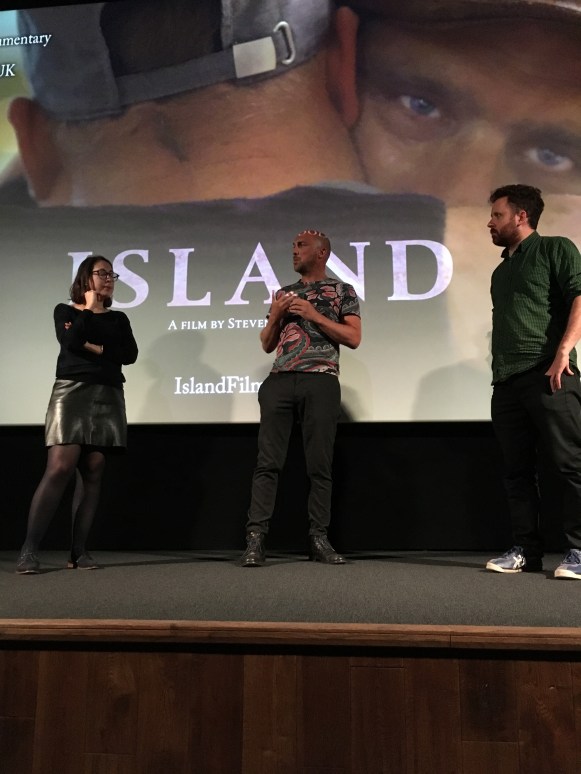
(Island (Steven Eastwood))
The Miseducation of Cameron Post (Desiree Akhavan)
The Predator (Shane Black)
The Search (Hossam El Din Moustafa)
Stories of Passers Through (Koutaiba Al-Janabi)
Poisonous Roses (Ahmed Fawzi Saleh)
Scheherazade’s Diary (Zeina Daccache)
The Film of Kyiv (Oleksiy Radynski)
Lucky (John Carroll Lynch)
Diamond Island (Davy Chou)
We Don’t Care About Democracy. This Is What We Want: Love, Hope and Its Many Faces (John Torres)
I Have Sinned a Rapturous Sin (Maryam Tafakory)
The Land (Youssef Chahine)
Wajib (Annemarie Jacir)
Nervous Translation (Shireen Seno)
Marvin (Anne Fontaine)
The Rider (Chloé Zhao)
People Power Bombshell (John Torres)
MATANGI/MAYA/M.I.A. (Steve Loveridge)
Climax (Gaspar Noé)
El reino (Rodrigo Sorogoyen)
Venom (Ruben Fleischer)
Blindspotting (Carlos López Estrada)
Weeks in the West End (Ian Mantgani)
Skate Kitchen (Crystal Moselle)
Wild Relatives (Jumana Manna)
Columbus (Kogonada)
aKasha (hajooj kuka)
Mandy (Panos Cosmatos)
Kusama – Infinity (Heather Lenz)
The Wife (Björn Runge)
Bad Times at the El Royale (Drew Goddard)
La flor parte 1 (Mariano Llinás)
Women Make Film: A New Road Movie Through Cinema (Mark Cousins)
La flor parte 2 (Mariano Llinás)
La flor parte 3 (Mariano Llinás)
Halloween (David Gordon Green)
Fahrenheit 11/9 (Michael Moore)
Dogman (Mateo Garrone)
First Man (Damien Chazelle)
The Old Man and the Gun (David Lowery)
Beautiful Boy (Felix Van Groeningen)
The Man with the Iron Fists (RZA)
Mid90s (Jonah Hill)
Ash Is Purest White (Jia Zhangke)
Wildlife (Paul Dano)
The Girl in the Spider’s Web (Fede Álvarez)
Widows (Steve McQueen)
Nae Pasarán (Felipe Bustos Sierra)
Assassination Nation (Sam Levinson)
Shoplifters (Kore-eda Hirokazu)
Bohemian Rhapsody (Bryan Singer)
The House That Jack Built (Lars von Trier)
Sorry to Bother You (Boots Riley)
Roma (Alfonso Cuarón)
An Elephant Sitting Still (Hu Bo)
Disobedience (Sebastián Lelio)
Le livre d’image (Jean-Luc Godard)
Spider-Man: Into the Spider-Verse (Peter Ramsey, Robert Persichetti Jr., Rodney Rothman)
The Green Fog (Guy Maddin, Galen Johnson, Evan Johnson)
Mary Poppins Returns (Rob Marshall)
The Favourite (Yorgos Lanthimos)
Aquaman (James Wan)
The Wild Pear Tree (Nuri Bilge Ceylan)
Ralph Breaks the Internet (Rich Moore and Phil Johnston)
Happy Christmas (Joe Swanberg)*
Unexpected (Kris Swanberg)*
Daphne (Peter Mackie Burns)*
I am Not a Witch (Rungano Nyoni)*
Marjorie Prime (Michael Almereyda)*
Monsters: Dark Continent (Tom Green)*
Tentacles (Ovidio G. Assonitis)*
On the Road (Michael Winterbottom)*
The Last Movie (Dennis Hopper)*
Mega-Shark versus Giant Octopus (Ace Hannah)*
The Protagonists (Luca Guadagnino)*
Ender’s Game (Gavin Hood)*
A Spectre Is Haunting Europe? (Julian Radlmaier)*
Dyketactics (Barbara Hammer)*
The Dunwich Horror (Daniel Haller)*
It Came From Beneath the Sea (Robert Gordon)*
The Crimson Kimono (Samuel Fuller)*
Superdyke Meets Madame X (Barbara Hammer)*
Cabin in the Woods (Drew Goddard)*
The Structure of Crystal (Krzysztof Zanussi)*
(20,000 Leagues Under the Sea (Richard Fleischer)*)
It Came From Outer Space (Jack Arnold)*
Dead Slow Ahead (Mauro Herce)*
Hokusai Manga (Kaneto Shindo)*
L’amant d’un jour (Philippe Garrel)*
Untitled (Michael Glawogger and Monika Willi)*
The Constant Factor (Krzysztof Zanussi)*
Las Plantas (Roberto Doveris)*
Mirror World (Abigail Child)*
Life is a Fatal Sexually Transmitted Disease (Krzysztof Zanussi)*
Wùlu (Daouda Coulibaly)*
Clash of the Titans (Louis Leterrier)*
The Gorgon (Terence Fisher)*
Percy Jackson & The Olympians: The Lightning Thief (Chris Columbus)*
On Body and Soul (Ildikó Enyedi)*
In The Mouth of Madness (John Carpenter)*
Annihilation (Alex Garland)*
The Cloverfield Paradox (Julius Onah)*
The Bridge (Eric Steel)*
Paris à tout prix (Joséphine Ndagnou)*
The Year My Voice Broke (John Duigan)*
Spotswood (Mark Joffe)*
La Jalousie (Philippe Garrel)*
L’ombre des femmes (Philippe Garrel)*
Why Him? (John Hamburg)*
Kékszakállú (Gastón Solnicki)*
Eadweard Muybridge, Zoopraxographer (Thom Andersen)*
Silverlake Life: The View from Here (Tom Joslin and Peter Friedman)*
Lean on Pete (Andrew Haigh)*
Shanty Tramp (José Prieto)*
Afternoon (Angela Schanelec)*
Audition (Milos Forman)*
Orly (Angela Schanelec)*
There’s Always Tomorrow (Douglas Sirk)*
Night Tide (Curtis Harrington)*
No intenso agora (João Moreira Salles)*
The Dreamed Path (Angela Schanelec)*
The Tarnished Angels (Douglas Sirk)*
Allende mi abuelo Allende (Marcia Tambutti)*
Ma Loute (Bruno Dumont)*
Diary of a Shinjuku Thief (Nagisa Oshima)*
(La petite vendeuse de soleil (Djibril Diop Mambéty)*)
Refugiado (Diego Lerman)*
New Jerusalem (R. Alverson)*
The Comedy (Rick Alverson)*
Lek and the Dogs (Andrew Kötting)*
The Tingler (William Castle)*
Matinee (Joe Dante)*
Casa Roshell (Camila José Donoso)*
Daddy Longlegs (Josh and Ben Safdie)*
Polytechnique (Denis Villeneuve)*
Human Desire (Fritz Lang)*
Bob & Carol & Ted & Alice (Paul Mazursky)*
Agilem (Ilkka Levä)*
Manito (Eric Eason)*
Separado! (Dylan Goch and Gruff Rhys)*
Adiós entusiasmo (Vladimir Durán)*
Jumanji: Welcome to the Jungle (Jake Kasdan)*
Donna Haraway: Story Telling for Earthly Survival (Fabrizio Terranova)*
Central Intelligence (Rawson Marshall Thurber)*
Mala Noche (Gus Van Sant)*
Alipato: The Very Brief Life of an Ember (Khavn de la Cruz)*
Aditya (Gérard Courant)*
4:44 Last Day on Earth (Abel Ferrara)*
Rubber (Quentin Dupieux)*
Je meurs de soif, j’étouffe, je ne puis crier… (Gérard Courant)*
They Live (John Carpenter)*
Inkheart (Iain Softley)*
Invaders from Mars (William Cameron Menzies)*
Evolution (Ivan Reitman)*
Jesús (Fernando Guzzoni)*
Fausto (Andrea Bussmann)*
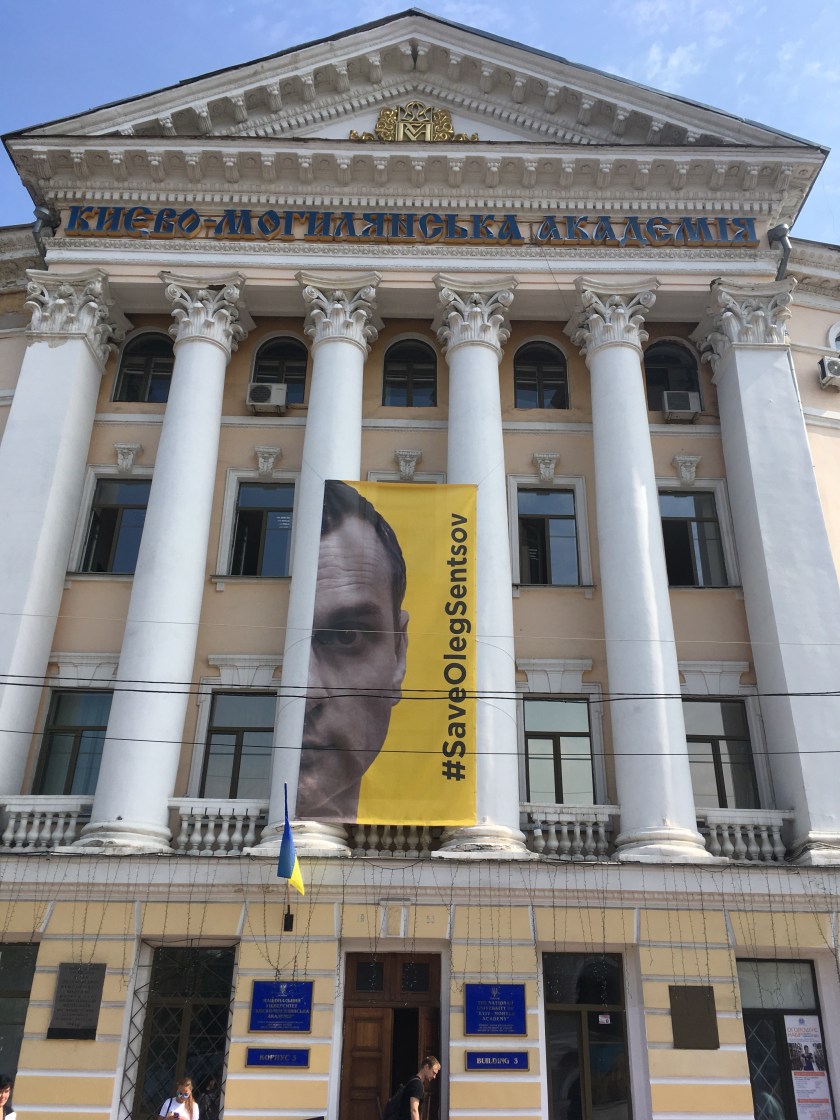
Gamer (Oleg Sentsov)*
Mr Kaplan (Álvaro Brechner)*
We Are Thankful (Joshua Magor)*
Revenge (Coenie Dippenaar)*
Meteors (Gürcan Keltek)*
Temporada (André Novais Oliveira)*
Between Fences (Avi Mograbi)*
Djon África (Filipa Reis and João Guerra Miller)*
Born in Flames (Lizzie Borden)*
El apóstata (Federico Veiroj)*
Todo Todo Teros (John Torres)*
The Andromeda Strain (Robert Wise)*
Spring Fever (Lou Ye)*
Blind Massage (Lou Ye)*
The Supplement (Krzysztof Zanussi)*
Bonsái (Alex Andonie)*
The Last of Us (Ala Eddine Slim)*
120 Days of Bottrop (Christoph Schlingensief)*
When I Saw You (Annemarie Jacir)*
Terror 2000 (Christoph Schlingensief)*
All You Can Eat Bouddha (Ian Lagarde)*
100 Years of Adolf Hitler (Christoph Schlingensief)*
Tonsler Park (Kevin Jerome Everson)*
Quality Control (Kevin Jerome Everson)*
Teatro de Guerra (Lola Arías)*
Cinnamon (Kevin Jerome Everson)*
1428 (Du Haibin)*
Three Quarters (Kevin Jerome Everson)*
Una corriente salvaje (Nuria Ibáñez Castañeda)*
Wild Plants (Nicolas Humbert)*
A morir a los desiertos (Marta Ferrer)*
Giuseppe Makes a Movie (Adam Rifkin)*
Tape (Li Ning)*
Years When I Was a Child Outside (John Torres)*
‘Til Madness Do Us Part (Wang Bing)*
Trees Down Here (Ben Rivers)*
Spice Bush (Kevin Jerome Everson)*
L’Apparition (Xavier Giannoli)*
Season of the Devil (Lav Diaz)*
Girl from Nowhere (Mark Jackson)*
The Ballad of Buster Scruggs (Ethan and Joel Coen)*
L’année des méduses (Christopher Frank)*
Alba (Ana Cristina Barragán)*
Mañana a esta hora (Lina Rodríguez)*
L’affaire des divisions Morituri (FJ Ossang)*
Female Human Animal (Josh Appignanesi)*
Bird Box (Susanne Bier)*
Li Shuangshuang (Lu Ren)*
The Meyerowitz Stories (New and Selected) (Noah Baumbach)*
A Star is Born (William A Wellman)*
Mudbound (Dee Rees)*
Mon Souffle (Jihane Chouaib)*
Octopussy (John Glen)^
Cathy Come Home (Kenneth Loach)^
Les amours de la pieuvre (Jean Painlevé)^
A Lesson in Love (Ingmar Bergman)^
Waiting Women (Ingmar Bergman)^
Sleep Has Her House (Scott Barley)^
Io Sono Li (Andrea Segre)^
The Royal Road (Jenni Olson)^
Freakstars 3000 (Christoph Schlingensief)^
Reminiscences of a Journey to Lithuania (Jonas Mekas)^
By Night With Torch and Spear (Joseph Cornell)^
Alone. Life Wastes Andy Hardy (Martin Arnold)^
Disorient Express (Ken Jacobs)^
The Trail of the Octopus (Duke Worne)^
I Love You (Marco Ferreri)^
Love The One You Love (Jenna Bass)^
Cefalópodo (Rubén Imaz)^
The Draughtsman’s Contract (Peter Greenaway)^
L’uomo in più (Paolo Sorrentino)^
Cabaret (Bob Fosse)^
Web Junkie (Hilla Medalia and Shosh Shlam)^
Mare Nostrum (Rex Ingram)^
Live By Night (Ben Affleck)+
Eat Pray Love (Ryan Murphy)+
Goodbye Christopher Robin (Simon Curtis)+
A Streetcar Named Desire (Elia Kazan)+
Epic (Chris Wedge)+
Alpha (Albert Hughes)+
Crazy Rich Asians (Jon M Chu)+
King of Thieves (James Marsh)+
Isoken (Jadesola Osiberu)+
Hearts Beat Loud (Brett Haley)+
The Meg (Jon Turteltaub)+
4th Floor to Mildness (Pipilotti Rist)>
Purple (John Akomfrah)>
Joan Jonas (Joan Jonas)>
Despair (Alex Prager)>
La Petite Mort (Alex Prager)>
Face in the Crowd (Alex Prager)>
La Grande Sortie (Alex Prager)>
About A Boy (Paul and Chris Weitz)//
Bros: After the Screaming Stops (Joe Pearlman and David Soutar)//


Roma (Alfonso Cuarón, Mexico/USA, 2018)

Blogpost, Film reviews, Latin American cinema, Uncategorized

A few brief thoughts (involving spoilers) on Alfonso Cuarón’s Roma, mainly in relation to a concept that David H. Fleming and I have been developing, and about which we recently published an essay in the journal, Film-Philosophy.

In that essay, which is on Arrival (Denis Villeneuve, USA, 2016), we posit the notion of chthulucinema, which is a term that can be used to describe movies that chime with Donna J Haraway’s notion of the chthulucene, an era that follows the so-called anthropocene and which sees the importance of humans wane on planet Earth, if not seeing humans disappear from the planet altogether.

We connect chthulucinema also with the eschatological writing of HP Lovecraft, whose Cthulhu equally signals a threat to humanity, and which is given expression in Arrival by the tentacled heptapods (which arrive not to destroy humanity per se, but which are here to announce an evolution in the human understanding of space, time and, ahem, evolution itself).

This is because the heptapods let humans know that there is other intelligent life out there in the universe (space) and that they have a completely different understanding of chronology (time). What is more, they have arrived because their species and our species are mutually dependent – with all of the drama of the film also being connected to the issue of whether linguist Louise Banks (Amy Adams) keeps her baby daughter, even if she knows that it will not live long (evolution).

This is about evolution because to reproduce is to evolve: children are not copies of their parents, even as we live in a world in which we seek to live forever, to stay young forever, and never to change through processes such as cloning, cosmetic surgery, and the preservation of the self in data (including the digital data of computer files and the analogue and digital data of images).

If children are not copies of their parents and if to become a parent is to let go of living forever and instead to let a child live – even if it is ‘imperfect’ and itself does not survive past childhood (the premise of Arrival) – then evolution here is also about learning to die and learning to accept death as a necessary part of (cosmic) evolution.

So… if this does not sound too barmy, then the issue becomes: what on Earth does cosmic evolution and the like have to do with Roma?

Well, we can start by suggesting that Cuarón has form in terms of dealing with such issues. To take perhaps his two most famous examples, Children of Men (USA/UK/Japan, 2006) and Gravity (UK/USA, 2013) both deal with the issue of childbirth, in that the former is about a world where children are no longer born and the latter is about an astronaut attempting to recover from the loss of her child.

[Notably, First Man (Damien Chazelle, USA/Japan, 2018) also feels compelled to talk about the conquest of space in relation to the trauma suffered at the loss of a child… as if space travel were the quest for immortality in the face of, and perhaps in a bid to deny, the truth of mortality. As Chazelle whitened jazz in both Whiplash (USA, 2014) and La La Land (USA/Hong Kong, 2016), here, in an era in which cinema tries to explore stories such as the one told in Hidden Figures (Theodore Melfi, USA, 2016), he also makes space travel white and male – as per the film’s title – as he celebrates the immortality of conquest in contradistinction to the mortality of becoming.]

To return to Cuarón, Roma is indeed at times quite consciously referential to the director’s earlier work – notably during a long sequence shot during riots in Mexico City in 1971, recalling the main sequence shot in the Bexhill riot zone in Children of Men, and during a cinema visit during which Cleo (the astounding Yalitza Aparicio) watches Marooned (John Sturges, USA, 1969), a film from the pre-CGI era that bears a strong similarity in its premise to Gravity.

But if Roma is something of a summation of Cuarón’s work to date (the story of servants also brings with it shades of A Little Princess (USA, 1995) and Great Expectations (USA, 1998), while the portrait of class tension in Mexico equally recalls Y tu Mamá también (Mexico, 2001)), how does it connect with the chthulucene and related issues?

Well, about three quarters of the way through the film, well-to-do Distrito Federal mother Sofía (Marina de Tavira) takes her children and their housemaid Cleo to the seaside.

I say well-to-do, but really Sofía is struggling: she has been abandoned by her husband (Fernando Grediaga) and money is getting tight. Nonetheless, she still runs a household with four kids and two housemaids, including Cleo, who has just lost a child at birth.

Sympathising with Cleo’s loss, Sofía promises Cleo a break on the beaches of Tuxpan, where she will not be asked to carry out any of her normal tasks of servitude.

As the group arrives at a coastal resort, they pass a large image on a wall of an octopus, before then being in a seaside diner where octopus also appears on the menu.

I am not saying that Cuarón included these details because he consciously believes what follows. But from the perspective of chthulucinema, which is a cinema of tentacles and thinking about the world from a non-human, more invertebrate perspective, the presence of these octopus references is telling.

For – and no more than this – they simply are reminders of alternative lifeforms, but whose biology and anatomy is so vastly different from ours that to ponder them does give pause to our everyday assumptions about time, space and evolution… and which does ask us to consider how an intelligent alien (which is how octopuses are often described) might perceive the world in a fashion that is completely different from the human.

(Octopuses and octopus-like creatures are common in Mexican cinema, as Fleming and I discuss in what we hope to be the book-version argument of our Arrival essay, nominally called Kinoteuthis Infernalis: The Emergence of Chthulumedia, which title means with a doff of the cap to Vilém Flusser ‘the squid cinema from hell,’ and which takes in other films like Cefalópodo/Cephalopod (Rubén Imaz, Mexico, 2010), La región salvage/The Untamed (Amat Escalante, Mexico/Denmark/France/Germany/Norway/Switzerland, 2016) and Una corriente salvaje (Nuria Ibañez, Mexico, 2018). I might mention here how Roma also seems indebted at least a little bit to Güeros (Alonso Ruizpalacios, Mexico, 2014), with its long sequence shots and images of civil unrest.)

However, while the presence of the octopus in Roma simply helps us to think about ‘intelligent aliens’ that are not us and which perhaps stand alongside and might help to evolve the contemporary human world, which we might otherwise describe as a patriarchy, it does also tie in with a narrative that is about children/childbirth, and which involves fantasies of transcending the planet (Marooned), changing the current structure of society (civil unrest) and perhaps even creating a matriarchy (Sofía and Cleo bonding) instead of a patriarchy.

It is not that Roma is obvious or mawkish. Indeed, problems remain as at the last Cleo returns to her position of servitude, and the loss of her child is not really mitigated by a weekend in the sun (where she ends up nearly drowning as she tries to save Sofía’s children from getting swept away by tidal currents).

Nonetheless, Cuarón is clearly investigating issues surrounding what another world might look like or be – as perhaps is befitting of someone who shares a culture with one of the great childbirth novels, namely Carlos Fuentes’s Cristóbal Nonato/Christopher Unborn (1987). He does this by studying a period of transition within a family as a nation also undergoes transition. And he does this by exploring what it means to reproduce – or not.

With the heartbreaking loss of Cleo’s child, Cuarón would seem to paint a bleak picture of a world where change may be hard to achieve, and where the poor really are sacrificed for the ongoing benefit (‘eternal life’) of the rich.

But as the octopus’ presence suggests, and as Cleo herself emerges from the sea with Sofía’s children, and as the unrest continues in the streets, if change may not have happened yet, it nonetheless is on the way – and we shall experience new worlds that currently are alien to us.

And this is because while Cleo suffers, she is also indestructible. Not in the sense that she is immortal, but in the sense that – and I am not sure I can overstate the magnificence of Aparicio’s performance here – she cannot be destroyed by hardship, even as she undergoes terrible hardship after terrible hardship. Cleo (and Apricio’s performance) are so strong. They are strength. And even if not now, they are the vision of a more just world.

Or something like that.


Female Human Animal (Josh Appignanesi, Mexico/UK, 2018)

Blogpost, British cinema, Film reviews, Latin American cinema, Uncategorized

I’ve been meaning to write a few blogs recently, and am only now getting around to it. But I did want to write a couple of brief thoughts about Josh Appignanesi’s Female Human Animal, mainly in light of its treatment of plastic.

The film tells the story of Chloe (Chloe Aridjis), who is a writer and curator who is helping to organise a retrospective of the relatively forgotten surrealist painter Leonora Carrington at Tate Liverpool.

As the film progresses, however, we begin also to see develop Chloe’s relationship with a German/Austrian man (Marc Hosemann), who is kind of stalking her – although she may also be stalking him… and in such a way that we begin to be uncertain about what is real and what is not.

The film is rich in symbolism, especially through its use of animals, including a tarantula that at one point appears… while also being something of a contemplation of what it means to be single and/or not a mother at an age that many would consider to be suitable for bearing children (I do not share this view, but I express it as a view that a good number of people share, supposedly with biology to support them – and I say ‘supposedly’ not because I think that biology is wrong, but because each human’s biology is different and perhaps not even determined on a personal, let alone on a species, level).

Indeed, at one point, we see Chloe on a stage in a club where suddenly she has to perform on a microphone. Behind the stage the word moth is written in large letters. To make a pun of the sort that psychoanalysis loves, to be a mother is to be more than a moth… and so while not a biological mother, perhaps Chloe is herself the moth (moth, not moth-er)… on stage and under scrutiny like moths pinned to a board by an entomologist for study and display.

The surrealism of the film (what is real? what not?) is exacerbated by some interesting moments that push language to its limits. In games of the ilk played in his work by Eugene Ionesco, characters repeat words over an over again (‘perhaps,’ ‘so’), lending to Female Human Animal an oneiric/dream-like quality that makes a mockery of language and thus takes us into the realm of the inexpressible… perhaps taking us closer to what it is like to be Chloe, while also recalling the influence of Carrington.

But this evasion or twisting of language is also reflected in the fabric of the film itself. For Female Human Animal is also shot on videotape as opposed to on polyester or even digital memory cards. In this way, the film as a whole defies film, exploiting instead a supposedly ‘obsolescent’ material that is reworked to create something remarkable (much as Chloe herself is, as Kinneret Lahad might put it, ‘still single’ – and thus ‘obsolete,’ but also highly creative).

And this brings me to the insistent use of plastic in the film. For on numerous occasions we see sheets of transparent plastic filling sections or all of the screen, including when Chloe first meets the man, as well as in a sequence where Chloe herself wears a transparent plastic Mac.

Indeed, the film ends with images of plastic production at a factory – images that seem otherwise disconnected from the surrealist narrative that has preceded them.

What to make of such a motif?

Well, in part it reminds us of the plastic nature of the contemporary world: synthetic products are filling our lands and our seas, as well as surely creeping into our bodies and blood streams via micro plastics and other materials that may well end up choking us, as if plastic were itself some sort of alien intelligence slowly invading and overtaking our planet. The sort of idea that Reza Negarestani might have.

The plastic sheets on the screen literally distort our vision of what lies beyond them, thus bringing into question the validity of our vision. That is, plastic has changed the way that we see the world, with humans beginning to take plastic as natural when in fact it is not (with plastic thus proving that our world is in a certain sense plastic, in that its form and our perspective of it is not fixed, but rather malleable).

What is more, they also help us not to understand what is real or otherwise.

Plastic sheets and other cauls have also been used to distorting and disturbing effect in Francis Ford Coppola’s classic, The Conversation (USA, 1974), which tells the story of, er, Harry Caul (Gene Hackman), who in short aspires to a position of omniscience regarding a murder mystery that befalls him, and who ends up going mad because he cannot achieve his desired position of total knowledge (frankly, who can?).

At one point in that film, we see blood across a white sheet on the screen – and the blood seems to signify how Harry is projecting the murder on to the white screen. This in turn makes us think about what cinema itself is, namely images projected on to a white screen, and which thus are not real, but which our imagination often confuses with reality (we find reality boring if it is not cinematic).

Now, the reason for mentioning The Conversation is because the use of the plastic sheet in Female Human Animal seems to be doing something similar – except that rather than depicting a white sheet that recalls the cinema screen, we see transparent plastic sheets that remind us that film itself (be that polyester or videotape) is a plastic.

Indeed, if you enter ‘film’ as a search term in Google Scholar, the first things listed are not studies of cinema but typically studies of plastics and surfaces. For, plastic is a film as film is plastic. And plastic is all surface. Whither depth in the era of plastic? Perhaps even whither plastic in the era of data?

In other words, Female Human Animal seems to be in part a sophisticated study of how human perception only allows us access to the surface of things, while also being a self-conscious exploration of cinema and video as plastic media that also can only ever explore surfaces. What lies beneath? And how to get beneath?

And yet, where Coppola uses a white sheet (and distorting windows) to suggest that cinema is perhaps like human perception a projection as much as it is a reception of information from the outside world, Appignanesi in his film oddly pushes further by insisting on the transparency of the plastic film.

In being able to see through it, with the distortions often only very subtle, Female Human Animal does a delicate and artful job rendering almost invisible the distinction between dream and reality – while also giving us pause to consider how media themselves might be films that get between us and reality, giving us a sense of separation and detachment from that reality, making it hard for us to know what is real, making us feel alienated, because these films are alien intelligences here perhaps to kill us, or at the very least to destroy the current logocentric and patriarchal order (as per the film’s exploration of a female psyche that is at odds with and which ultimately kills that phallic order, even if that phallic order is itself surrealistically weird – if it is real and more than an illusion at all).

In this way, Female Human Animal is a kind of anti-cinematic (or what I might term non-cinematic) piece that uses non-film to make a film that is very much about film and the filmic nature of the contemporary world.

Philosophical Screens: This is Spinal Tap (Rob Reiner, USA, 1984)

American cinema, Blogpost, Film reviews, Philosophical Screens, Uncategorized

This post is basically a written version of a talk that I gave at the British Film Institute last night (Thursday 22 November 2018), as part of their ongoing Philosophical Screens series, and where This is Spinal Tap played as part of their Comedy Genius season.

Other speakers at the event were Lucy Bolton of QMUL and John Ó Maoilearca of Kingston University. Some of the below feeds a bit on what they said, and I hope here to acknowledge as much.

Now, to offer up an analysis of a comedy naturally lends itself to immediate charges of spoiling the humour and not allowing audiences simply to enjoy the film. But there we go. Hopefully what follows is a fairly cogent reading of the movie.

And this reading relates to the film’s treatment of hardness and softness, as well as to the relationship between 1 and 0, or the line and the hole, the phallic and the vaginal, the solid and the void – with my argument being that comedy can put us in touch with the void, making it a transformative experience.

For, transformative human experiences all necessarily involve an openness to the outside. Without such an openness, we would be closed off and we would not change. When we are open to the outside, we change, we learn, we become.

We can think of this quite easily in relation to our mouths. Not just in the sense of opening our mouths to live by eating, drinking and breathing. But we also open our mouths when we experience orgasm, when we die, and when we experience something new. Along the lines of the jaw dropping open and we say to ourselves ‘oh yeah,’ as we realise something for the first time.

Each of these experiences involves contact with the outside, with the new, and each involves us learning, developing, changing, becoming.

The same applies, then, to laughter: when we laugh, we experience an openness to the outside. And as much can be understood by the word comedy itself – since the term implies withness (co-) and contact (media), or commedia as they say in Italian. Contact with otherness, with the outside, it tickles us, our mouths open, and we develop as human beings.

And yet we live in a world in which we try to close ourselves off from and to avoid contact with the outside: erecting walls, creating borders and boundaries, hiding in cars, behind screens, not talking to strangers, putting concrete over nature, living indoors and so on. Individualism, too, would suggest the desire to close oneself off from others.

And to build walls, etc, is to create a hard world with hard edges and clear definitions, rather than a soft world of overlaps, contact, vagueness (as per the waves/vagues of the sea) and more. Comedy is a soft form, while seriousness is hard.

Music, meanwhile, can a bit of both of these things. Music can bring people together, but it can also be a hard, aggressive and scary medium. Think of how drums have been used by many peoples to demarcate their territory, and think of how loud music is often defined as a ‘wall of sound.’ Indeed, rock and metal music both suggest hardness.

And this hardness is typically male and phallic.

And so it is that This is Spinal Tap charts a tension between the hard and the soft. This is not simply a question of hard rock music. But it also can be seen in how the band plays around with hardness, aspiring to hardness and to a solid masculinity.

Examples abound in the film, but several include the cricket bat that band manager Ian Faith (Tony Hendra) carries around with him, the band’s famous Stone Henge set, the album cover of Intravenus de Milo, the proposed Smell the Glove cover, and the tin foil-covered vegetable that bassist Derek Smalls (Harry Shearer) keeps down his trousers.

Repeatedly, the band strives for hardness – as also is made clear by the band’s name: Spinal Tap. For, the spine is itself a hard, vertical series of bones that keep the human upright.

And yet, every attempt that the band has at becoming hard/male/phallic/vertical is somehow thwarted. Ian doesn’t really use the cricket bat; the Stone Henge set is comically small; Intravenus de Milo is derided (as is Shark Sandwich, which in being described as ‘shit sandwich’ conveys a softness that the band otherwise tries to escape); Smell the Glove is temporarily shelved as a result of the proposed cover; Derek is humiliated by an airport security staff member when he tries to pass through a metal detector with his would-be massive cock. As Alice Pember also pointed out after the film, when they first arrive in New York, the band is greeted by their driver (Bruno Kirby) with a sign saying ‘Spinal Pap.’

Perhaps an exemplary image of this desire for solidity comes early in the film at the band’s tour launch party, where a mime (Dana Carvey) offers food to guests. Berated later by Billy Crystal (‘mime is money’), the mime signals the round 0 of his mouth and feigns the gesture of eating.

Where the mime tries to pretend that there is something solid where in fact there is only empty space, so does this mime gesture to the hole, to the 0 while seeming to signal a 1. This Crystal image, then, is a crystallisation in some senses of This is Spinal Tap itself: mime, like the band, wants to be money/capital/solid, but in fact it is an empty hole.

We can even return to the name of the band itself: while the spine might keep the human upright and hard, a tap is a vent hole. In other words, while tap also makes us think of drums (the tapping of the drum), it equally is an open hole, an orifice that makes the spine porous rather than solid and upright.

Perhaps the exploding drummers in the band also suggest a porous humanity, with drumming itself punching holes in a wall of sound that otherwise aspires to be solid.

That solidity is to do with modernity and in particular the sound that is afforded by electricity and the electric guitar – even as that sound is also punctured by the radio signals that are picked up by the wireless set on the lead guitar of Nigel Tufnell (Christopher Guest).

It perhaps also is to do with a nascent digital age, as we see keys player Viv Savage (David Kaff) playing a computer game on the band’s tour bus.

And yet, what is the digital? The digital is defined by binary code – that is, by 1s and 0s. By a combination of the phallic (1) and the vaginal (0).

And yet, as the band aspires towards being hard, it aspires only towards being phallic – and so instead of playing at 10, the band instead wants to replace the 0 and, as Nigel so famously explains, play at 11. In other words, the band wants to play only the phallic (11) and not the phallic and the vaginal (10).

The two-fingered horn gesture so beloved of rock fans (🤟) also suggests an exclusive masculinity: men only (1–1) – as is made clear by the band and their rejection of women (or at least Nigel’s rejection of Jeanine, played by June Chadwick, who is the partner of lead singer David St Hubbins, played by Michael McKean).

This all-male phallic club is also suggested as somehow demonic, perhaps even satanic when we link the horn gesture to the devil, whose horned head also functions as a backdrop to many of the band’s gigs.

It is not that rock music is literally the work of the devil. More, in its desire to be hard, all male, phallic and solid, it excludes the soft and so is a perversion of nature. It is patriarchal. It is patriarchy.

If modernity is the era of 1 (individuality, walls, exclusivity, masculinity, patriarchy), then the digital era involves something different – the advent of a 0, the advent of death, the advent of enlightenment, the becoming that is part of the 0 of the open mouth as it comes into contact with the outside.

(Perhaps it is for this reason that musicians like Lars Ulrich of Metallica were so against digital-era technologies like Napster: their patriarchal masculinity was threatened by the advent of the 0, the desire to make money over the desire to share.)

And This is Spinal Tap may be a film that comes out ahead of the digital era in its fullest manifestation (although as mentioned, the presence of the computer game, notably played by Viv, the weirdest and perhaps softest of the band members), but it is a film that itself is in touch with 0, hence functioning as a comedy.

(Notably, the film is not a nasty comedy, either. It is not phallic and mean towards its would-be phallic characters. Instead we have a lot of time for David, Nigel, Derek and the others – because the film in fact shows their softness even as they aspire to be hard. They want to be phallic spines, but we see also their invertebrate, fearful side – much as Derek at one point gets trapped inside a vaginal pod on stage that otherwise he wishes to escape.)

It was the philosopher Duns Scotus who first wrote of haecceity as a form of ‘thisness.’  That is, haecceity refers to uniqueness and the individuality of things. In some senses, then, haecceity relates to defining things and separating them off from the rest of the world. Or giving to things the form of a 1.

To announce ‘this is Spinal Tap,’ then, is to announce the ‘thisness’ of the band, or their aspirations towards being a 1. And yet what really is ‘this’ when we look at Spinal Tap?

The band may aspire to create a wall of sound as they take us on a jazz odyssey, but really they made their name with their flower power hits from the 1960s (when the band was known as the Thamesmen).

That is, their softer numbers were what made them famous… and as the band tries to cling to fame, so they become harder and harder, undergoing a sclerosis that does not go with the flow (as all flow-ers otherwise do). Or rather, they seek not to go with the flow and instead to be in control… but like all human lives, theirs, too, is a catalogue of errors, a series of failures to escape time, change, becoming, 0 and flow. And in recognising their failed attempts to escape time, we can perhaps recognise our own hubristic desire not to die – and so we laugh, since in the comic moment we do indeed come into contact with a little bit of death.

The clown is a twisted clone. That is, in the pursuit of cloning, humans attempt to live forever and to defeat time, since we will be able to repeat our lives over and over and never die. This is the phallic, patriarchal and planet-destroying quest to become what Noah Yuval Harari might term homo deus.

The clown, meanwhile, is a bit like the clone – but also different, in the sense that the clown like the mime mimics/clones reality, but in such a way that reality is presented to us as if new. That is, reality itself becomes new, soft and a force of becoming/change/time (0), rather than something hardened and never-changing and which, petrified, escapes the ravages of time (1).

The clown – who always speaks truth to power (itself a system of 1) – thus presents us not with reality as we want it to be (under control) but as it is (out of our control, changing us). The clown gives us comedy and a little bit of death (which is why people can also often be afraid of clowns, and why the clown has indeed become something to fear in our era of never wanting to die and seeking permanent life).

Cinema itself might be a tool for presenting idealised versions of ourselves back to us – a tool for escaping the ravages of time as we become permanent in images, or, to take Roy Scranton‘s twist on Harari’s homo deus, to become light, or homo lux.

But if much cinema wants to do this – to show us as permanent and never-changing, halting change – cinema can also show to us change itself, as well as being a force of change. Cinema, then, can be a clone of reality, a virtual world in which we hide from time, death and becoming (1). Or it can be a clown that reminds us that we are all going to die (0) and that our efforts to escape death (1) indeed constitute the human comedy.

Indeed, in the language of Henri Bergson, comedy is essentially the exposition of le mécanique plaqué sur du vivant, or the mechanical mask that we aspire to put on living flesh, the hardness that we use to cover our softness, which, in being exposed as precisely a mask shows us our inner softness.

With This is Spinal Tap, cinema is thus a indeed clown – and this is part of the film’s power.

If the statuesque and petrified Arnold Schwarzenegger proclaims in his movies that he’ll ‘be back,’ what he suggests is a desire to become rock solid, hard bodied, permanent and never-changing. To seek always to be back – i.e. to have a spine – is to seek always to return, to control time, not to die.

This is Spinal Tap, though, taps/puts a hole (0) in that spine (1) and takes us into a less vertebrate realm. The film passingly references The Last Waltz (Martin Scorsese, USA, 1978), thus situating itself knowingly in the genre of the concert film, the music documentary, or what director Marty DiBergi (Rob Reiner) calls the rockumentary. By extension, the film is also a backstage musical, i.e. showing us behind the scenes of the spectacles that we otherwise see on stage.

One of the great music documentaries is D.A. Pennebaker’s Don’t Look Back (USA, 1967), a film that takes us behind the scenes of Bob Dylan’s controversial tour to the UK in 1965 (and during which he also tried to solidify his music style by playing electric guitar).

Backness – or the spine – is key to music and films about it. In asking us not to look back, Pennebaker suggests how it is perhaps best not to peer too hard into the life of Dylan, or else we might discover that the legend is just a man – and one who quite deliberately seeks to erect his phallic identity (the would-be 1 of Bob Dylan as opposed to Robert Allen Zimmerman, the musician’s birth name).

Pennebaker’s film opens with a tracking shot of Dylan walking from his dressing room and on to the stage, thus announcing that his film has access to Dylan backstage, as well as access to how he constructs his onstage front. This is Spinal Tap, meanwhile, follows the band around backstage – only for them never to find the stage and thus not to get to the front.

While the film does allow Nigel and the band a final Japanese comeback (Spinal Tap are back!), in showing that they are only back (only backstage?), This is Spinal Tap deconstructs their spinal/solid/phallic aspirations, their thisness, their haecceity, their addiction to the spine – as expressed in David’s lyric in the typically puerile ‘Big Bottom’: ‘how can I leave this behind?’

Although there were numerous mockumentaries prior to Spinal Tap, with Luis Buñuel’s Las Hurdes/Land Without Bread (Spain, 1933) being perhaps one of the earliest and best known, This is Spinal Tap nonetheless remains perhaps the landmark mockumentary, the film that defines the genre.

In this way, the film is an event, perhaps unique, and in this it is arguably itself a 1. However, in being a film that softens the distinctions between fiction and documentary, it is also a soft film, a film that has a 0 in addition to its 1, and which thus constitutes an openness to the outside.

It is this openness to the outside, its own open-mouthed 0, that makes the film new, and thus a landmark film, even if it is not the first of its kind. As all 1s must be born from 0s (vaginas), then so do we see that 0 is (without wishing to be too heteronormative) the defining feature of human life. The film is a 0, or a cipher, that allows us to deconstruct the 1 of phallic, patriarchal society.

What is more, the film would seem to allow Nigel to come to understand this, as he progresses from wearing his skeleton t-shirt that depicts his hard, vertebrate self to professing that he likes tinned tuna because it has no bones.

No bones about it: This is Spinal Tap is a great film, and it is so because of its softness, including both the softness of and the film’s softness towards its character, as well as the softness of the film’s structure as we do not phallically/linearly progress along a solid line, but instead meander about, get lost, find new things, have chance encounters, and in the process open our mouths, laugh, let the outside in, die a little (oh/0 to die laughing!), and become new, wiser people as a result of our encounter with the clown.

The digital era may yet be the era of comedy, where we learn to live with our planet rather than destroy it, and to live with each other rather than to humiliate and exploit each other (Nigel and David deny but cannot but subtly express their latent misogyny and racism as the film progresses).

It is an era in which we learn to let in and to remember that we come from (and may well return to) the 0. The spine will be tapped and the phallus will fall – and we will move from a hard ‘boner’/boney culture to one of flaccidity, softness, touch and kindness. An era of comedy, where we laugh and in the process love. Let This is Spinal Tap be remembered for tapping early on into the societal changes that are taking place.


Brief thoughts on People Power Bombshell: The Diary of Vietnam Rose (John Torres, Philippines, 2016)

Blogpost, Film reviews, Philippine cinema, Uncategorized

In 1936, Joseph Cornell reworked footage of East of Borneo (George Melford, USA, 1931) in order to create Rose Hobart (USA, 1936), an experimental short in which the meaning of Rose Hobart is changed as a result of how Cornell re-edits the Melford flick.

Meanwhile, east of Borneo is the Philippines, where another Rose – Vietnam Rose – was supposed to bloom in the 1980s, but who never really saw the light of day.

That is, Philippine director Celso Advento Castillo, the so-called ‘Saviour of Filipino cinema,’ in the 1980s tried to complete a feature film called The Diary of Vietnam Rose with the 19-year-old film star Liz Alindogan.

Alas, however, the film was abandoned after running into logistical and financial issues – with Alindogan herself being so traumatised by the experience that she basically disappeared from cinema for several years, having also functioned as one of the film’s producers.

It was only 30 years later, then, that John Torres put together People Power Bombshell: The Diary of Vietnam Rose, a film that combines footage from some 20 reels recovered from the production of that film with original material made to look like it was shot at the time, and with various experiments in sound also playing a part of the film’s fabric (at times we hear dialogue from the characters in the scenes, but at other times we also hear voices delivering inner monologues and other sounds).

Being shot in 1986, the film was also made at the time of the People Power Revolution that led to the toppling of the regime of Ferdinand Marcos. Also known as the Yellow Revolution as a result of the prominence of yellow ribbons during the non-violent anti-government protests, and as the EDSA Revolution (EDSA stands for Epifania de los Santos Avenue – a chief artery in Manila), the moment brought about the end of martial law and the reinstatement of democracy in the Philippines.

In some senses, then, Torres’ film and the People Power Revolution resonate with each other – although the political aspects of the film are not what I shall focus on here. Suffice to say that as The Diary of Vietnam Rose fell apart, so in some senses did the Marcos regime. But it is not that Castillo or Alindogan are necessarily the equivalent of Marcos, or even that the film’s troubled production – in various ways involving but perhaps also exploiting locals in the remote location where the film was made.

Rather, the fact that the film fell into ruins bespeaks the state of the Philippines in 1986, such that the revolution took place. And where cinema as a force for change found it hard to survive under the Marcos regime, perhaps it is only since that the Philippines has  been able to develop a cinema worthy of the name.

The last paragraph is an overstatement. One need only think of the likes of Lino Brocka and Ishmael Bernal to realise that oppositional cinema was in some senses doing well under the Marcos regime.

And one might suggest that much mainstream cinema in the Philippines today is pretty mediocre, melodramatic fare – suggesting that cinema as a force for change still struggles to eke out an existence in the Philippines, as it does in many other places around the world.

But what I mean by saying that the Philippines has since developed a cinema worthy of the name is that flowers do grow on the ruins of the Philippines, with People Power Bombshell being a literal case in point as Vietnam Rose blooms a new life – different to the one that Castillo and Alindogan had intended, but which nonetheless is alive, and which suggests future life for the country in spite of ongoing corruption and other controversies. And in breathing new life into the world, People Power Bombshell is thus exemplary of a cinema that can bring about social change.

What is most fascinating, then, is that new cinema, in the form of a rose (red, yellow, pink or blue – as per the blue tint that Joseph Cornell typically added to Rose Hobart by projecting the film through blue glass), flowers where old cinema is thought to have died – east of Borneo, in the Sulu Sea that separates Borneo from the Philippines.

This creates a kind of paradox: this is both cinema but also not cinema, a new cinema born from the old cinema, a cinema that is also a non-cinema – much as Adrian D Mendizabal suggests People Power Bombshell features non-images here.

Indeed, the film shows the original reels from 1986 converted to digital images, but which have not been cleaned up or restored, but which wear on their sleeves the rot and ravage of time. Akin to the work of Bill Morrison, then, Torres’ film sees glitches and imperfections in the aged image not as faults, but precisely as expressive forces in the film – which becomes visually arresting, hard to read, but truly beautiful as a result.

What is more, as flowers grow from the ruins of cinema, so do begin to think of the film as being like another plant form, the rush. For, being made up not so much of finished sequences as rushes, People Power Bombshell sees the rushes grow green, suggesting a sort of amphibian cinema that rises from the depths – again giving testimony to the power of life to continue in spite of the death of any individuals.

Yongchun Fu, Maria Elena Indelicato and Zitong Qiu refer to recent Chinese blockbusters that are aimed at global audiences and which sometimes even involve western stars, such as The Great Wall (Zhang Yimou, USA/China/Hong Kong/Australia, Canada, 2016) as Huallywood – named after huaxia, or China, from the character 華, or hua.

However, perhaps we might make a semi-pun and suggest that this flowering cinema that blooms out of the ruins of the old cinema is also a different kind of Huallywood, but this time based on 花/hua, which is the Chinese for flower. Huallywood is cinema as a flower, which does not cut and shoot in the violent way that traditional (western) cinema does, but which produces new life from cuttings and shoots that grow upwards even amongst the ruins of the Third World.

In her recent Ex-Centric Cinema: Giorgio Agamben and Film Archaeology, Janet Harbord suggests that cinema is less about movement and scenes in which people set out to achieve pre-established goals via recognised and recognisable means, but more about gestures and bodies that move in strange and peculiar ways, which themselves affect us in ways that we cannot predict.

In this way, cinema in its commodified, mainstream form is about controlling bodies. But a cinema that moves away from itself (an ‘ex-centric cinema,’ which is not far removed from what I have – including in relation to Philippine cinema – called ‘non-cinema‘), sees bodies set free, as new life is breathed into them and where like a flower they flow.

Being made up of sometimes indiscernible, sometimes random and sometimes striking images, People Power Bombshell becomes a cinema that, in Harbord’s language,

deactivate[s] the smooth flow of commodity images. Cut, removed, repositioned and replayed, the naturalised sequences of ideal bodies and lifestyles become jagged-edged, unruly, uncomfortable to watch… In contrast to the perfect surface of the commodity image as it is put into circulation, the cinematic image comes to bear the marks of its exhibition, or to put it a different way around, it loses the sheen of its status as fixed record and moves into a zone where recording and transmission become indiscernible… [This is] the exhibition of cinema’s materiality as it surfaces in celluloid, video tape and digital video discs. In the glitches, sparkle and crackle that pattern the images… the commodity is subjected to the registration of its history, to contingency, finitude and decay. (Harbord 2016: 102-103)

In other words, in its very imperfection, the image demonstrates that the cinematic image is not eternal, unchanging and fixed forever – an eternity that is part and parcel of its power, in that only gods can stop time and are eternal, and if cinema is a commodity that has no flaws, then cinema as a commodity becomes, or at least aspires to be, god. That is the world of commodities, the world of capitalism.

In showing us that cinema, like the world, changes, and that it even dies… we learn to understand that life goes on, that things need not and will not remain the same, and that other worlds are possible.

May seven billion more flowers bloom on the ruins of cinema-capital and in the realm of non-cinema.

Many thanks to Aperture Asia & Pacific Film Festival for screening the film at the Close-Up Film Centre in London.

The fidelity and treachery of images (thoughts inspired by Maryam Tafakory and John Torres)

Blogpost, Film reviews, Iranian cinema, Philippine cinema, Uncategorized

What is a title?

In some senses, a title gives to things an authority, a name. Something that is titled is also entitled. To have a title, to be titled: these are things that connote importance.

A title can also sum up a work of art, or even a human being. Or rather, the title Lord Snodgrass not only sums up a human being, but it also covers up that human being. For, ‘Lord Snodgrass’ tells us little about a flesh and blood person who has weaknesses and foibles like everyone else. Instead, the title becomes inhuman, a symbol of power. If you don’t have a title, you are nothing.

There is naturally a tradition within pictorial art – but less so in other forms – for works not to carry titles (even if they carry signatures).

But in film, it is quite rare for a work to be untitled.

Nonetheless, titles clearly are important.

But if titles wield power and impose meaning upon a person, then they might also do the same for a work of art, including a film.

As ‘Lord Snodgrass’ takes us away from a flesh and blood human being, then, does a film title not in some senses take us away also from the film itself?

Perhaps it is for this reason that John Torres gives to one of his short films the improbable title of Wala kaming pakialam sa demokrasya. Ang gusto namin: pag-ibig, pag-asa at ang kamukha nito/We Don’t Care About Democracy. This Is What We Want: Love, Hope and Its Many Faces (Philippines, 2010).

In its very unwieldiness, the title gets us away from an imposed meaning, and instead perhaps reminds us of how titles impose meanings, thereby perhaps allowing the film to ‘speak for itself’ – without the title interfering.

Indeed, in giving to us an unrememberable and convoluted title, perhaps Torres asks us to get away from normal cinema, which is defined by titles, and into a new realm of cinema, perhaps even a non-cinema (as per the non-films that Torres’ Philippine compatriot Khavn de la Cruz creates – often using equally impossible titles), in which we see images not constricted by the meanings of words and titles, but images that speak for themselves as images. Strange, alien, perhaps undecipherable – the essence of cinema, but which by virtue of being unquantifiable and unsellable without titles, language and meaning, become non-cinema because not ripe for capitalist exploitation.

Except for the fact that Torres’ short film is all about titles, because as the action of the film unfolds – as actors Edgardo Maynar and Manilyn Glemer discuss their relationship on a bed – we get simultaneous English-language and Mandarin titles sprawling across the bottom and the right-hand side of the screen respectively.

Similarly, Maryam Tafakory’s I Have Sinned a Rapturous Sin (Iran/UK, 2018) also involves titles working their way into the fabric of her short film – be they written in white on a black cloth as she writes out the words of Forough Farrokhzad’s poem, ‘Sin‘ (from her collection The Wall), or as words from the poem appearing in various sizes across the frame of the images of her film.

It is widely proven that when viewers watch a film with subtitles, their eyes spend a long time looking at the subtitles in order to read them, meaning that their eyes cannot spend so long looking at the image itself. Especially if the film involves fast motion and a fast cutting rate, then this means that viewers watching a film with subtitles miss vast amounts of visual information presented to them – more than the already huge amounts of information to which they do not attend even when the film does not have subtitles.

It is notable that Torres’ film involves a discussion of fidelity, while Tafakory’s is also infused with exploring active female desire in the context of an Iran that seeks systematically to repress that desire, as is demonstrated in the film by the use of footage of imams and other figures of authority explaining how to prevent women from feeling desire (feeding them lettuce is put forward as a decent ploy).

The films do not quite use titles in the same way, but they do in some senses reflect upon the same issue, which might be as follows: to spend one’s time looking at the subtitles rather than the remaining contents of the image is thus in some senses to be unfaithful to the image.

Indeed, in I Have Sinned… one of the talking heads from the film’s found footage suggests that to look is at the root of desire, and that if one does not look then one might not fall into sin.

Perhaps it is true of films: titles (which perhaps erroneously are referred to most commonly as ‘subtitles,’ even though they dominate our attention) force us to look away from the film itself and to desire instead not the film as it is, but the film as it is controlled by the use of language.

More than this.

For if titles ascribe meaning to images that might otherwise remain free and ambiguous, titles in part do this, then, by imposing their own rhythm on the images, which in some senses is to impose a certain narrative on the images that might otherwise defy that narrative.

So in some senses, then, titles impose a temporality or a rhythm on images – they subject images to the time of translation and control – rather than allowing images to be free, to breathe at their own rate, to be themselves.

Titles, then, in some senses betray images – as René Magritte perhaps knew all too well in adding to his 1948 painting of a pipe the title Ceci n’est pas une pipe, or ‘this is not a pipe.’ And what is the official title of the painting? La trahison des images, or ‘the treachery of images.’ For the title betrays the image, just as the title also forces the viewer to betray the image by imposing on that image a meaning that curtails that image’s potential to mean so much more. (Khavn may yet have it right when he says of all of his movies that ‘this is not a film.’)

treachery-of-images

But there is yet more.

For as Torres’ film continues, the titles come to speak for the male character, suggesting his own thoughts of infidelity to his partner. That is, the titles do indeed come to signify infidelity – to the woman and perhaps to the cinematic medium, but reducing to literature something that is cinematic (just as cinema routinely is reduced to scripts by film industries that must pre-approve all movies in their literary form before they even have a chance to become movies at all).

For Tafakory, meanwhile, the whisper of her voiceover, the distributed nature of her titles (sometimes hiding in the frame, sometimes announcing themselve boldly) and the pictorial nature of the Farsi script all ask the viewer to indeed be unfaithful in some senses to the image, but in other ways the titles also ask our eyes to caress the image, to hunt for the titles, which themselves are incomplete.

That is, Tafakory’s use of titles means that titles work against themselves (even if in some respects it chimes with the increasing desire for film producers to create expressive titles that are embedded into the film’s mise-en-scène, including for those hard-of-hearing audience members that need the titles in order to follow the film’s action).

While Torres plays explicitly with infidelity and treachery in his titles, Tafakory induces a sensual relationship between text and image, as the female figure that we also see remains mysteriously hidden behind her hair – in a fashion not dissimilar to Mania Akbari under bath foam in her and Mark Cousins’ other homage to Forough Farrokhzad, Life May Be (UK/Iran, 2014), and in opposition to the speaking imams who are all given faces. It is as if language here is courted precisely in order to bring us to a ‘sinful’ relationship with the film – which wants to explore the poetry of sin and the sin of poetry rather than the straitjacket of prosaic desire.

(My memory is not working properly – but the use of the whisper also recalls the female whispers that are used extensively in I think Samira Makhmalbaf’s Sib/The Apple, Iran/France, 1998… but my brain not be remembering properly.)

In both cases, then, the ongoing and problematic relationship between language and images is intelligently and beguilingly explored, unsettling at all times our understanding that a film has a singular, controlled existence.

For, if we are not sure whether we fully understand everything, and if we are not sure which ‘version’ of the film is the correct one (with or wthout subtitles? even if with subtitles, which titles?), then in some senses the film remains mysterious, sensual, other and alive. We can have a loving relationship with such a film, rather than the sort of controlling relationship that patriarchal logocentrism claims is love, but really is a kind of imprisonment.

Torres and Tafakory thus paradoxically set cinema free. Long may they continue to do so.

*The screening of these short films was part of Day for Night’s Asia through the Aperture workshop held at the University of Westminster on Tuesday 18 September 2018, and which was jointly organised by the Centre for Research and Education in Arts and Media (CREAM), the University of Westminster, and Aperture: Asia & Pacific Film Festival.

Diamond Island (Davy Chou, Cambodia/France/Germany/Qatar/Thailand, 2016)

Blogpost, Cambodian cinema, Film reviews, Transnational Cinema, Uncategorized

I was fortunate enough to catch the UK premiere of Davy Chou’s Diamond Island at the Aperture: Asia & Pacific Film Festival as organised by Day for Night at the Close-Up Film Centre on Monday 17 September 2018.

The film is a beautiful movie told largely in the neorealist tradition, using non-professional actors, being shot on location, and having as its primary concern the social mobility of two brothers, Bora (Sobon Nuon) and Solei (Cheanick Nov), in contemporary Phnom Penh.

For, Bora, having recently moved to the city to work on the building site for the luxury development from which the film takes its title, runs into his brother, Solei, after not having seen him for five years.

Bora has come to town to raise money to help his mother, who is ill, while Solei, having left home for unknown reasons, makes his way in the capital as a well-to-do student who is being sponsored by an American.

The brothers reconnect and Solei begins to help Bora financially, promising to take him abroad – and dragging him away not only from his friends on the building site, but also from Aza (Madeza Chhem), whom Bora fancies, but whom Solei tells him to leave behind.

What plays out is a film that is ponderous and yet visually arresting, with no real recourse to melodrama, although Chou does use both atmospheric musical sequences and the odd ‘experimental’ technique (e.g. split screens) in order to give to the film a visual and aural fabric that takes Diamond Island away from neorealism and into the realm of poetic realism.

In particular, the film’s lighting scheme adds an expressive element to the film’s mise-en-scène, and it is this that I would like to discuss here.

For, Diamond Island is defined regularly by a blue hue that emanates most often from neon lights, digital screens, moments that take place at dusk, the sky, the sky as reflected on occasion in the water that surrounds the titular island, and various objects in the mise-en-scène, including pallets, t-shirts and pipes.

However, it is in particular the blue neon lights upon which I’d like to concentrate.

For, consistently throughout the film, we see a cool neon blue light permeate the space of the film, particularly via the lights on the mopeds and smartphone screens that the richer kids in the film can afford, and which we see at various points being used by youths during Chou’s various montage sequences.

In other words, the blue light becomes associated with digital technology in the film – as per the blue light emitted by phone screens and which disrupts the production of melanin, and consequently disrupts sleep patterns, converting humans from entities that live in circadian rhythms into beings that live according to the permanent now of 24:7 capital and the attention economy.

Becoming blue, then, is akin to becoming economically successful – having a screen existence in which one peddles one’s own image rather than singing other people’s songs off a karaoke screen as per Bora’s poorer friends.

Soon after Bora’s arrival at the Diamond Island building site, Chou cuts to a 3D digital animation that offers us a simulated fly-through of the hotel and tourist site that is soon to appear on the island.

The moment is notable both for the digital nature of the images and for the sensation of flight through the space that the animation provokes. This compares significantly with the relatively static camera that follows Bora at pedestrian pace and level during the majority of the film.

Not long after Bora has re-found Solei, Solei takes him out on his moped – and now Chou uses a drone to follow Bora, Solei and his richer friends as they ride around the island and at one point also into Phnom Penh.

It is not that Solei introduces Bora to a world of increased mobility; it is that this mobility is also associated with elevation and the ability to rise above the ground and dirt that Bora normally works on the building site.

Humans under capitalism wish to head upwards – to disconnect themselves from the ground and to become airborne. That is, and as per ‘blue sky thinking,’ they want to head up into the blue. To become blue, then, is to become integrated into capitalism by virtue of becoming rich.

Indeed, it is perhaps coincidental but nonetheless telling that Bora’s transition out of the building site is achieved by taking a job managing the café that Solei’s friend Blue (Batham Oun) sets up in Phnom Penh.

In addition, Bora accompanies Solei and his friends to a party in an empty apartment, where Bora sleeps for a period on a lavish bed that has blue neon lights around its head. It is also in this space that the friends gather to look at some 3D holograms – the height of digital imaging technologies. Notably, one of the animations is of a blue jellyfish – as if the blue light of digital technology also took on a tentacular and Cthulhoid quality – as befits the work on digital technology and tentacled sea creatures that David H Fleming and I have been developing, and the first published iteration of which will soon appear in the journal Film-Philosophy.

The promise of the capitalist blue sky may in fact be the appearance ‘out of the blue’ of an alien, digital intelligence that is not the culmination of humanity, but its very replacement.

And if Cambodia is still marked by the history of the Khmer Rouge, as per Chou’s last film, the documentary Golden Slumbers (France/Cambodia, 2011), then, without wishing to make too crass a pun, then the toll on the new Cambodia that emerges along with global capital might be characterised as a Khmer bleu.

Or, to link this film’s fairground sequences to another ‘blue’ film that also uses the fairground as an important backdrop for its descent into greed, this might be Cambodia’s ‘blue ruin.’

The ultraviolet quality of some of this blue light also brings to mind the possibility of seeing in the dark and different colours on the light spectrum that typically remain invisible.

As Bora progresses into visibility, then, he is contrasted relatively strongly with the more telluric hues of the his construction worker friends, who continue at the film’s end to live on Diamond Island, eking out existences that may not have the mobility that Bora comes to enjoy, but which nonetheless have an enduring dignity that Chou’s film sensitively captures.


A brief note on The Predator (Shane Black, USA/Canada, 2018)

American cinema, Blogpost, Film reviews, Uncategorized

The Predator is old-school Shane Black with smart talk, back chat, banter and gags all amidst an ultra-violent tale of aliens invading Earth.

There are some zeitgeist references, including how the predators are preparing to come to Earth to inhabit it as the human species dies out according to climate change (we may last one, maybe two more generations, the film says).

But really the film is just about sniper daddy Quinn McKenna (Boyd Holbrook) learning to find a meaningful relationship with his autistic son Rory (Jacob Tremblay), whose autism is linked to an ability directly to understand the aliens, something that chimes with Steven Shaviro’s assertion that autism is not solipsism but a kind of democratic vision of the world – in that the autist prioritises no one piece of information over others, but instead sees the world in a flat (if affectless?) fashion.

In addition to being about fathers and sons, then, the film is also a reworking of The A-Team (Stephen J Cannell and Frank Lupo, USA, 1983-1987), except with a slightly larger squad, in that Quinn is Hannibal, Nebraska Williams (Trevante Rhodes) is BA, Coyle (Keegan-Michael Key) and Baxley (Thomas Jane) are combined Murdoch, except that it is Lynch (Alfie Allen) who is on hand to fly helicopters, and then with Quinn himself and Nettles (Augusto Aguilera) being a good and bad Faceman respectively. This then makes Olivia Munn’s expert biologist Casey Bracket the equivalent of Amy.

Indeed, thinking about it as I write, the set-up is also not wholly dissimilar to the Teenage Mutant Ninja Turtles (Kevin Eastman et al, USA, 1987-1996).

With Munn’s role in #metoo in mind, in that she came forward to discuss harassment by director Brett Ratner in late 2017, one wonders that the film might make itself less blokey and perhaps have a more pronounced female presence, as men – both human and alien – beat their chests for the 107 minutes of the film’s duration.

But, all that said, I really only want to highlight one aspect of the film that I found interesting.

The predators bring with them this time some alien dogs. At one point Nebraska shoots one of the dogs in the head at point blank range. However, he fails to kill it – meaning that the alien dog thing recurs throughout the film – but this time as more or less Casey’s pet.

Indeed, it is suggested at one point that Nebraska did not kill, but rather simply lobotomised the beast.

What is interesting, though, is that when we first meet him, Nebraska and the rest of Group 2 are being transferred to a special installation precisely to be lobotomised – each for slightly different reasons, but with Quinn going because he has witnessed a predator in person.

Nebraska’s reason for going is that he shot his commanding officer in a fit of rebellion… only for us subsequently to reveal that he was his own CO, and that the person whom he shot was himself…. in the head. Only he missed.

In other words, not only is a link set up between Nebraska and the dog, in that he shoots both himself and the dog in the head – and yet fails to kill them. But also if Nebraska has already lobotomised himself by shooting himself in the head, then the fact that he is a kick-ass soldier who seems to feel no pain and who ultimately…

SPOILERS

… sacrifices himself by jumping into the jet engine of an alien spacecraft in order to bring it down, suggests that lobotomisations take place not to stop these men from being soldiers, but precisely in order to militarise them.

Indeed, that the Group 2 soldiers all suffer from PTSD, madness and more, The Predator would seem to suggest that these things are not the consequences of war, but the pre-requisites of war.

That the predators do not kill for survival but for sport is mentioned several times as grounds for the name being a misnomer: the predators are not predators but sports hunters.

Meanwhile, Quinn tells his son that he does not enjoy killing… before then confessing – as he kills two fellow American soldiers – that he does. That is, Quinn is a killing machine, while his son also has no qualms about having murdered a punk metal fan who hurls an object at him when he is out trick-or-treating.

Indeed, Rory explains that it is the weapons that do the killing of their own accord when the bearer of the weapons is attacked. Total fantasy of disconnect: I did not kill you, my weapon did.

But more than this.

For, at one point government agent Traeger (Sterling K Brown) describes a dead alien with the n-word, thereby creating a link between soldiers, animals, lobotomised creatures and black people.

Naturally, the film does not explore these associations any further (and it is worth noting that Traeger is himself black).

But if we add in to the mix that actor Rhodes is most famous for his part as homosexual gangster Black in Barry Jenkins’ Moonlight (USA, 2016), then there are yet further associations in the film with oppression, minorities, abuse and violence.

That everyone ultimately subordinates themselves for the reunion of the white father-son dyad… would suggest the sacrifice of these minorities for the purposes of protecting the planet from aliens is really to maintain the status quo of power and not to bring about any social change.

What seems a lost opportunity for an interesting ending, even if unlikely in the face of the film’s conservative heart, is that rather than having the predator-killing technology turn up as a gift from a rogue predator at the film’s climax, the predator should have delivered to Earth an alien as per AVP: Alien vs Predator (Paul WS Anderson, USA/UK/Czech Republic/Canada/Germany, 2004)… in order to unleash a whole new series of chaos that might indeed help defeat not only the predators, but also the dominant white men at the same time…


Towards a natural language of cinema: Island (Steven Eastwood, UK, 2017)

Blogpost, British cinema, Documentary, Film reviews, Uncategorized

Steven Eastwood’s Island is a documentary about death and dying. It is set on the UK’s Isle of Wight, where we follow four main people, Alan, Jamie, Roy and Mary, as they suffer from terminal diseases.

The film is sensitive and beautiful, although surely it may not be for everyone given its subject matter and different people’s experiences of/with death and/or their attitudes towards it.

It is not that one can really give spoilers for a film that is about death and dying; the inevitable is bound to happen. And yet, I shall be discussing the last images of this film later on in this blog, so be warned that it does reveal in some respects how the film ends.

However, I would like to start with the opening image, which is of a ferry emerging from fog as it heads towards the Isle of Wight. For, what I wish to suggest in this blog is that cinema can offer us a natural language, not in the popular sense that everyone can more or less understand it, but in the sense that the world (nature) possesses a kind of language that is there for us to decipher if we so choose to. In this way, not only can cinema help paradoxically connect us to the natural world, but it can show us not just metaphors of the world, but a sense of its natural language. That is, cinema can be a system not just for symbols and meaning, but for a sort of folk or natural wisdom.

In order to take our first steps in this direction, let us consider the opening image. Fog is of course an indicator of mystery, and thus the arrival of the unknown, while the ferry signifies transition as one passes over the sea from one location to the next. Meanwhile, the sea itself suggests a realm that is more or less alien to the human. Yes, we can swim and we have invented submarines, but on the whole the depth of the ocean remains hard for humans to fathom. In this sense, the ocean represents a sort of alien presence, something along the surface of which we can drift, but down into which we cannot descend without often dying.

From its opening image, then, Island suggests the arrival of the unknown, almost invisible because shrouded in fog, and yet which is here perhaps to transport us into a new dimension.

We might say that the film therefore deals in metaphors, or at the very least that it offers us a specifically human perspective on matters (since fog is not necessarily mysterious to fog itself, just as the depths of the ocean are not alien to giant squids; that is, the meaning of fog is different to different species). Nonetheless, the film invites us to connect with the world presented in these images, and to read fog, the sea and a ferry not just in a literal sense, but in terms of what they mean… what they say to us about our own relationship with the world.

There is a discussion of fairies and then angels in the film. As the French philosopher Michel Serres might suggest, angels are evidence of and provide scope for us to perceive hidden dimensions within our world. It is not that we see cherubs with halos as per classical religious iconography. Rather, every encounter that we have and which allows us to see the world anew is in effect an encounter with an angel; marvelling over a gust of wind, overwhelmed by the kindness of strangers, seeing an animal up close. In other words, angels open up new angles of the world, showing us hidden dimensions that lie within plain sight, and yet which often we do not see. To see an otherwise hidden dimension, then, is not suddenly to find secret realities in the sense of popular science fiction film. Rather, it is to realise how limited my vision is of reality when I do not notice animals for what they are, when I do not consider the importance of the wind and when I do not expect strangers to be kind. To be reminded of those things reveals to us the limited nature of our own vision, allowing us to see reality with fresh eyes, renewing us thanks to this encounter with the alien angel that takes us out of our fixed selves and in the process reminds us precisely that we are not fixed, but always changing. In this sense, an encounter with an angel is to experience time, to be in what Alan in the film describes as the now – rather than perceiving reality only in terms of what we want to get out of it (projecting the future on to the present) or in terms of how we have seen it in the past (projecting the past on to the present). To be in the presence of angels is to feel presence.

These hidden dimensions, then, are not hidden from the world; they are simply hidden from us owing to the limitations of our vision, limitations that are not just biological but also shaped by culture. These dimensions are, like the character of Nothing in Boris ‘s In Praise of Nothing (Serbia/Croatia/France, 2017), which also is in cinemas at present and which makes for an interesting companion to Island, around us at all times.

Death itself, then, is also an alien and mysterious other that we typically do not see, and yet which is perhaps always only ever with us. Indeed, if time is change, or becoming, then that which is at any given moment in time must die, and that which was not comes into existence, or is born. Death is everywhere and everywhen – and Island helps us to understand that.

For, humanity may fetishise the dry land of life, but it is only an island surrounded by death. But more than this, as the road leads directly into the sea without a clear cut-off point between the two, so does life lead into death and vice versa.

Indeed, as John Donne famously said, no man is an island. Humans are all porous, consistently excreting liquids and gases via their major orifices and through their very skin. Humans try to close themselves off in many ways – including via the way in which they cocoon themselves away from death. And yet they never succeed, since humans are always being opened up.

To become an island, to separate life from death, to shut oneself off from others is to be closed. To be open, though, is to have open eyes, an open mouth, to cry, to scream, in short to feel and thus to live, to be alive. To be alive is to be open to death. And to live is to be open to others in terms of both giving and receiving, to be an angel to all those around us just as all those around us can be angels to us.

The Greeks described the highest form of love as ἀγάπη, or ‘agape,’ and which consisted of charity: to be open to or to be an angel to others in the form of giving. As Alan dies, his mouth also lies agape; he is open, including being open to death.

More than this. As Alan dies we hear director Steven Eastwood begin to snore as he has fallen asleep in the room with Alan. It is oddly as if as Alan lies agape and breathes his last, Eastwood’s mouth itself falls open and he begins to receive Alan’s breath – as if the latter were an angel opening up Eastwood and the viewer of Island to new dimensions, to seeing that death is normal and everywhere and not a strange, alien object that we relegate to another dimension.

Remarkably, as Alan dies a nurse enters the room and stands in front of the camera, thereby making the film’s frame turn black. Alan’s open mouth has already been a black hole, a void, an impenetrable presence within the film’s frame – and now the whole frame goes black.

The nurse says that Alan is dead – before curiously saying that another breath may yet be drawn. The boundary between life and death is perhaps, like the human, itself porous. And darkness is not what lies beyond the frame or which cinema destroys by shining a light on to it; rather, darkness is within the frame.

Even if only by chance, then Island allows us to see the darkness that is not just there at night (and which through electric lighting we try to relegate and banish from our world, meaning that we cannot see the stars), but which perhaps also is always with us, like the void that is Alan’s open mouth.

That Eastwood sleeps – and perhaps dreams at this moment – also suggests the presence of an alien presence – not just in the sense that we might all be dreaming our lives away, but in the sense that sleep allows the brain unconsciously to store memories and so on, with dream perhaps consciously registering some of this process. As humans who bodies run more or less entirely unconsciously, we have hidden dimensions within ourselves that we do not know, which are alien to us, and yet which dream – in all of dreams’ senselessness – can reveal to us (notably Alan also discusses dreams in the film).

Owls appear at various points in the film. Steven Eastwood suggested that they have no metaphorical function within the film. But not only are they quite literally winged creatures within the film, but they also bear other qualities that bespeak a kind of natural affinity with death which means that humans will perhaps ‘naturally’ become curious about them as death becomes us.

It is not simply that owls are supposedly wise creatures. But owls also are associated with the night and seeing (in) the dark. More than this, the owl in various languages is considered to have an onomatopoeic root (‘owl’ is supposed to be not far from the bird’s call), with that root being a kind of harder ‘boo’ sound in various languages (Greek βύᾱς, Latin būbō, Spanish buhó, French hibou). In other words, as per the idea of shouting ‘boo!’ at someone or the concept of a sonic boom, the owl signals the sudden irruption of a hidden dimension within the world – with owls belonging to the order of strigiformes, with this term itself being derived from στρίγξ, or ‘strinx,’ meaning a screecher (as well as from the Latin strix, meaning a furrow, a channel or a groove, as if the owl clawed out new dimensions in old dimensions). As the Giant (Carel Struycken) says to Agent Cooper (Kyle MacLachlan) in Twin Peaks (David Lynch, USA, 1990), ‘the owls are not what they seem.’

In some senses, Island is a film about more or less unseen women preparing men for death. That is, the primarily women nurses on the Isle of Wight are angels helping men.

In this way, these angels who are open to death help to make men open to death – since it is the world of men that is the world most often closed off from death. The world of closure – man as separate from nature, man as separate from each other, man as wanting to expel darkness and death from existence in order to preserve itself forever rather than to become or to change – is thus also the world of patriarchy and capitalism. The nurses represent a different world, an open and caring world (that nonetheless increasingly in the UK is under attack as healthcare becomes increasingly privatised).

The film ends with shots of a television screen in which a documentary shows soil pushing forward fresh flowers, before the film cuts to Mary, before then ending.

Without necessarily even wanting to, then, Island suggests that with death comes rebirth and that this process is a female one. That openness to becoming is thus a more female process than it is a masculine one, even if men in death are helped by women to become open to what faces them.

(Notably, Mary had not died by the time that filming for Island had stopped.)

Thinking back to the owl, then, Island strictly (strix-ly) channels the reality that surrounds it. In this groove, we see a world in which the boundary between life and death becomes blurred, and in which a female perspective might help us to see through the patriarchal world of division and closure.

A couple of further thoughts remain.

Firstly, cotton plays a key role in the film as we see pyjamas, sheets and various other articles made of cotton covering much of the frame at various points.

What is more, we might reflect upon how if openness is in some senses a more ethical way of being with the world (being open to it, rather than shutting oneself off from it), then the film frame is always closed – a rectangular boundary separating what is in the frame from what is not in it. The frame of the cinematic image in some senses means that film only ever deals with metaphor.

Unless, that is, one breaks the frame – for example when Eastwood shares a cigarette with Alan, his hands coming into frame to hold it for him, or when we hear his voice. And of course when other figures come into frame, and when the participants in Eastwood’s documentary (perhaps including the owls) look directly at the camera and/or acknowledge the presence of their microphones.

What is more, the sheer duration of a good number of the shots – long, slow takes, with the film having only 140 or so shots in its 90-minute running time – also suggests a kind of out of the frame. Or at least an attempt to allow events to unfold at their own pace and not at that of the filmmaker. That is, reality determines the film rather than the film attempting to determine reality. By being open to this, the film does not simply offer us metaphors, but it allows the world to reveal itself and for us in some senses better to understand that world, since we see new and yet real dimensions within it, and thus come better to understand our relationship with it. If this is one of the major powers of cinema, then cinema can only do this by trying to get over or around the natural limit that is its frame – and to get us to think beyond the frame, just as Island wants us to see not just what is behind the fog, but the fog itself, and as it wants us to see not what the darkness conceals, but the darkness itself. A film that does this must be self-reflective or self-conscious, and this is truly the case with Island.

A final two thoughts.

Firstly, Isla is the name of Jamie’s daughter, whom we see singing songs from Frozen (Chris Buck and Jennifer Lee, USA, 2013). One wonders whether Isla, as a female representative of the future, is also a key aspect of the demonstrating that no man is an island, even if men try to make rocks and islands of themselves (as per ‘I Am A Rock’ by Simon and Garfunkel).

4CBD958B-7A81-4CBC-8A94-735C241BE37F

Steven Eastwood (centre, with his name projected on to his head), talks with Island producer Elhum Shakerifar (left) and Chris Harris of Picturehouse Central (right) as Jamie Gunnell looks back from the screen at a preview showing of Island on 10 September 2018.

Secondly, in response to a question at a Q&A screening of Island at the Picturehouse Central on Monday 10 September 2018 and in which a viewer asked why the film did not give intertitles during or at the end explaining to audiences not just who the people in the film are, but what happened to them , Eastwood remarked  that he did not consider markers regarding names, dates and so on as being important to his project. Indeed, dates do not, it would seem, help us to understand a life.

And yet, there is a set of dates that is given in the film right at the end of its credits – those of the late filmmaker Stuart Croft to whom Island is dedicated. Not in the film, one wonders nonetheless to what extent dates are an attempt for us to make sense of the alien nature of death when we have not had a chance to confront it (let us say, to grieve). When we are open to and live through death (when in some senses we expect it), then we can reach a state of presence and of time wherein we do not need dates at all. We can escape from death as a sudden and terrifying boom, instead looking it in the eye, normalising it and finding that mere numbers do no justice to death nor to the life with which it is entangled.

Trying to comprehend Trump, Jacksonville, fake news, the World Cup and Crimea: Gaamer/Gamer (Oleg Sentsov, Ukraine, 2011)

Blogpost, Film education, Film reviews, Ukrainian Cinema, Uncategorized

It is perhaps strange to write a post about a film that is now seven years old.

However, I wanted to discuss Gamer, which I saw this week while staying in Kyiv, the capital of Ukraine, for a number of reasons – a couple of which are complicated by the deaths of three people, including shooter David Katz, at a gaming convention in Jacksonville, Florida, USA, this week.

Gamer tells the story of Alex, or Lyosha, whose gaming nickname is Koss (Vladislav Zhuk). He lives in a small town in Ukraine where he ditches school and shuns the company of others in order to spend his time playing Quake.

He is sufficiently good at the game that he progresses from his small town, Simferopol, to Kyiv and all the way to Los Angeles in the USA, where he comes second in a world championship.

However, this success seems to mean little to Koss, who remains affectless throughout more or less the whole film. As a younger gamer, Kopchick, comes to replace him as the leading gamer in his home town, Koss instead begins to find dignity in helping his mother (Zhanna Biryuk) work in a shop – with one reviewer commenting that this leads him to smile for the very first time in the film.

A movie about a kid who plays truant naturally recalls François Truffaut’s Les Quatre Cent Coups/The 400 Blows (France, 1959), with director Oleg Sentsov being wise to this point of comparison by having his movie end with a freeze frame on Koss – much as Truffaut’s ends with a freeze frame on Antoine Doinel (Jean-Pierre Léaud).

But more than this, the film is also striking for the way in which it, like many a film from the French New Wave, takes to the streets, mixing documentary and fiction as the film involves real gamers and footage taken from real-world gaming tournaments.

Shot on an estimated budget of US$20,000, the film also involves direct sound, long takes in real locations and various other tropes that suggest the economic realism of cinema. By ‘economic realism,’ I mean that the less money one has as a filmmaker, the more one is likely to be pushed into the direction of long takes in order to save on time and money for set-ups.

But this is not a deficiency. On the contrary, it is a strength of the film that it does this, since the resulting intrusion of the real world (hence realism) into an otherwise fictional story is precisely what makes Gamer and numerous other films like it all the more powerful.

Indeed, it is the presence of the real world alongside the fantastic and violent world of Quake, from which we see a few play-throughs, that makes of the film an interesting investigation into the nature of gaming and virtual worlds in the present era – especially in a context like that of the contemporary Ukraine.

It is interesting how in games, the presence of cut-scenes would suggest that the medium aspires in some senses to become cinema. That is, games aspire to have the cultural clout of cinema, even if gaming is a larger industry than cinema worldwide.

Indeed, the cut scene, as well as the exemplary play-through, or the automatic action replay that takes place in some games when one performs a virtuoso bit of skill (or scores a goal) would suggest that the ‘best’ bits of games, and that towards which we should all aspire, become games not for us to play, but videos for us to watch.

In other words, gaming involves a logic of becoming image, or becoming cinema – since to become cinema bespeaks power, elevating the person out of the human realm and into the divine and supposedly eternal realm of the image, or light.

Given the presence of such ‘cut scenes’ in Sentsov’s film, one might suggest that Koss also aspires to become cinema, and to transcend his earthly identity, as marked by his change of names, precisely from Lyosha to Koss.

What is more, since such virtual images are placed alongside ‘mundane’ shots of everyday life, the effect is to suggest that the power of Gamer resides precisely in its not aspiring to be cinematic, but to express something like the outside of cinema, or what in my more academic writings I have termed non-cinema, and which may be something like reality itself.

That is, Gamer as a film charts Koss’ transition from aspiring to being cinematic (even if via gaming), a process that he finds ultimately hollow, and which is set against the smile that he achieves by becoming not cinematic, to his reconnecting with the real world (getting a job in a shop and working with his mum, who herself is also a translator/academic whose job does not pay enough for her to survive, suggesting that critical thinking is undervalued and discouraged in the contemporary world).

Notably, Gamer is also punctuated by other ‘cinematic’ moments during which a brightly lit Koss can be seen turning to the camera as dreamy music plays. A sort of set of fantasy sequences, these moments made me think that Lyosha was dreaming of an absent father – whom we never see and who is not even mentioned during the course of the film.

That is, Lyosha’s aspirations to be cinematic are also about him finding his father: to achieve success, to be famous, to become an image – these are all things that we are encouraged to achieve in our patriarchal and capitalist society (to ‘be someone’/to be ‘a man’ is our father, the thing that we pray for… and not to achieve it is to be a loser, perhaps not even to be human – as many a victim of cyber bullying might testify).

And so, as Lyosha ditches his cybernetic ambitions as Koss, and as he reconnects with the real world by taking a humble and dignified job in a shop as Lyosha, so does he also reconnect with his mother and a more feminine world.

Arguably this means that the film essentialises femininity as earthly and wise or some such. Nonetheless, it still means that the film’s story – together with its ‘realistic’ aesthetic – suggests a rejection of patriarchy and the myth of becoming cinema that lies at the heart of the contemporary capitalist world. Non-cinema is the way forward in a society dominated by the aesthetics and politics of cinema, or the aesthetics and politics of spectacle.

At one point we see Koss look through a window at his school and, using a speck of dirt on the window as a would-be rifle sight, he imagines shooting his fellow pupils.

Notably this moment takes place through the medium of a window. That is, Koss sees the real world through the medium of a separating screen rather than being directly in touch with it. And it is this separating screen that allows him to indulge his violent dreams, with violence itself being part of the logic of the cinematic world, in which we also repeatedly see violent images on screen, especially when playing a game like Quake.

Without wishing to pathologise the deeds of David Katz in Jacksonville this week, it is perhaps precisely because of the warping screen that media create, distorting our vision, that we humans go crazy and carry out violent deeds both in a simultaneous and paradoxical bid to become image (I become famous even if only as a murderer) and to destroy rivals who are seeking also to become image (Katz killing rival gamers, a crime that reveals the way in which the competition to become famous/cinematic perhaps necessarily involves violence, meaning that the murders are oddly and upsettingly a logical extension of the world in which gaming conventions take place – even if of course the absolute vast majority of gamers are wonderful, generous and loving people).

But more than the events of this week, Gamer benefits from a brief comparison with Ready Player One (Steven Spielberg, USA, 2018), another film that is about gaming and gaming culture, and which is one of the biggest box office successes of the year so far.

Indeed, where Gamer reportedly made only US$2,696 at the box office, Ready Player One has made US$582,018,455 worldwide. It is perhaps no coincidence that the film with the major special effects, the fast cutting rate and the conventional hero logic (replete with manic pixie dream girl who is there to help the hero to become a man) should make so much money. For, Ready Player One is patriarchy writ large.

Not only is it patriarchy writ large, but it also is an indulgence in nostalgia for the values of cinema, with a kind of weird fantasy posited at the end that maybe not all humans should spend all of their time playing games (or living in what the film calls the Oasis).

Aside from how closing the Oasis for a day a week would be commercial suicide (as other companies replace it by leaving their virtual worlds open 24:7, which is to say nothing of how to regulate different time zones into this fantasy logic), Ready Player One suggests that the Matrix is not something of which we should be fearful, but that being in the Matrix is great.

More than this, it also indulges a fantasy scenario in which the world of gaming really involves a sort of political activism (even though there are no hackers here), as ‘rebel’ gamers take on the corporate gamers in order to take/retain control of the Oasis.

(Forgive me; I am assuming some familiarity with Ready Player One, rather than explaining everything about it in too much detail. I sort of hope that readers can fill in the gaps if they have not seen the film; it really is all quite predictable.)

The point to make here, though, is that gaming is not rebellious, even if one believes that it is. Indeed, Katz is doing nothing more than committing an act of murder in taking the logic of the game (to ‘win’ by all means possible) outside of the game and into the real world. Indeed, gaming is always to, ahem, play into the hands of power (at least in the way that I am describing it here; I am sure that this view of gaming-as-patriarchy does not and should not always hold – except insomuch as it applies to patriarchal games, which not all games necessarily are, just as not all films are patriarchal; indeed some can be non-cinema, as per my argument above and elsewhere).

Here we come to perhaps the crux of my argument.

For as Gamer presents to us a vision of gaming as separating us from a real world with which we might do well to reconnect, so does Ready Player One suggest to us that gaming and virtual worlds are politically progressive.

To ditch digital culture and to ‘get back to reality’ naturally sounds like a conservative position. It involves a rejection of the novel possibilities that new technologies allow. To embrace those new technologies, meanwhile, sounds progressive, rebellious, young and hip.

And yet I am going to suggest that Gamer is a far more progressive film than Ready Player One. And this is not only because Gamer is not always-already creating spectacles for the purposes of making money/capital. That is, it is not simply because Gamer is not cinema but non-cinema.

However, in order to explain this point properly – and thus to explain the topsy-turvy-seeming logic of a kind of technological conservatism as progressive over a technological utopianism as progressive – we need to think about what has subsequently happened to the director of Gamer, Oleg Sentsov.

If you wander around Kyiv today, you will see numerous posters demanding that Oleg Sentsov be freed.

For, the #SaveOlegSentsov movement started when Sentsov was arrested by the Russian Federal Security Service in 2014 on charges of terrorism against the Russian state and sentenced to 20 years in prison.

Widely purported to be fake charges, Sentsov nonetheless was supposedly, according to Verity Healey, coordinating ‘relief efforts to help Ukrainian soldiers barricaded into their barracks by the Russian military.’

Sentsov’s reasons for doing this are that in 2014, Sentsov’s native Crimea, which includes Simferopol and which at that point in time was part of Ukraine, was ‘annexed’ by Russia – and which move remains to this day the cause of combat between the Ukrainian and the Russian militaries.

In late 2013 and into 2014, thousands of Ukrainians poured into and occupied the Maidan Nezalezhnosti in Kyiv in protest against, among other things, the decision by then-President Viktor Yanukovych to withdraw Ukraine from signing agreements with the European Union – preferring instead to cement ties with Russia.

After police violence against the protestors, which involved c130 deaths (with Ukrainians referring to the victims as the Heavenly Hundred), Yanukovych was toppled and an interim government set up.

During the instability that followed (not least because some Ukrainians would prefer to side with Russia than to join Europe), Russia annexed Crimea – and during this period Sentsov suspended shooting his second feature film, Rhino, in order to take part in the EuroMaidan and then to protest the annexation.

Sentsov has since his arrest allegedly been tortured and ‘left to die‘ by Vladimir Putin after the filmmaker began a hunger strike while the rest of the world decided to forget about reality and to celebrate Russia as a result of its wonderful hosting of the 2018 Football World Cup.

In other words, for Sentsov active participation in the world is more important than filmmaking. Reality is more important than media. And while we watch spectacles like cinema, games and soccer, people are fighting and dying in an unofficial war over Ukrainian territory.

Let’s ratchet this blog up a bit.

As the UK’s England side, with its rather unremarkable Won 3 Drew 1 Lost 3 record, progressed to the semi-finals of the World Cup, numerous memes began to circulate, often accompanied by the song ‘Three Lions’ by Skinner & Baddiel and the Lightning Seeds, and which encouraged England fans finally to ‘believe.’

What they ‘believed’ was that football might – after 52 years – ‘come home,’ in the sense that it has been 52 years since England last won a major international tournament (the 1966 Football World Cup), and in the sense that the English believe that they invented football since they were the first to formalise an enjoyable sport into a violent, money-making spectacle that today leads many human beings to be trafficked (as per Soka Africa, Suridh Hassan, UK, 2011), which is not mention alleged sexual abuse conspiracies within the sport and other human rights abuses that take place as a result of the sport.

It is interesting that the response of England fans to their team’s perceived success and possible chances of winning the tournament were framed by the word ‘belief.’ Football is not about being the better team, but about believing that one can win. But not on the part of the players, but perhaps especially the fans (which is not to rule out some irony in a good number of the memes, suggesting that people did not really believe that a mediocre England team could at all be the best in the world).

More than this, that belief is spurred on not just by the performance of a football team and its fans, but also by the plethora of media artefacts that circulate around it (and I’d like to write a blog at some point about Gareth Southgate’s waistcoat and the role that it played in both creating that sense of belief, but also ultimately in betraying that belief as false).

That is, what we believe – what we consider to be real and true – is shaped by media. Hence it is that the pages and pages of British media covering men in shorts running around a grass field create a sense in which that sport is more important to many human beings than lives in Ukraine, where a covert war is taking place – simply because the British media do not cover it. (Perhaps rather than cover it, they cover it up.)

So while Sentsov was protesting the World Cup, England fans got all excited because they managed to stick six goals past a weak Panamanian side and score a few penalties. Sentsov could, in effect, go hang as far as the England fans were concerned; they were having far too much fun on Russian soil to want to think about serious matters like politics.

Indeed, if anything, the UK with its Brexit vote would seem to side with Yanukovych in wanting to be shot of the European Union.

More than this. The UK, with the involvement of Cambridge Analytica in a bid to shape what American voters consider to be real and true, seems increasingly to be the plaything of Russia, which itself seems increasingly likely also to have been involved in shaping what American voters consider to be real and true, and which thus led to the election of Donald J Trump as the 45th President of the United States of America.

You may think that I am going too far and that this all sounds far too conspiracy theory-like.

But the point that I wish to make is that to embrace technological progress as unthinkingly and uncritically wonderful (Ready Player One) is to lead towards the post-truth world of digital fake news that characterises the contemporary era. Hipster rebellion is not rebellion; giving up games and filmmaking in order to fight for something that one truly believes in… is properly to lead a political life – even if that just means making human connections and working a modest but dignified life in a shop (Gamer).

Note that what I do not mean by evoking fake news is that Russian involvement in American politics is not true. On the contrary, we must critically examine what has happened if we are to work out the truth. But what the world of fake news does politically is that it allows everyone to be precisely uncritical and to dismiss as ‘fake’ that which simply does not please them.

It is to dismiss from view the unpleasant realities of a film director undergoing hunger strike in a Russian prison in order to prefer the spectacle framed by ‘belief’ of a football team doing well at a World Cup.

It is to dismiss from view the unpleasant possibility that we are all being manipulated by media in order to manage our perceptions. It is, à la Ready Player One, to prefer the Matrix to reality – reality not as something that lies beyond our attempts to find out exactly what it is, but reality as precisely our attempts to discover it. Reality as critical thinking and ongoing thought, rather than the matrix of no critical thought, a loss of human connection, a loss of humanity, a world of docile reception in which the only actions possible seem not to be ones of love (making human connections), but ones of violence against other human beings (murder) because one does not believe those humans (or perhaps anything) to be real. We love what we consider to be real, or rather what we love is what we consider to be real, and we love images more than humans. And yet to love should be to love humans (and perhaps images, too – but not only the images that one a priori loves; to love is to love what one does not love; to love is to love unconditionally; to love is only to love and not to love and to hate; to love and to hate is really just an excuse to hate).

In rejecting gaming, Gamer, then, tries unlike Ready Player One to take us back to the human realm (even if the hero of Spielberg’s film gets the one-dimensional girl and takes a day off gaming every week in a pseudo-effort to placate the notion that living in a fantasy world might not be all that it is cracked up to be).

Even if Ukraine cannot officially be at war with Russia, and if in this sense it must always already be complicit with the precedence of images over reality (no country can join NATO or the EU if at war, and so if Ukraine wants to join either of these institutions, it cannot be officially at war), we can nonetheless bear in mind that the fate of a Ukrainian filmmaker in Russia is still connected to Trump, Putin, the World Cup, fake news and the murders that took place in Jacksonville. And that Oleg Sentsov’s Gamer can help us to make sense of how this is so.

Understanding that this is so might be key to helping us not simply to accept by forgetting the corruption and the violence of the contemporary world, but also to believe in and thus to help create a better world. To believe not just that England might once again be ‘great’ (a true conservatism expressed through digital media and in the Brexit vote), but to believe that we can live in a world that ignores the divisive mechanisms of nations and nationality and which is based upon the shared humanity and life of our fellow human (and other) beings. To believe not in the patriarchal matrix of a society of control, but to believe in and to act towards a world of liberty and self-determination.

You can watch Gamer on the website for the International Film Festival Rotterdam for US$4. Money goes towards supporting Sentsov’s case.