Announcing Letters to Ariadne and St Mary Magdalen’s Home Movies

Beg Steal Borrow News, Uncategorized

Beg Steal Borrow is delighted to announce the completion of two new movies, Letters to Ariadne and St Mary Magdalen’s Home Movies.

Letters to Ariadne
Letters to Ariadne is a film comprised of a series of letters from William Brown to his two-year old niece, Ariadne.

Created using footage gathered in various places in 2015, the film contains reflections and advice for an infant growing up in today’s world.

The film takes in various key themes, including art, migration, nature (especially flowers), metamorphosis and Greek mythology – especially the myth of Ariadne (whose thread helped Theseus to defeat the minotaur).

The film features very brief cameos from filmmakers Mania Akbari and Lav Diaz, while also featuring friends and family members from places as diverse as England and Scotland, Canada and the USA, Italy, France, Mexico, Sweden, Macedonia and China.

The film is partly indebted to a Brown Fellowship that William won from the Museum of Fine Arts in Houston, Texas, to spend a month at the house of the late artist and photographer, Dora Maar, in Ménerbes, France.

Furthermore, the Macedonian section of the film was made possible thanks to the CineDays Film Festival in Skopje, while the Swedish and Chinese sections were made possible thanks to the Universities of Skövde, Gothenburg and Nottingham Ningbo China, respectively.

Ariadne

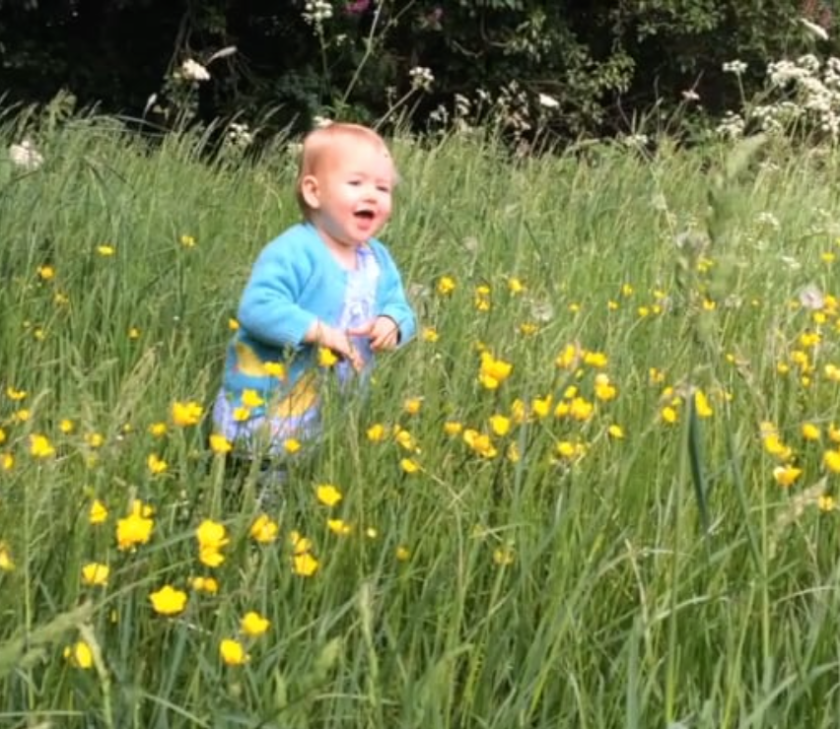
Ariadne (above) lies at the heart of Letters to Ariadne

St Mary Magdalen’s Home Movies
Drawing on over a dozen films, St Mary Magdalen’s Home Movies demonstrates the way in which Magdalen College, Oxford, has repeatedly been used by filmmakers in a strikingly patterned way.

Across nearly every film set or shot at Magdalen, the college’s front-facing tower has repeatedly been represented as a space associated with heterosexuality, coloniality and the regulation of time, while the college’s rear New Buildings and, more particularly, its deer park, have been depicted as one or a combination of female, postcolonial and in particular queer.

The aim of this essay-film, however, is not simply to demonstrate an esoteric pattern exclusive to the analysis of an equally exclusive place. Rather, it is to suggest that there is a ‘sexuality of space’ that both is expressed by and which expresses places that regularly we see on film.

That is, beyond the case study given here, St Mary Magdalen’s Home Movies demonstrates a new way of looking at how particular locations are treated in cinema – while at the same time using the essay film form itself as a means of providing a ‘queer’ (back) entry both into film studies and, in this particular instance, into a space that is otherwise accessed only by a privileged few.

St Mary Magdalen’s Home Movies draws inspiration from a combination of films like Rock Hudson’s Home Movies (Mark Rappaport, USA, 1992) and Les dites cariatides/The So-Called Caryatids (Agnès Varda, France, 1984).

It features footage from a variety of films, including Scholastic England (James A FitzPatrick, USA, 1948), Accident (Joseph Losey, UK, 1967), Purab aur Paschim (Manoj Kumar, India, 1970), Summoned by Bells (Jonathan Stedall, UK, 1976), Howards End (James Ivory, UK/Japan/USA, 1992), Shadowlands (Richard Attenborough, UK, 1993), Robinson in Space (Patrick Keiller, UK, 1997), Wilde (Brian Gilbert, UK/Germany/Japan, 1997), The Mystic Masseur (Ismail Merchant, UK/India/USA, 2001), Blue Blood (Stevan Riley, UK, 2006), The History Boys (Nicholas Hytner, UK, 2006), Brideshead Revisited (Julian Jarrold, UK/Italy/Morocco, 2008) and Charlie Brooker’s Weekly Wipe (Charlie Brooker, UK, 2015).

The film was made with thanks to Rachel Dwyer, Christine Ferdinand, David Pattison, and Mr and Mrs 55, whose translation of ‘Koi Jab Tumhara Hriday Tod De’ is featured in the subtitles.

The film premiered at the 2016 Film-Philosophy Conference at the University of Edinburgh – and we hope that there will be screenings of both films at other venues soon!

Guerrilla Filmmaking Workshop at Fest Film Festival

Beg Steal Borrow News, Uncategorized

William Brown has given a workshop on ‘guerrilla’ filmmaking at the Fest Film Festival 2016 in Espinho, Portugal.

FEST

The workshop, which took place on 22 June, was keenly attended by some 50 filmmakers from different parts of the world.

William discussed his unorthodox approach to filmmaking, before talking the audience through the ways in which limitations and perceived ‘imperfections’ can in fact be the most vital and important aspects of filmmaking and the films that result.

William is also on the Jury at Fest for Documentary and Experimental Shorts.

In 2013, Fest screened Common Ground, which is described in the 2016 catalogue for Fest as a film that ’caused quite a sensation.’

William is also curating a screening of films by students at the University of Roehampton in Fest, which takes place at the Filmmakers’ Corner in the Centro Multimeios in Espinho on 24 June at 8pm. All are welcome!


Selfie screens in Skopje

Beg Steal Borrow News, Press and Blog Mentions, Screenings, Selfie, Uncategorized

Beg Steal Borrow’s Selfie has screened at Skopje’s Kino Kultura.

20160514_191307

Skopje’s Kino Kultura, a leading independent arts venue in Macedonia’s capital.

The screening took place on Saturday 14 May, playing as the second part of a double bill with Vladimir Najdovski’s experimental film, Phi (Macedonia, 2016).

20160514_192258

Kino Kultura’s wonderful big screen.

A wonderful and enthusiastic crowd turned out for the films, with discussion lasting into the night at a local hostelry.

20160514_204632

William Brown and ‘friends’ on the big screen at Kino Kultura.

Many thanks to Vladimir Najodvski and Veronika Kamchevska for helping to organise the screening, and in particular for subtitling Selfie – a mammoth task that truly is appreciated.

The screening also received some coverage in the local news and online, with journalist Svetlana Simonovska conducting an interview with William Brown for local website Dnevnik Online.

Selfie screening

Dnevnik Online coverage of the screening of Selfie in Skopje

Further online press coverage of the event has been collated here. If you read Macedonian, take a look!

Keep on the lookout for other forthcoming Beg Steal Borrow screenings. There are rumoured to be screenings of The New Hope in Berlin, Selfie in London, and perhaps even a screening in Curitiba, Brazil, in the autumn. And of course a forthcoming premiere of Circle/Line.


Benefit of Doubt’s Hannah Croft on Radio 4

Beg Steal Borrow News, En Attendant Godard, Friends of Beg Steal Borrow, The Benefit of Doubt, Uncategorized

Beg Steal Borrow reports with great pleasure the launch on Radio 4 of The Croft and Pearce Show.

The show is co-written by and stars Hannah Croft, the leading actress in Beg Steal Borrow’s forthcoming feature film, The Benefit of Doubt. Hannah also starred in Beg Steal Borrow’s debut film, En Attendant Godard.

Hannah is one half of comedy double act Croft and Pearce, who recently embarked on a nationwide tour with their latest material – as well as playing several dates in New York.

Evidently, we are super excited and proud to work with such successful and talented performers. And maybe one day our website will be as good as theirs!

The first episode, which aired on 9 March, is currently available here on BBC’s iPlayer.

Croft and Pearce

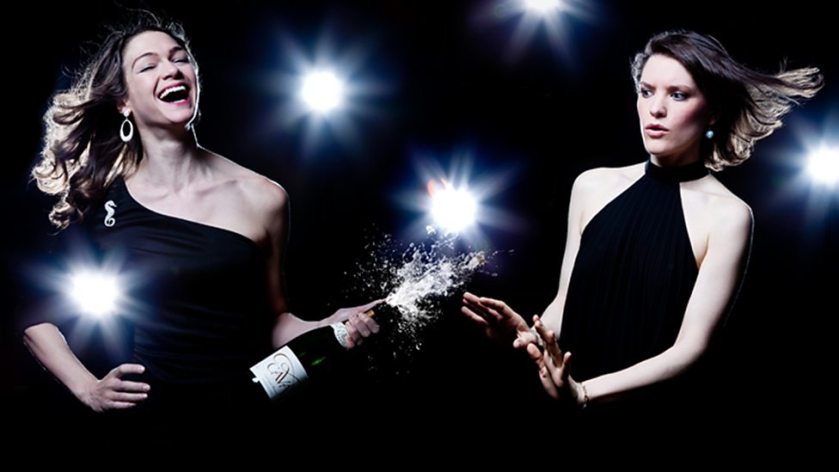
Hannah Croft (left) and Fiona Pearce of comedy duo Croft and Pearce.

The Benefit of Doubt tells the story of a young woman, Ariadne (Hannah), who arrives in Nice, France, after the end of a long-term relationship. There she befriends fellow visitors Nick (Nick Marwick) and Greg (Greg Rowe), who embark upon a promenade des anglais (et écossais) around the city so memorably depicted in Jean Vigo’s classic, A propos de Nice, which is a visual inspiration for the film.

Shot in October 2015, The Benefit of Doubt is currently in post-production. Keep your eyes peeled for more on the progress of that film as and when it comes together!

Meanwhile, Hannah’s first Beg Steal Borrow film, En Attendant Godard, will be screened at the University of Roehampton, London, on 18 March 2016 as part of the Film programme’s Film History & Criticism module.

Selfie screening in Skopje

Beg Steal Borrow News, En Attendant Godard, Screenings, Selfie, Uncategorized

Beg Steal Borrow is delighted to announce that Selfie will screen at Kino Kultura in Skopje, Macedonia, on 14 May 2016.

The screening, which has been organised through talented and local low-budget filmmaker Vladimir Najdovski, will take place at 8pm.

Director William Brown is hoping that he’ll be able to make it to the screening – depending on flight price and availability!

Kino Kultura is a centre for contemporary performing arts and independent culture run jointly run by LOKOMOTIVA and Theatre Navigator Cvetko.

Kino Kultura was a thriving cultural venue in the 2000s, having recently reopened in February 2016 after a 10-year absence. It has been described as ‘the symbol of urban life in Skopje’ – and we can think of no better venue for a film like Selfie.

Selfie Poster

The Selfie poster, designed by the talented Angela Faillace.

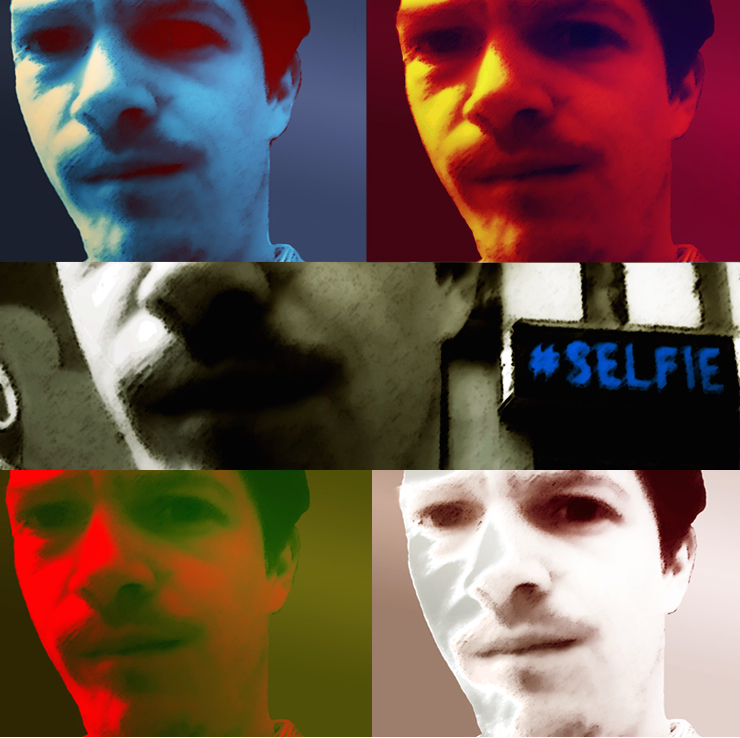
Selfie is an essay-film about selfie culture. It was shot between January and May 2014, and it is composed almost entirely of moving image selfies taken by director William Brown during that period.

The Kino Kultura event will follow soon after a screening of En Attendant Godard at the University of Roehampton on 18 March 2016, as part of the Film History & Criticism module taken by first-year students on the university’s Film course.

Circle/Line trailer goes live

Beg Steal Borrow News, Circle/Line, Trailers, Uncategorized

The trailer for Beg Steal Borrow’s forthcoming documentary, Circle/Line, has now gone live.

The trailer features snippets from some of the many interviews that William Brown and Tom Maine conducted between May and August 2015 outside stations on London Underground’s Circle Line.

In the film, interviewees are asked one simple (?!), initial question: are you happy? And from there, the conversations go in all manner of different directions… although in order to see those, you’ll have to wait until the finished film.

On that note, William is putting finishing touches to what he hopes will be at least a preliminary draft of the finished film. Keep your eyes open for a preview screening coming up soon…

Partially inspired by Edgar Morin and Jean Rouch’s Chronique d’un été/Chronicle of a Summer (France, 1961), Circle/Line offers a fascinating insight into the well-being of people in London today – from the homeless to the hopeful, from the ambitious to the activist, from task-driven Londoners to visiting tourists.

We hope that you look forward to seeing the finished film!


Scriptapalooza wants (to) Kiss and Make-Up

Beg Steal Borrow News, Festivals, Kiss and Make-Up, Screenplays, Uncategorized

William Brown’s screenplay, Kiss and Make-Up, has been accepted into the 2016 Scriptapalooza International Screenplay Competition.

Judges on the Scriptapalooza panel include representatives from Lawrence Bender Productions (Reservoir DogsPulp Fiction), Ambush Entertainment (The Squid and the Whale), Bender-Spink (A History of Violence), Ghost House Pictures (Evil Dead), Cross Creek Pictures (Black Mass), Aperture (San Andreas), Industry Entertainment (Requiem for a Dream) and many more.

Founded by Mark Andrushko and running since 1998, Scriptapalooza has featured in Entertainment WeeklyVarietyVanity Fair and The Hollywood Reporter, among others.

Over 90 scripts from Scriptapalooza have been optioned, with nearly 80 writers having been hired to write for film or television as a result of the competition. Furthermore, of participants in Scriptapalooza, 68 have gone on to have films released and/or moved into production, with nearly twice that number of writers also getting an agent or manager.

Needless to say, therefore, William is delighted to have had his script selected for the competition. Who knows what his chances are from here on in, but we shall see. Quarterfinalists are announced in late July, with the winners being announced in mid-August 2016.

Kiss and Make-Up is a screenplay about a man who disguises himself as different people in order to remain close to his ex-girlfriend. In October 2015, the script was selected as a finalist at the Oaxaca Film Festival.

scriptapalooza

Scriptapalooza

Circle/Line Filmmaker’s Diary #5

Beg Steal Borrow News, Circle/Line, Uncategorized

I have been meaning to write about the progress of Circle/Line for some time now.

In short, editing progresses not necessarily apace, but steadily.

There have been some frustrations along the way. First and foremost is that it appears that we have lost the video files for one interview conducted at High Street Kensington, all of the interviews that we conducted at Gloucester Road, and part of the long interview that we enjoyed at South Kensington (the very final interview that we conducted).

I guess these things happen – and we still have the sound files, so not all is lost; but this might mean that to include those interviews in, say, a finished film, would mean having the sound over other images, which might seem odd with regard to the look of the rest of the film.

Either way, though, having been through all of the footage it is clear that we have numerous wonderful interviews with numerous fascinating people – all talking about happiness in lots of different ways/approaching it from lots of different angles.

How to arrange it now becomes the big challenge.

I hope that the ‘film’ will in fact take several different shapes.

Firstly, I would like to edit together a film in the traditional sense, which includes footage from a range of the interviews conducted, although not necessarily all of them. I shall return to this shortly below.

Secondly, however, I hope also to create a website with all of the interviews (at least in part) uploaded – in 27 instalments, with one shorter film for each stop on the Circle/Line.

This not only will provide a space for visitors to browse far more of the footage than I can ‘reasonably’ include in a single film (unless watching six and a half hour films is your thing), but I would also like to make the footage available for download, so that visitors can then use the footage potentially to edit a completely different film to the one that I put together.

Finally, more ambitiously and more unlikely, I’d love to find a space where I could mount 27 screens, one for each station, and then allow visitors to come and browse the films at their leisure – for as long or as little as they would like, with each monitor (as per the website) screening footage from that particular station.

Obviously, a yellow theme as per the Circle Line’s appearance on the standard London Tube map, perhaps with a ‘yellow brick path’ around the space, might also be good.

Now, I am editing both the 27 short films and the feature film simultaneously – and what is quickly apparent is that it is very tough to know what to include and what to exclude, in the feature film at least.

It is clear that various themes emerge over and over again: the weather, sport, comparisons between London and other cities – both in the UK and abroad, and so on. I shan’t be able to include all of these, and it becomes clear to me that I am editing a more ‘political’ film, in which issues like the cost of living, work, religion, housing problems and other issues are explored, than I am necessarily editing a ‘feel good’ film (although I hope that the film conveys a lot of the optimism of the people that we interviewed).

Tom Maine – with his customary elegance and sensitivity – has captured absolutely beautiful portraits of the people whom we have interviewed, and so I generally feel happy with the look of the film and in a sense edit more to what people say.

However, sometimes one also edits not only because of what the interviewee does in terms of gesture or facial expression, but sometimes one also edits because of chance events that occur in the background.

I am still undecided as to whether it will make the final cut, but Tom has done shots for example through a taxi that pulled up between him and me/an interviewee at Cannon Street – and which look absolutely fantastic.

In addition, small things like a moving crane also can provide visual attractions that do not necessarily belong to the interview. The vertical framing does, in my humble opinion, work very well – and so the point is that while Circle/Line is a vox pop film, in that it features people talking, it is also – I believe – a very visual film.

Indeed, we set out to create a portrait of London – or at least of London’s Circle Line, the people that pass through and/or inhabit it, and a sense of the relationship between the two by staging the interviews in the street, near public transport, and with an emphasis on the vertical in order to see the human figure in relation to the giant buildings that surround her.

I hope that others consider the film to be successful in presenting not just a series of portraits of people interviewed in London, therefore, but also in many respects a portrait of the city. In the spirit of Jean Rouch and Edgar Morin’s film from which Circle/Line draws inspiration, I hope also that the film is a ‘chronicle of the summer’ of 2015 in one of the world’s most vibrant cities.

The next time I post, I hope that it will be to announce that a cut of the film is ready. But everything continues enjoyably and hopefully with the result of producing a watchable and engaging piece of work.

Below are some stills – from interviews at (clockwise, starting top left) Kings Cross, Liverpool Street, Embankment, Edgware Road, Notting Hill and Bayswater.

And also keep an eye out for a trailer and a poster somewhere in the pipeline, too!

Ur screened in China

Beg Steal Borrow News, Press and Blog Mentions, Screenings, Uncategorized, Ur: The End of Civilization in 90 Tableaux

We are pleased to report that Ur: The End of Civilization in 90 Tableaux enjoyed a screening at the University of Nottingham Ningbo, China (UNNC).

The screening took place on 17 December 2015, and was attended by an enthusiastic gathering of UNNC staff and students alike, with a Q&A led by Dr David H. Fleming.

Director William Brown also led a couple of masterclasses in micro-budget ‘guerrilla’ filmmaking while at UNNC.

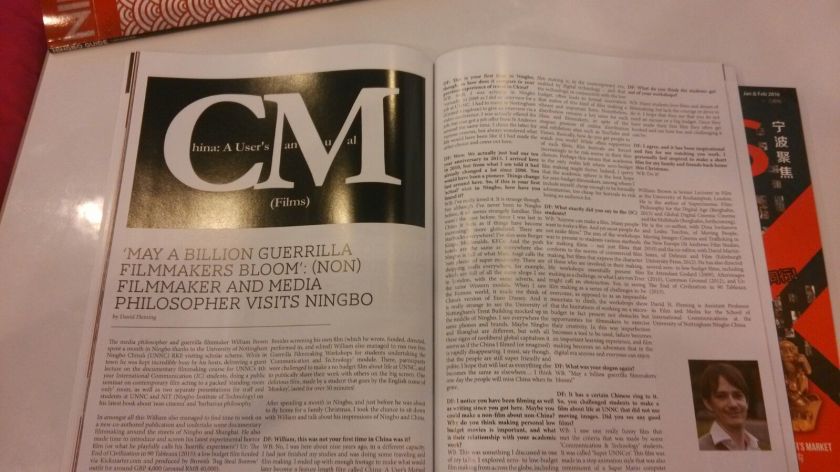
His visit received coverage in Ningbo Guide, a local English-language cultural journal.

We hope to be able to announce more screenings of Ur and other Beg Steal Borrow films in the coming months.

IMG_7732

William Brown’s visit to China, which included a screening of Ur, was covered in local journal, Ningbo Guide.


Media, mud and the life of matter

Blogpost, Uncategorized

I am feeling a bit deflated. So I decided to write something. This is the result. It owes much to David H. Fleming, with whom I am working on some of these ideas for the purposes of academic publishing to be developed in the (un)foreseeable future. And aspects of it were inspired by papers by Robert Burgoyne, Agnieszka Piotrowska and Eileen Rositzka at the Society for Cinema and Media Studies (SCMS) Conference in Montreal in 2015. They very kindly asked me to act as a respondent to their panel on drones – and to their bewilderment, I responded by talking about shoes.

At the beginning of Gadjo dilo/The Crazy Stranger (Tony Gatlif, Romania/France, 1997), Stéphane (Romain Duris) is walking along a snow- and ice-covered road somewhere in Transylvania. He is lost, and he stops to survey the landscape, stamping his feet and blowing the warm air of his lungs on to his hands. The sequence always make me think about cold feet: Stéphane’s feet must be freezing.

This in turn typically makes me think about shoes. What are shoes?

Barefoot, humans can walk across many but not all terrains. Some will be too hot for bare feet (desert sands), while others will be too cold (Transylvania in winter; the French chaussure keeps the foot hot), while others still might feature rocks too jagged for walking (as anyone who has danced “ooh ah” across a shingle beach will know).

The shoe, then, is a medium that allows humans to cover different terrains, thereby modifying the way in which the human interacts with the Earth, giving to humanity the means by which they can expand their presence both across and into new worlds.

But shoe also separates humans from the world, depriving them of direct contact, even if, as per Stéphane’s freezing feet in Gadjo dilo, the shoe is not a perfect tool for keeping nature out.

After the shoe expanded the possibilities for humans to travel came various other technologies that function as a medium between humans and Earth.

A history of these media might chart how, by and large, humanity’s ability to travel further and faster across Earth has involved ever greater amounts of separation of man from Earth: the shoe raises humanity an inch or so higher, the wheel several inches/a few feet, propellers and jet engines thousands of feet, the space shuttle out of Earth’s orbit.

In some senses, then, the spread of humanity and their ability to see more of this and other planets/moons is linked to an ever-greater distance between man and Earth.

This distance is not just spatial (inches/feet/extra-orbital), but it can also be temporal. Systems of representation such as painting, photography and film, for example, can create a temporal distance (I see records of older times).

What is more, with television, there is minimal temporal distance, but an almost absolute conquest of spatial distance: I am in London, but I can see what is happening in Sydney in effect right now.

Media allow for a renewed understanding of the world (they make for a new world), while at the same time distancing us from a direct relationship with that world.

That new world of humans and their technology/media is an integral part of what we might call the anthropocene – the period in the planet’s history during which humans have had the greatest influence in shaping the world (in refashioning it anew).

For, media like shoes do not only help us to walk over a greater variety of the Earth’s surface-types, but humans also refashion the surface of the Earth with things like concrete in order to make that world more cross-able. The road and the pavement are in some senses the making-shoe of the planet.

And if the planet is, as I am suggesting, ‘made shoe,’ then in some senses the medium – something that was created at a specific point in history – is naturalised, or made to seem timeless. By this I mean to say that we begin not to see that the road and the pavement are human creations, but simply part of the Earth that we live with.

Why did a human create shoes? Clearly, we cannot know a (pun intended) concrete answer to this.

(The intention of the pun is to reveal that we use metaphorical terms like ‘concrete’ – which we know to be a substance that is man-made and, in my argument, part of the shoe-ification of the planet – in order to define whether an answer is good or not, with goodness now being measured by the man-made as opposed to by the natural; we conversely define muddy answers as bad ones. The point being that we use the language of the man-made [concrete] to justify human thoughts and actions, and we use the language of nature [muddy] to delegitimise nature – and in this sense we create not natural but self-reinforcing and quite abstract logics regarding how we understand the world/what we perceive the world to be. In short, concrete/man-made = good; muddy/natural = bad.)

To return. Even if we do not know its precise origins, it is quite possible (I should say that it is quite probable) that the shoe was invented because humans did not simply want to travel, but because they had to. They were either under threat from an outside force or from each other, did not have enough resources in their location at the time, or indeed found that their environment was changing without them even moving, such that they had to invent the shoe in order to better their chances of survival.

Now, I am here linking the shoe to human survival, which would mean that in a basic sense the shoe is a ‘good thing.’ But I also wish to suggest that this story of the shoe and the separation from Earth that it entails (even if the French also term a shoe a soulier, or an ‘under-link‘) sparks, via that very separation, a sense in which the Earth is not just a space with which we exist, but a space that is a malleable plaything that we can mould. Not only do we wears shoes, but via concrete we can turn the whole planet into a shoe. This is not just survival of a planet, therefore, but it is also subjugation thereof.

The subjugation of the planet to humanity leads to a logic that whenever the planet is unruly and does not obey our desires then it is being bad, which in turn makes us believe that the planet is evil, or nasty, or cruel – thus reinforcing our sense of separation from it, since it is in opposition to us, as opposed to something with which we live (and die).

The subjugation of the planet to humanity – the use of the planet not as a space with which we live but as a space that we mould (‘make shoe’) for our own purposes – is what I would call the birth of exploitation (we do not co-exist with the world, we exploit it), and thus the birth of what I would call capitalism, in that capitalism is the institution and then the naturalisation of exploitation, such that exploitation seems right, good and what humans should do, and when nature goes against human wishes, it is bad, evil and cruel.

If the subjugation of nature is good, and if nature’s lack of conformity to subjugation is bad, then we can see here how our understanding of nature has been denatured, and how processes of exploitation/subjugation have become naturalised (exploitation is what we understand to be natural, as opposed to nature itself).

If the logic of exploitation for human benefit is allowed to stand as my definition of capitalism, then capitalism is the institution and the naturalisation of media – of things that separate us from the world, such that we ‘better’ can exploit the world.

In effect, I am suggesting that capitalism entails a logic of separation, and that this separation is legitimised because of a perceived improvement of life (we survive longer), which in turn comes to justify an improvement of life at the expense of the planet.

We know that if we destroy the planet, then there can be no life, be that life good or bad. And yet we persist in our pursuit of ‘improving’ life, even though really it sews the seeds of the end of (our) life.

If capitalism and media are, by this reckoning, coterminous (even though it is in the interests of both, since they are predicated on a logic of separation, for humans to believe that they are not/that they are separate), then the multiplication of media is also the proliferation of capital.

How to make money? Set up a wall in space, thus creating two spaces, and then charge people to walk through the gate that in principle connects them, but which in reality is separating them. Or better still, get them working for as little as possible under the false promise that with enough work, they’ll get from the one space to the other, but then in fact ensure that they can never get from one space to the other, thereby ensuring that they continue working.

(The Church is a self-proclaimed medium between man and God [whatever that is], charging humans in both spiritual and economic terms in order to regulate a relationship that, if I may put it in an oblique way, is in fact one [there is no god; or there is God but our relationship with Him {sic.} is direct; God is already here, but the Church cows us into believing that God is there.)

Now, I am going in some respects to flip all that precedes in this blog post, for which apologies in advance if this is irritating (I doubt you’ll have read this far if it is, though).

It is not that shoes and walls are not real; they are real enough, especially because those who tell us that they exist convince many people not only that they do exist, but also that they must exist (because nature is cruel; because other men are cruel; the shoe and the wall thus are naturalised, replacing a nature that sure enough has ‘barriers’ – I cannot walk barefoot on ice or desert sands for very long, and I certainly cannot walk on water – but these ‘barriers’ in nature are barriers for the human and not necessarily barriers at all from nature’s own perspective; nature sees itself as one – and a human in tune with, as opposed to seeking to exploit, nature thus perhaps also can ‘walk on water’).

However, if from nature’s perspective the first and the second space are not separated, but in fact part of a single space (desert and glacier roll into each other), then the wall that keeps spaces separate is in some respects illusory – it is a human invention. That is, where capital and media separate, nature itself is interlinked, one, or entangled.

(‘But walls keep out the cold. We’d have all died without walls.’ This I imagine to be a normal response here. To which I might reply: yes. And shoes and clothes and cardboard boxes also keep humans warm, especially in climates where it is not naturally warm enough for humans to exist as is. Technology keeps humans alive, in some respects. It is not that technology is bad for humans; I am interested in thinking through what technology does in addition to helping humans, and in working out what that might mean, or how we can think about it.)

If nature is one, and if humans are natural, then we can extrapolate that nature and humanity, including those aspects of humanity that separate, are one. In effect, capitalism is in some respects an illusion, in that the world is not simply a backdrop for but it also plays an active role in our existence. But if humans are not separate from nature, then even in our claims that humans are separate from nature, nature must still be at work.

The aim here is not to say that capitalism, media and so on are natural in the sense that it is fine, or even good, to exploit the planet. Perhaps one of the reasons why humans will exploit the planet until their own deaths is because the planet and humans realise that this is the best/only entangled way for the planet to rid itself of humans in such a way that their belief in separation is not legitimised but exposed precisely as erroneous.

That is, if humans are killing the planet and thus themselves, humans persist in this process in spite of knowing that they are doing it because they are indeed not separate from nature, but with nature. In effect there is no escaping nature: either humans survive by working with as opposed to against nature; or humans die out because they cannot get around the fact that they are with nature, even if they think that they are not. Nature is inescapable.

But, and here we go a bit crazy, if humans and their technology continually do try to escape nature, but if that escape is impossible, then nature is playing as great a role in what humans do as humans themselves are (contrary to the human belief that they themselves are responsible for everything that they do).

If nature is playing as great a role in the creation of the shoe as humans, then in some respects we might read the creation of the shoe as the will of nature to become shoe.

Again, the point here is not to say that it’s great and ‘correct’ for humans have ‘shoeified’ the world/made the world shoe. Rather, it is to say the matter that is the shoe has organised itself as much as humans have organised it.

That is, rather than the human being wholly responsible for making the shoe, matter has in fact partially used humans in order to become shoe. It is not that humans are uniquely exploiting nature; nature is in some respects also exploiting them.

All technologies or media, I wish to suggest, pursue their own propagation much the same way that humans do. In this way, media – matter as a whole, even mud – is ‘alive,’ thinking about ways symbiotically of working with humans.

Just as humans come from water and mud, so, too, is the wall an expression of mud’s own will to become organised. And as mountains rise and fall depending on the shuffles of the planet’s tectonic plates, so, too, do walls and buildings rise up and fall, as matter wills itself via its human partners into various shapes, changing, shifting, matter perpetuating itself into new forms in a kind of breathing of the planet.

And as humans come to encase themselves in their technology – hiding behind four walls, wrapped up in blankets and clothes, cocooned away from that supposedly cruel nature – what we can really see is matter itself taking the form that is necessary in order to reach around and into the human in order to bring the human back down into the mud from which it originally sprang.

That is the thought that I had today and the expression of which – itself an expression of my own impending death as technology reaches into me and slowly turns me back into mud – is a consolation (that which I got wrong today/yesterday is simply the will of the universe, and this mini-essay is simply the expression of the power of the universe and my inevitable death. That’s a bit of an oblique ending, but I shall leave it at that.)