Blue Ruin (Jeremy Saulnier, USA, 2013)

American cinema, Blogpost, Film reviews

This is a written version of an introduction that I shall be doing this evening for a screening of Blue Ruin at the Ritzy Picturehouse in Brixton, London.

The blog's author introduces Blue Ruin at the Ritzy on 2 May 2014. Photo courtesy of Matt @ The Ritzy!

The blog’s author introduces Blue Ruin at the Ritzy on 2 May 2014. Photo courtesy of Matt @ The Ritzy!

The film tells the story of Dwight (Macon Blair), a seemingly homeless guy living in a car on an anonymous beach somewhere (in Delaware – where else?). A police woman (Sidné Anderson) tells him that a man has been released from prison – and this compels Dwight to drive across the States to his hometown in Virginia to find and kill this man.

This man, Wade Cleland Jr, allegedly killed Dwight’s parents. Dwight therefore murders Wade as an act of revenge, and drives away in the stretched limo that his family has hired for the day to see him out of jail.

However, Dwight soon realises that in the limo with him is William (David W Thompson), Wade’s youngest brother. Dwight lets William go – but only to realise that of course the Clelands now know who killed Wade.

As a result, Dwight reunites with his estranged sister, Sam (Amy Hargreaves), in order to protect her from the Clelands – who of course do come in search of their revenge, too.

And so begins a cycle of revenge that culminates in the film’s final, bloody and brutal showdown at the Cleland household.

Blue Ruin has some strikingly beautiful moments in it – Dwight going through trash cans next to a seaside amusement park and Dwight’s near-dead sedan driving down the mist-filled roads of the USA are two that stick out in particular.

The latter image is in particular haunting – the mist conveying a sense of uncertainty regarding the future, adding to the film’s ominous, suspenseful tone, while also featuring Dwight’s beat up sedan which is of course blue in colour, and thus is perhaps the ‘blue ruin’ that is the film’s title.

In this sense, the film takes on a mythical quality: the once-vibrant dream of the road movie – open space and adventure – is now foggy, the adventure shabby, the future not wide open like the road, but murky and threatening. If the West once found revenge an almost thrilling prospect, it is now tired, haunted, exhausted and dulled. Everything falls into ruin; perhaps Saulnier’s remarkable film is about the fall into ruin of the USA itself.

But what has brought about this ruin? Well, it would seem in part that the desire for revenge, or the violent nature of society, has become so naturalised that even a mild-mannered and middle class man like Dwight will become sucked into it.

And how has revenge and violence become so ingrained in an American society such that it is a/the knee-jerk response to all problems? Well, at least in part through the movies.

Blue Ruin has earned comparisons to the films of the Coen Brothers, and in some senses these are justified, particularly films like Blood Simple (Joel Coen, USA, 1984), Fargo (Joel Coen, USA/UK, 1996) and No Country for Old Men (Joel and Ethan Coen, USA, 2007). With these films Blue Ruin shares a fascination for often quite unexpected violence, delivered in a deadpan, quite detached fashion.

(Note the way that the shots in Blue Ruin just seem a little bit longer than in a conventional Hollywood film, giving a sense of space and how characters are not necessarily agents who conquer space, but who perhaps are smaller than that space, quite small in comparison – something director Saulnier no doubt acquired through his collaborations with Matthew Porterfield, for whom he worked as a cinematographer on several features, including the acclaimed Putty Hill (USA, 2010)).

However, I am going to compare Blue Ruin to another Coens film, their cult classic The Big Lebowski (Joel Coen, USA/UK, 1998). There is a scene in that film in which Jeffrey Lebowski, also known as the Dude (Jeff Bridges) finds himself in the house of pornographer Jacky Treehorn (Ben Gazzara). The Dude sees Treehorn scribbling on a notepad, before Treehorn takes the piece of paper and pockets it. Treehorn then leaves the Dude, who scrambles over to the notepad, takes out a pencil, and starts to shade over the topmost piece of paper – in a bid to trace out what information Treehorn will have left.

What inspires the Dude to do this is of course Alfred Hitchcock’s classic film, North by Northwest (USA, 1959), in which Cary Grant’s Roger Thornhill does exactly the same thing in trying to find the location of Eve Kendall (Eva Marie Saint).

But where Thornhill is successful, the Dude only uncovers a picture of a man with a massive cock drawn by the rather puerile Treehorn.

The reason that I mention this moment is because here we have encapsulated what is perhaps the guiding genius of the Coens: the fact that everyone – at least at times – believes that they are in a movie, and so they adopt behaviour that they have seen at the movies, here the Dude imitating Thornhill, only to find that of course, they are not in the movie that they thought they were – and that reality always has in store for us something different from what we were expecting.

What is true of the Coens is in this respect perhaps also true of Saulnier’s remarkable debut film. Two key examples: when Dwight goes to stab a tyre on the limousine, and when Dwight takes a shot at Wade’s brother Teddy (Kevin Kolack) from all of two yards. Each moment in which Dwight assumes that he can carry out an action seen many times before, but never performed by himself, Dwight comes quickly undone. He has been fooled into thinking cinematically, into thinking, in particular, that actions are easy to carry out and can be done without practise and without work. This is the myth of the movies written large: that we can achieve anything. And it is this myth that Blue Ruin busts, thereby making it an exceptional film.

The body, its imperfections and inadequacies, is what looms large, then. For while violence is so easy and so beautiful in so many mainstream Hollywood movies, such that we aspire to be violent as Dwight pursues revenge here, the body always comes back to remind us that we are inept, malcoordinated and incapable. Rather than being lighter than air – the superhero myth – Dwight is human, all too human – as is signalled by the sheer physical pain he endures through the film, and through all of the fluids that ooze out of his body, which is that of a most unlikely hero.

(Macon Blair’s performance is, by the way, excellent.)

The frailty of the body, then, when compared to its desires (it wants to run, fly, kill; instead it trips, falls and tears open), is the source of the film’s dark, dark humour. And also the source of the film’s suspense: for, will Dwight make it out alive of this world that is far more real and violent than he could have imagined? In this sense, the film’s relative slowness is also its great power: Dwight will have no easy victory, if victory he will have at all. If he is to get out of this alive, it will a long, slow and difficult trudge.

If Blue Ruin is, then, a critique of what I am terming cinematic thinking, the naturalisation of violence and the desire for revenge as a result of the myths peddled by the movies, then it is a film that is, paradoxically, deeply cinematic as a result. Perhaps all art, then, must reflect upon the conditions of its own making in certain respects.

Furthermore, the difficulty and, ultimately, the pointlessness of revenge lends to the film a political edge. For in a world in which we read about the need for payback, and in which violence is indeed a common part of our globalised existence, Blue Ruin suggests that in the real world, revenge is deeply unsatisfying, breeding only more violence that in the end ruins families rather than bringing them together.

Salvo (Fabio Grassadonia and Antonio Piazza, Italy/France, 2013)

Blogpost, European cinema, Film education, Film reviews, Italian Cinema, Transnational Cinema, Uncategorized

The below is a written version of an introduction that I shall make for Salvo at the Ritzy Picturehouse in Brixton this evening (Tuesday 29 April 2014). Come along if you can – though you may also have to suffer me putting in a gratuitous plug for my film, Common Ground (William Brown, UK, 2012), which plays at the American Online Film Awards Spring Showcase from 1 May 2014)!

And so…


Salvo is the debut feature of screenwriters Fabio Grassadonia and Antonio Piazza. It tells the story of a hitman, the titular Salvo (Saleh Bakri), who starts out getting into a gunfight. He chases down his assailants and then goes to the house of Enzo Puleo (Luigi Lo Cascio), the man who organised the hit. There he meets Rita (Sara Serraiocco), a blind woman and Enzo’s sister, who suddenly can see at the moment of her encounter with Salvo.

Subsequent to this encounter, Salvo and Rita go on the run – and must evade the mob, which surely will hunt them down in a quest to find out what has happened to them.

In certain respects, then, the film tells the story of a miracle. But rather than being a miracle couched in a sense of religiosity, we have the miracle functioning in Salvo as something of an allegory.

For, the encounter between Salvo and Rita becomes some sort of primordial event, a transitional moment after which nothing is the same – and this event is based upon the encounter between two people who mutually change.

In short, then, the film is about how love can open our eyes – it can take away our blindness – and it can put us in touch with other people. Indeed, if Jean-Paul Sartre once said that hell is other people, Grassadonia and Piazza might counter this by saying that love, too, is other people, constituted in and by a recognition of other people.

Thus Rita’s literal blindness is accompanied by what the directors call Salvo’s ‘moral blindness’. Indeed, in an interview, Grassadonia explains it thus:

The topic of blindness is important. We come from Sicily, we grew up there, and our experience is that you live surrounded by voluntarily blind people. We told this story, this meeting by two characters affected by two different kinds of blindness: the moral blindness of the mafia killer, who is nothing more than a killing machine at the beginning, and this blind girl, physically blind, but not innocent. She knows exactly her role in that kind of world.

It is in encountering Rita that Salvo can see – and the film works hard stylistically to convey the encounter to us, mainly as a result of its absence of close ups and its absence of faces for the first section of the film, the section that culminates in the miracle.

For, we do not see Salvo’s face until the miracle – if anything we see only disembodied eyes surrounded by darkness. We can surmise two things from this.

Firstly, we can surmise that in a world without faces, people do not exist as humans but as objects that can be killed and discarded without a moral sense of guilt.

Secondly, we can surmise that in having no empathy, it is not that Salvo sees no faces, it is that he himself is also faceless. In encountering Rita, Salvo not only sees her face, but she also sees his, and thus he begins to take on a face.

In other words, identity – Salvo as a recognisable human being – is not something born solipsistically in a body and mind detached from the rest of the world; identity is something that exists only in relation to the world, only with the world. We exist only with other people. Subjectivity is intersubjective.

If the film makes this point, the point does not exist in a bubble. That is, while it it may simply just be that humans can only exist as subjects if there is intersubjectivity, nonetheless the film suggests that we live in a world that lacks recognition of others, a world that lacks empathy, and which is thus a world that encourages what I shall term solipsistic.

So when I say that the point does not exist in a bubble, what I am really asking is: what is this world in which we are encouraged to be solipsistic, blind to each other, rather than with each other?

In interviews, Grassadonia and Piazza talks extensively about how they made the film in their native Sicily, Palermo more specifically. Indeed, in the quotation above, they talk about ‘voluntarily blind people’ there – who in effect turn a blind eye to the mafia, thus accepting its way of life, even if they are not directly involved in it.

In one interview with the ICA, the directors state this clearly:

We are both from Palermo and we naturally chose to set our story in our home town. Palermo is a world where freedom is hazardous. A world that feels the need for a tyrant, an oppressor, is a totally unacceptable state of affairs but somehow understandable. What’s more mysterious is the presence of a silent majority that wishes to be oppressed, that needs to live in a “state of exception”, a state of constant emergency, where violence and oppression are the only laws. A situation where an unencumbered meeting between two human beings is inconceivable.

What is noteworthy here is the use of the term ‘state of exception’ – a concept developed and used at length by Italian philosopher Giorgio Agamben.

For Agamben, the ‘state of exception’ is the generalised totalitarianism of the present age. That is, during exceptional times, a state might give itself increased power in order to keep everyone safe. However, what we increasingly have these days is the way in which all times are presented to us as somehow ‘exceptional’ – and so we live under greater levels of control at all times, under a generalised ‘state of exception’ (a key example for Agamben is the War on Terror in the aftermath of the plane crashes of 11 September 2001).

In suggesting that Salvo reflects upon the ‘state of exception’ that is the mafioso rule of Palermo, Grassadonia and Piazza in fact spread the relevance of their film, such that it might well be speaking not just of Sicily, but perhaps of an Italy that has recently been under the control of a media-magnate. Perhaps even to a world in general, in which political and economic crisis are presented to us as the master narratives that keep us all in our place – and scared in our homes – trusting of no one else, in competition with everyone else.

Not seeing each other as human beings, as subjects, but as threats, opportunities and objects.

This wider relevance of the film is signalled aesthetically, too. It is hard not to read the opening sequences, full of bloodshed, and in which we follow Salvo as he chases down his would-be assassins, as borrowing from computer games, in particular the behind-the-head shot familiar from shooter games (and complete with the odd silences that moving through space can involve in computer games).

In other words, the film suggests via this reference to computer games that its message is relevant to the whole of the contemporary, media-saturated and digital world. That we no longer look at each other – but instead pursue a faceless world characterised by affectless, or unemotional, violence.

Salvo does not just make references to a computer game, however. It also makes reference to other films and/or genres. The filmmakers themselves discuss how their film pays homage to the likes of Taiwanese filmmaker Tsai Ming-liang, and that it also draws inspiration from Jean-Pierre Melville’s classic, Le Samouraï (France/Italy, 1967) – while its use of a miracle, its sparse dialogue and its interest in procedure also seem to recall the cinema of Robert Bresson (for me at least).

In other words, while the film is about how we are with each other in the world, even at a time when we are encouraged to feel that we not together, that to create a bond with another person is ‘inconceivable’, the film itself is also making bonds with other films; films only exist in an inter-cinematic way, too, it would seem.

And yet, for all of Salvo‘s precursors and reference points, the film had a hard time getting made.

After writing the 2004 comedy Ogni volta che ne te vai/Every Time You Go (Davide Cocchi, Italy, 2004) and the TV movie, Gli Occhi dell’amore/The Eyes of Love (Giulio Base, Italy, 2005), the latter of which suggests an ongoing interest in eyes and looking, Grassadonia and Piazza wrote and directed Rita (Italy, 2009), a short film that in some respects is the basis for Salvo (it is about a blind woman).

It then took them four years to get Salvo off the ground, making the film the product of a five-year process. Piazza recounts his experience thus:

Basically if you’re a first time director and you don’t arrive with the conventional comedy made for television, it’s extremely difficult, if not impossible, to finance a film. In our case, the Italian press was talking about the film because of the support of French television but not the support of the Italian television

In other words, the aesthetics of Salvo, a cinephile’s film that is in part about films, reflects the production history of the film, in that a film about two characters who come to understand the existence of themselves through finally seeing others, is a film that was only made because of a transnational coproduction (with the French) – most Italian producers being too risk-averse, too caught up in the solipsism of contemporary capital, to want to tell a story that reaches out in the way that this one does.

The generalised ‘state of exception,’ then, is also present in the risk-averse nature of the film industry – and it is only in collaborating with strangers, perhaps, that films of this kind can get made. Perhaps it was a concession to commercial interests that the film features prominently on its soundtrack the number one Italian chart hit, ‘Arriverà‘, by Modà, featuring Emma Marrone.

Perhaps this even helps to account for the casting of the film. Salvo is played by Palestinian actor Saleh Bakri, the star of Elia Suleiman’s film The Time That Remains (UK/Italy/Belgium/France, 2009), while a couple of well-known actors have cameons, including Luigi Lo Cascio as Rita’s brother, Enzo. Lo Cascio won a Best Actor Donatello (Italian Oscar) in 2001 for I Cento Passi/One Hundred Steps (Marco Tullio Giordana, Italy, 2000), was nominated for the same award two years later for La meglio gioventù/The Best of Youth (Marco Tullio Giordana, Italy, 2003), and was nominated for Best Director in 2013 for La città ideale/The Ideal City (Italy, 2012).

Leading actress Sara Serraiocco, meanwhile, stars in only her first movie. Perhaps this is emblematic of her character, that she is revealed to the world as the world is revealed to her. But then her character is perhaps a bit more canny than this – she is counting mafia money when we first meet her. That is, while Salvo may romanticise her, the film arguably does not, with the ‘miracle’ potentially being in Salvo’s head – it is an allegory, not necessarily a miracle to be believed in a literal sense – with the cheesiness of ‘Arriverà’ as the central musical motif also suggesting as much.

The directors quote great Italian writer Italo Calvino in relation to the film:

In the inferno of the living, where we live every day, that we form by being together, there are two ways to escape suffering it. The first is easy for many: accept the inferno and become such a part of it that you can no longer see it. The second is risky and demands constant vigilance and apprehension: seek and learn to recognize who and what, in the midst of inferno, are not inferno, then make them endure, give them space.

One can argue that the film is not without complications; Salvo and Rita do not necessarily escape the cycle of violence and it is perhaps only by perpetuating it that they stand a chance of surviving. Indeed, as Salvo’s name suggests, not only might he ‘save’ Rita, but he might also be a force for the state of exception, in that ‘salvo’ also means ‘except’ (in the sense of ‘save for’ – as in, ‘I would have been killed, save for a hitman coming to my rescue’).

Nonetheless, as a film Salvo is not inferno – and so we must give it space and thus help it to endure in a world of rapidly recycled and endlessly forgettable films.

Tian zhu ding/A Touch of Sin (Jia Zhangke, China, 2013)

Blogpost, Chinese cinema, Film reviews

It has been a couple of months since I saw A Touch of Sin at a cinema in Paris (La Clef on rue Daubenton), and so my memory of the film is not necessarily fully accurate.

However, I wanted to get down some thoughts on the film ahead of the fantastic-looking Chinese Visual Festival that runs from 8-18 May in London, and which features a visit from director Jia Zhangke to discuss both his early short films and A Touch of Sin.

For, my plan is not to send out spoilers ahead of the film’s screening. Rather, it is to encourage people to attend the screening(s) – since A Touch of Sin is a remarkable film by an important director. And I wish to delineate the film’s importance, as well, perhaps, as its contradictions, in this post.

(I cannot, alas, make the screening – in fact I can only make one film during the whole Festival. Should any readers care to know, I shall be away to give a talk at the Cinemateket in Stockholm, Sweden, for the first part and on holiday/at a wedding in Spain, for the second part of the festival. Even though I have these treats in store, I am still envious of anyone who gets to hear Jia in conversation.)

So…

A Touch of Sin tells four stories, each based on true events, about contemporary China. It opens with a man on a motorbike, Zhousan (Baoqiang Wang), who is held up by a gang of young highwaymen. He kills them with a gun and then rides off – past Dahai (Jiang Wu), who sits astride his own bike next to an overturned tomato truck (it could be red apples).

We then stay with Dahai as he tries to arouse anger in his village against corrupt businessmen, especially an old friend who has become very rich (owning a private jet) while others continue to be poor. So angry does he become that he decides to take getting revenge into his own, soon-to-be-bloody hands…

The film then returns to Zhousan, who has come home for New Year to see his wife and child. He claims to be doing successful work during his migrations, but in fact leads a life of crime (as his early murder of the highwaymen makes clear – more murders follow).

A third section of the film sees a pretty receptionist at a sauna, Xiaoyu (Jia regular Zhao Tao), who is beaten up by the wife and friends of her lover (Jiayi Zhang), before being abused by two rich businessmen (one of whom is also played by Jia regular Hongwei Wang) who mistake her for a prostitute. This insult leads Xiaoyu to exact her revenge on the businessmen.

And, finally, a young factory worker named Xiaohui (Lanshan Luo) quits a job in a clothing factory after an accident sees him needing to pay compensation to one of his co-workers. He joins a friend at a factory in a different town, is found and beaten up by his former colleague who suffered the accident, and commits suicide.

The description of the film at last year’s Cannes Film Festival is as follows: ‘Four people, four different provinces. A reflection on contemporary China: that of an economic giant slowly being eroded by violence.’

While this description is in some senses accurate, I wonder that it is also a bit misleading. It suggests that violence is eroding China as an economic giant, when in fact the film is really about how in becoming an economic giant, China is becoming an increasingly violent place.

And although the violence that we see in this film is both startling and based on a set of true stories, the film also functions at an allegorical level: the major violence perpetrated in this film is by those Chinese citizens who have embraced the get-rich-quick ethos of what we in the West might term neo-liberal capitalism, and who, in adopting this ethos, concomitantly adopt an ethos whereby the rest of the world can go hang. Whereby violence, in the form of exploitation, is enacted on the rest of the world. Humans are deprived of their very humanity and instead are seen as commodities, as economic opportunities, and objects to be disposed of as one sees fit.

A Touch of Sin is vastly more violent than any of Jia’s films to date, even if those other films also chart the disenfranchisement of various members of Chinese society – right from first feature Xiao wu/Pick Pocket (Hong Kong/China, 1997) through to Er shi si cheng ji/24 City (China/Hong Kong/Japan, 2008), Jia’s last fiction feature.

I find this violence interesting for a couple of reasons. Firstly, I have written an essay – to be published in a book provisionally entitled Marxism and Film Activism, edited by Ewa Mazierska and Lars Kristensen – on the films Tropa de Elite/Elite Squad (José Padilha, Brazil, 2007) and Un homme qui crie/A Screaming Man (Mahamet-Saleh Haroun, France/Belgium/Chad, 2010).

In that essay, I argue that we are entering an era of renewed activism, one that in particular features violence as a response to the injustices of the world – and one in which standing by and observing is no longer justified.

For those who care to note the technical aspect of my essay, I make this argument using the language of Gilles Deleuze and his writings on cinema.

Deleuze argued that his concept of ‘time-image’ cinema featured ‘seers’ – characters who can only watch in the face of the world, and who do not decide to be agential heroes that do violence to the world, something we might characterise as the typical mythos of the American western.

I argue that while the ‘time-image’ might have been revolutionary in its time, perhaps a new ‘movement-image’ cinema of action is being adopted now as a means of resistance against the inequities of global, neo-liberal capitalism – as per the (admittedly problematic) violence of Elite Squad, and as per the critique of passivity in A Screaming Man.

I then use Marx to argue that we should not put time-image and movement-image cinema into a hierarchy; the time-image is often interpreted, in the modern context, as superior to the movement-image, which, in broad terms, we can equate as being the superiority – aesthetically if not commercially – of art house cinema to mainstream cinema (cinema that uses the fast-paced aesthetics of what David Bordwell would term ‘intensified continuity editing’).

To return to A Touch of Sin, I see the film’s violence as being Jia’s own expression of how we have perhaps gone through the time of/for passivity as a response to the intensified spread of neo-liberal capital, perhaps especially in mainland China. So maddening is the onslaught that accompanies it that we are looking at what the Invisible Committee would term a Coming Insurrection; an outbreak of violence so severe that it might bring neoliberal capital to its knees.

Perhaps it is worth noting that the move on Jia’s part is premeditated and deliberate. The film’s title is of course a reference to King Hu’s classic martial arts film, A Touch of Zen (Taiwan, 1971), which tells the story of an artist caught up in a struggle against Imperial conspiracy and domination. That film uses martial arts as a means of resistance against hegemony, with the martial being/becoming an art – with art always being a tool for resistance against domination (art is always political, and art for art’s sake is a bourgeois concept intended to nullify the political power of art). Perhaps Jia considers violence in a similar, contemporary fashion here.

But Jia’s film involves not just a reference to King Hu. Among its rich forebears must surely be included not the western, but the spaghetti western, especially the works of Sergio Leone, and/or a film like Django (Sergio Corbucci, Italy/Spain, 1966). As David Martin-Jones has cogently argued, these films also use violence as a means to express the disempowerment of Europe’s impoverished south, and as a means to try to empower themselves, but not by positing a wholly new, artistic cinema (as happened further north in Europe, for example), but by taking the tropes of a very Western genre, the western, and reworking them for their own ends (perhaps we can argue that the giallo does something similar with horror).

In this way, A Touch of Sin also is part of a tradition that takes tropes of the western in order to give expression to dissatisfaction with the ongoing drive towards global capitalist domination, a domination that historically was itself espoused in the Indian-destroying, nature-taming genre of the western itself.

(I argue in this book that Django Unchained (Quentin Tarantino, USA, 2012) might also be trying to do something similar – as might the overwhelming emphasis on revenge in contemporary cinema, with the recent Calvary (John Michael McDonagh, Ireland/UK, 2014), and in some senses, ahem, my own film, Common Ground (William Brown, UK, 2012), being (Christian-influenced?) considerations of how allowing that vengeful violence, of how standing up saying ‘perhaps it is right that you should attack me’ might in turn be a/the bourgeois-but-understanding response.)

The question then becomes, though: does Jia (do all of these films) express a solution to the problem, or only a means of perpetuating it? If (the spectacle of) violence is at the very soul of capitalism, then to give in to violence – even if in ‘only’ a film, albeit one based on a true story – might simply perpetuate the status quo rather than in fact challenging it…

I quote:

as Antonio Negri puts it, “antagonism is the motor of development of the system, the foundation of a continuous resurgence of antagonism each time that the project, the history of capital, progresses,” then perhaps it is only in an inventory of the failed efforts and strategies of human liberation that the forces of oppression can be identified and fought effectively.

This is from Jonathan Beller, quoting, as is clear, Antonio Negri.

Perhaps, then, the antagonism of A Touch of Sin only adds to the progress of capital. Vicious, thought-provoking and heartfelt as A Touch of Sin is, one wonders if Jia has succumbed to a (too-human?) desire for violence in order to endeavour properly to get out of the paradoxes and contradictions of capital – only to fail because antagonism is what capital wants. Indeed, it is not as if the cinema has not commodified violence since soon after its inception – as an early film like The Great Train Robbery (Edwin S. Porter, USA, 1903) makes clear.

The Rocket (Kim Mordaunt, Australia/Thailand/Laos, 2013)

Australian Cinema, Blogpost, Film education, Film reviews, Laotian Cinema, Uncategorized

I recently introduced The Rocket at the Ritzy Picturehouse in Brixton, London. The cinema has asked me to post my comments on the film online. While I was working from notes, and thus cannot reproduce fully what I said, this blog post nonetheless can convey some of my thoughts on the film.

So…

Set in Laos, The Rocket tells the story of Ahlo (Sittiphon Dissamoe), one of a pair of twins, but whose brother dies during childbirth. Ahlo is loved by his mother, Mali (Alice Keohavong), but twins are considered to be omens of bad luck according to local superstition. And since Ahlo’s brother died in childbirth, Ahlo must be a bringer of bad luck – or at least this is what his grandmother, Taitok (Bunsri Yindee), believes.

That Ahlo brings bad luck to the family is affirmed when the family is forced to migrate as a result of a dam being constructed in the region where they live. They are taken to a refugee camp, where their lives are affected by poverty. At the camp, Ahlo befriends fellow outsiders Kia (Loungnam Kaosainam) and her father Purple (Thep Phongam), who is obsessed with James Brown.

The family flees the camp, but endures more loss – affirming Ahlo’s status as the purveyor of bad luck, something that even Ahlo’s father, Toma (Sumrit Warin), begins to believe.

And so, in order to redeem himself, Ahlo decides to enter a rocket competition. This is a festival in which people build their own rockets and then fire them at the sky. Those rockets that fly highest, explode biggest and, if possible, which bring much-needed rain, will win a cash prize.

Ahlo enters, re-bonds with his father, and sets off a rocket that soars high, explodes mightily and forces the heavens to open. After tragedy, then, the film has a happy ending.

The Rocket is directed by Kim Mordaunt, a British-Australian who has lived extensively in Asia, and who has also taught filmmaking there.

Mordaunt has historically plied his trade most prominently as a documentary maker. Indeed, his earlier film, Bomb Harvest (Australia, 2007), has various similarities with The Rocket. Although the central character of that film is an Australian bomb disposal specialist, it nonetheless features Lao children who collect bombs to sell as scrap metal. This film no doubt informed The Rocket, since we also see Lao children playing around and working with unexploded bombs, including Ahlo.

The Rocket is Mordaunt’s first fiction feature, and it has won awards at the Berlin (Crystal Bear, Best First Feature, Amnesty International Film Prize), at the Sydney (Audience Award), and at the Tribeca (Best Film, Best Actor, Audience Award) Film Festivals.

Nonetheless, Mordaunt’s documentary sensibility remains in the film. This is made clear in the use of locations in the film (especially the stunning mountain scenery), but also, particularly, through the final rocket festival that is the film’s culminating point. Here, Mordaunt fuses documentary footage shot from an earlier, real rocket festival with footage shot at a recreation of that festival – and featuring his actors.

Furthermore, The Rocket has something of an ethnographic sensibility, charting rural Laotian life, including superstitions – as embodied in particular in Taitok and her belief that Ahlo is the bearer of bad luck.

Indeed, the clash of tradition with modernity is perhaps one of the key themes of the film, as I shall discuss presently.

According to Mordaunt, Laos is the most bombed nation on the planet, in part as a result of American bombing of the country during the so-called ‘Secret War.’ The ‘Secret War’ is another term for the Laotian Civil War that took place between 1953 and 1975, and which also involved those taking part in the Vietnam War. As a result, American and other forces dropped many bombs in/on Laos during this period.

Indeed, there are haunting scenes in The Rocket featuring unexploded bombs that have become an almost fixed part of the Laotian landscape – even 40 years after the end of the Secret War. The bombs, therefore, come to symbolise in the film both the precarious nature of life for the many people living in the Lao countryside (these devices could explode at any time, and lives can end suddenly, as the film shows us even from the outset with the death of Ahlo’s brother), but also the way in which Laos has perhaps been affected not by internal forces (how ‘civil’ was the Secret War?) but by external forces.

One senses, almost, that rural Laos might well continue to exist in a peaceful and bucolic fashion had it not been bombed into modernity. This forced entry into modernity continues today, but instead of bombs, the film shows to us the forced relocation of many Lao people as a result of dam construction (Mordaunt in interview reminds us that 60 million people have been relocated worldwide for dam construction – more than the entire population of the UK).

And, in an interview with the BFI, Mordaunt talks about how the film wants to reflect on Laos’ relationship with the wider world, suggesting how Australia plays a role in the dam-related relocations and the problem of robber barons (basically, people who bleed a country’s veins dry of its natural resources and get extremely rich in the process).

In Mordaunt’s own words: “There are a lot of cowboys about,” he says. “Our government is always saying we must relate to Asia. But the majority of that relationship is sheer economic opportunism. There are Australians making millions every year out of the place.”

In short, then, we see in The Rocket a Laos being forced into modernity by external factors that are not necessarily much to do with the country itself.

Nonetheless, the film does not simply suggest a romantic return to a pre-modern existence. Taitok’s superstitious belief that Ahlo means bad luck is ultimately proven wrong; Ahlo is not bad luck and, indeed, might be the bearer of good luck as he wins the rocket competition.

Indeed, that Ahlo wins the rocket competition by using materials from the unexploded bombs dropped during the Secret War suggests something quite stubborn, inventive and empowering. As Mordaunt says, the rocket competition allows the Laotians to ‘shoot back at the sky’.

That is, we see Laotians reappropriate the very bombs that brought them into modernity – even if, as Curtis LeMay might have put, the aerial onslaught of the time was also designed to bomb the Laotians back to the Stone Age. And in taking the remnants of foreign presence in Laos, in turning them into their rockets that help to maintain a Laotian tradition (the rocket festival), then we see an affirmative, potentially nationalistic, act of resistance taking place.

Perhaps we can read the character of Purple in this fashion as well. In impersonating James Brown, we see Purple take on an American icon who is associated with sex and libidinal release, suggesting that Laos, too, has desire for change.

However, the film is not without issues – and we can start to sort through those with a further consideration of the character of Purple.

On 5 April 1968, the day after the death of Martin Luther King, James Brown held a concert in Boston (the city where King had been assassinated) that was otherwise due to be cancelled, thus pacifying that city’s black community, which otherwise might have risen up in resistance and outrage in response to the events (as documented in The Night James Brown Saved Boston, David Leaf, USA, 2008).

With King as a noted civil rights activist who was vocal in his opposition to the Vietnam War, Purple would seem to use Brown also a means to speak out against the national trauma that has been the Secret War. Indeed, with Ahlo’s lost brother, with Purple’s alter ego as James Brown, and with the Secret War being the hidden other of the much more widely recognised and covered Vietnam War, The Rocket is in part about doubles – about missing doubles and overlooked histories that really ought to figure much more in our historical consciousness and in our understanding of the world today.

Nonetheless, Brown also caused controversy during the Vietnam War by travelling out to Asia in order to play to American troops. How ‘against’ the war was he such that he could do this? Brown insisted that soldiers are humans, too, but this makes the Purple-Brown analogy muddier and more problematic. And it becomes even more so when a source like this one suggests that Brown only agreed to play the concert if paid US$60,000 (of which he only allegedly received US$10,000). Did Brown take the money because one should not work for the Man for free, as it were? Or in going on stage and in asking Boston’s community not to react violently to the King assassination, did this make of Brown an ‘Uncle Tom’ figure – as various people accused him at the time?

In relation to Purple in The Rocket, that James Brown is such an unclear figure perhaps only reinforces the sense of trauma that Purple, with his military past, must have suffered. Somewhere here we have reworked Purple’s erased, real identity as the double of James Brown, as Ahlo is the double of Laos’ past, trying to work his perceived bad luck into some good luck by taking American bombs and firing them back into the sky.

The explosion might cause some rain to come down – with water being a key symbol of the film. A dam is being built – to use water for power, of course, but in an effort that might also privatise water, this most natural resource. The rural dwellers of the film are in a drought – and all that they have experienced in the past is a rain of bombs. And so they fire back into the sky and a new shower descends; perhaps the past will not so much be washed away, but allowed properly to appear and to be understood.

However, Purple is played by a well known Thai actor, Thep Phongam. In other words, if Purple as a character, and the film perhaps as a whole, are designed to make visible a ‘secret’ past that has for far too long remained invisible, it is ironic that a Thai star in fact only re-occults Laos; not even a Laotian actor can be found to play the part of a traumatised Laotian. That is, Laos continues to be invisible.

Perhaps the same is taking place through the casting of Bunsri Yindi as Taitok, Ahlo’s grandmother. Yindi is also a Thai actress, best known for playing the mother of Ting (Tony Jaa) in Ong-bak (Prachya Pinkaew, Thailand, 2003).

But most pertinent to this erasure-under-the-pretence-of-exposure is Mordaunt as director and the film itself.

 As the film’s website says, ‘The Rocket is one of the first feature films for international release set and shot in the intriguing and little-known country of Laos, rarely seen by the outside world since the end of the Vietnam War.’

(Air America, Roger Spottiswoode, USA, 1993, was set in Laos – but the film was in fact shot in Thailand and the USA. It stars Mel Gibson and Robert Downey Jr as pilots ‘recruited into a covert and corrupt CIA airlift organisation’.)

And yet, the film is made by an Australian-British filmmaker – and not by a Laotian.

In the film’s press kit, Mordaunt proudly declares that after Bomb Harvest, the ‘Lao and international response to the film was that we should make another film with a Lao child as the protagonist. And because Laos didn’t have a funded film industry we should be the team to endeavour to make Laos’ first internationally released feature film.’

It is in some ways fair enough that Mordaunt should make any film he chooses to, not least because, as he makes clear, Laos has no film industry to speak of. But on another level, since it is Mordaunt who is at the centre of the film’s publicity (rather than, say, Ki, the boy who plays Ahlo and whose performance is absolutely remarkable), we see Mordaunt himself becoming a quasi-robber baron of sorts – exploiting Laos and its history in order to make a career for himself.

Similarly, Australia put the film forward as its nomination for the Best Foreign Language Film at the 2014 Academy Awards. Australia, therefore, is happy to reap the benefits of this film in a similar fashion that makes Australian a film that is supposed to be giving to Laos its own cinematic identity. Those amazing landscapes that help to sell the film are not Australian, but Laotian. They should be recognised as such.

In short, then, if the film is supposed to convey how Laos has been forced into modernity by foreign forces (Vietnam, the USA, Australia), then the film and Mordaunt in fact only continue this cycle. Laos itself gets re-buried after having exhumed for the benefit of Western audiences – something made clearer still when we learn that the film was banned in Laos itself (my thanks to Sonia P Barras and to Ben Dunant for bringing this to my attention).

Perhaps this also explains why, even though Mordaunt mentions that the film reflects on how Australia plays a role in shaping contemporary Laos, this is not actually particularly visible (if at all) in the film itself. In other words, while Mordaunt’s words do help to justify his film politically, one wonders that the film itself does not in fact have much political, but rather an economic sensibility.

This is made clear by the film’s final ambition for Ahlo to get rich quick via a rocket competition. As per the equally problematic Slumdog Millionaire (Danny Boyle and Loveleen Tandan, UK, 2008), money – and money gained via luck/a lottery of sorts (it happens to start to rain when Ahlo fires his rocket) – is posited as the answer to all problems. In other words, Laos can only get on board in modernity if it adopts a policy of individual, rather than collective, enrichment via competition.

In short, The Rocket suggests that capitalism is the answer for Laos. No wonder the film got banned in the communist country that is Laos itself…

Slumdog is equally problematic in its British use of India – and in its tale of individual escape by competition-winning. That co-director Loveleen Tandan is barely given any credit for the film – Danny Boyle did not share his directing Oscar with her – demonstrates clearly the true erasure of India that the film in fact gives to us.

Perhaps, then, it is no coincidence that Western reimaginings of places like India and Laos can only be problematic – and perhaps we are in the midst of seeing a new, cinematic imperialism given how prominent it is becoming that Western filmmakers travel to the Third World in order to start their filmmaking careers.

(A short list of films might include Maria Full of Grace (Joshua Marston, Colombia/USA/Educador, 2004), Año bisiesto/Leap Year (Michael Rowe, Mexico, 2010), Soi Cowboy (Thomas Clay, Thailand/UK, 2008), Grand comme le baobab/Tall as the Baobab Tree (Jeremy Teicher, Senegal, 2012), Katalin Varga (Peter Strickland, Romania/UK, 2009) – but there are many, many more.)

Finally, then, cinema is itself a double of reality. As Ahlo hides his dead twin, so perhaps The Rocket hides the real (dead?) Laos that this film proclaims to reveal. The Rocket is a visually stunning and beautifully acted film, demonstrating the precarious nature of life in rural Laos and showing us – at least implicitly – a scarred and traumatic national past in a sensitive and affecting fashion.

The problem remains, however, that while Laotians should perhaps indeed shoot back at the sky, they are not (yet) shooting their own films. The deprivation of water, here understood as the flow of cinematic images, seems instead to continue…

The Pervert’s Guide to Ideology (Sophie Fiennes, UK/Ireland, 2012)

British cinema, Documentary, Film reviews

So, this blog post is not really a critique of Sophie Fiennes’ film, The Pervert’s Guide to Ideology, but more a critique of things that are said in it by its star and writer, pop philosopher Slavoj Žižek.

The film contains many delightful moments, with the usual interesting insight from Žižek, but ultimately I completely disagree with its core philosophy.

I think that this is summed up by Žižek towards the end of the film, when he says that each of us must realise that we are fundamentally and incontrovertibly alone in the universe.

Perhaps I take Žižek out of context slightly; he offers up our solitude as the logical consequence of there being no God.

However, I’d like to consider this matter from a slightly different angle: humans are not, to paraphrase John Donne, islands – and they cannot be so. And yet, Žižek would seem to suggest ultimately that we are all lost in our solipsistic little bubbles, with no real connection to anyone else ever happening.

While I recognise the emotion of solitude, and while I recognise the inevitability of perhaps never knowing any other human being, never being inside their head, never sharing entirely their life, I still shall argue that ultimately humans are not alone.

In effect, epistemologically speaking, humans might be alone – each knows only what each knows, and one cannot – necessarily – experience the world from without one’s own self/being (although more on this later); meanwhile, ontologically, we are not alone.

And if our ontological ‘withness’ can be accepted, then Žižek’s solipsistic worldview might be forced to crumble accordingly.

But we have to build towards this. And this is a blog post. So we shall do so as succinctly as we can and, alas, imperfectly.

How we are not alone

I lie in my bed. I feel my toes touching the end of the bed – a wooden frame. I cannot see the wooden frame, but I can feel it. I can only feel it because it is solid, and because it is supported by a floor, which itself is supported by a building, itself supported by the earth. I feel because I have a body, which itself functions as a result of blood flowing around me, which is possible in part as a result of my breathing oxygen on a planet whose atmosphere can support the life that has evolved to inhabit it. And while I may have great thoughts, even dreams, when I am on that bed, fundamentally I can only do so because I have a body, which exists on a planet whose atmosphere allows me to exist, and whose atmosphere is allowed thanks to planetary age and distance from the sun.

In other words, I am entirely embedded within a physical universe from which I cannot be separated. I am not alone.

That I speak language – any language, but in this instance English – and that I can recognise other human beings as such, as well as their emotions, is as a result of my having all my life interacted with other human beings.

A thought experiment: humans could be raised by machines, and thus human existence is not predicated upon the existence of other humans.

Indeed – it possibly true. We might run the argument of ‘who made those machines’ (although this points to the need for other humans). And we could follow the Bifo line of thought and say that humans are already raised predominantly by machines (mainly televisions) and that this machine-led life leads to humans being autistic (although this does not mean that those humans are not real humans).

But while the thought experiment is valid(-ish), the fact remains that I speak and think according to the conventions that have come about as a result of social living. I am not alone. This is what, for example, mirror neurons tell us: that humans are hard-wired to be social and sociable, to imitate and to learn from others. If Žižek did not believe this, he would not make a film to communicate with us.

Did Žižek make a film to communicate with us? (Becoming light)

I am not convinced that communication is really Žižek’s primary ambition in getting Sophie Fiennes to make this film (or in going along with Sophie Fiennes if it was she who proposed this and its predecessor, The Pervert’s Guide to Cinema (UK/Austria/Netherlands, 2006) to him).

This is not to say that Žižek does not communicate a plethora of interesting thoughts in his film. He does. But I think the chief rationale for Žižek to make this film is – facile though it may sound – self-promotion.

Žižek believes that we are all alone. To make a film in which he stars, and which basically features only him, would reaffirm as much. Let’s delve into this a bit more, though, because there is a nexus to be worked out that features something along the lines of cinema-neoliberalism-solipsism-Žižek, and all of which can be encapsulated under the concept of ‘becoming light.’

Becoming light is, simply put, the desire to make one’s life cinematic. It is recognisable in the highly visual culture of the contemporary world: people posting photos on Facebook, Tumblr or wherever, and which photos conform to a certain quality and style of image (often to do with warm lighting and a particular Hollywood-inspired aesthetic); people feeling alive at moments when their life conforms to moments in cinema that they have seen; people taking selfies so as to exist more as an image rather than as a flesh and blood human being – since our image is now considered the ‘real’ us ahead of the, er, real us; people desiring to transcend their real bodies to exist as light, as a star, on a silver screen; our fame and celebrity obsessed culture.

To become light, though, is also to divest oneself of a real body and to exist instead on an immaterial plane, or at least on a photonic plane – on a screen, projected to everyone.

If it is as a result of having a body that I realise that I cannot but be with the world and with other people, then it is in a desire to divest myself of my body and to become light that I dream of becoming cinematic, of existing on a plane without touch. This is falling in love with images of other people – masturbating over images of other people – as opposed to living with and being with other people (co-itus = going with other people).

The desire to live one’s life as if it were a film requires one to buy the sort of props that people in films have. This is about advertising, it is about stuff, and it is about what I shall broadly fit under the umbrella of neoliberalism: looking rich costs a lot of money, but if one does not look rich, one’s chances of becoming rich are slim – so one is forced to enter into the world of chasing material products in the pursuit of becoming rich, becoming immaterial, becoming light.

In this way, the desire to become cinema/to become light is tied to capitalism more generally, its neoliberal mode perhaps more specifically. For, if in becoming light I no longer touch anyone, I become a solipsist, living on my own.

But it is not just in becoming light that the solipsism starts. It is in the pursuit of becoming light. It is in ‘social Darwinism’ and ‘competition’ and the need to go further than anyone else to be the one who is noticed. It is a generalised need for exceptionalism. It is celebrity cult. It is the desire to be ‘famous’ at whatever cost – and better to be famous than a nobody, right?, because a nobody, paradoxically, only has their body, while a famous person has become light, has lost their body (even if dreams of sexual union with [images of] people is what drives the desire to become light).

We are all alone: this is the ethos of neoliberal capital. And it is the ethos that Slavoj Žižek also puts forward in an attempt to critique neoliberal capital. But, then again, Slavoj Žižek is saying this in a film about himself, starring himself. Of course Žižek says that we are alone at the moment when he becomes alone as a result of, finally, becoming cinema (inserting himself into movies, a kind of documented truth about set-jetting and the desire to ‘feel a bit of the magic of the movies’). Because not only is he alone, but he also sets himself apart from other people at this moment to become the celebrity that he wishes to be. Žižek wants to convince us that we are all ultimately alone because he is also at heart a stooly for the capitalist system that he otherwise proclaims to see through via his ideological critique.

Žižek’s nose

Žižek consistently touches his nose during A Pervert’s Guide to Ideology (and probably in his real life). There is something a bit obscene about this; but really it is Žižek’s ‘tell’.

What he is telling us is that he is indeed a pervert, but the perversion is not based upon any desire for a true encounter with the other, the nature of which is so twisted (say he likes copraphilia, or something) that he dares not speak its name. Rather, Žižek’s darkest desire is his solipsism – that he prefers masturbation over sex with another human being.

Of course, I am not making libellous claims about the ‘real’ Slavoj Žižek. We are in the realm of a metaphorical Žižek here. But the nose in the film is of course Žižek’s (metaphorical) cock, and of course he wants us to see him touching it in public, but he does not want to put it anywhere – because he must indulge in that most solipsistic and cinema-inspired act of jizzing not in his sexual partner, but on his sexual partner, or preferably just out in the open more generally (pornography’s infamous money-shot; sex becomes display and power games rather than going with someone).

Because of course a solipsist who believes in their own exceptional nature also believes that they cannot have offspring that will match them for brilliance, and so they do not see the point in reproducing. Instead, they just masturbate in public – asking everyone to behold their priapic prowess, while in fact being, ultimately, a solipsistic wanker.

The Void

So… Here we are with Žižek now indulging himself and asking us to indulge him by watching him become light while we mortals continue to lead our bodily existence.

That we are alone, that there is at the heart of reality, the Real of the Void itself is for Žižek the ultimate truth.

But in fact there is no void. The thing that is intolerable for humans is not the emptiness of the world and our sense of underlying solitude; what humans really fear through the capitalist ideology that demands solipsism as the most successful means to gain ‘happiness’ is touch, it is others, it is withness.

In other words, the void is the invention of capitalism. The void is not what lies ‘beyond’ ideology; it is ideology itself.

What lies ‘beyond’ ideology is the Real – but it is a Real so mundane as to be beautiful. It is our bodies, usurping our intentions at every turn, it is us bumping into things, tripping up in public, knocking into each other, seeing each other, smiling when someone else smiles at us, getting angry when public transport does not bend to our will. It is the everyday experience of waking up and getting frustrated and contradicted by a world that is always more profound and complex than our mere imaginations can wonder.

Don’t get me wrong; this is not an apology for leading a dreary life. On the contrary, it is an exhortation to find life in even the most dreary moment, rather than conferring to fetishised and cinematic moments a sense of being ‘really alive’. Because alive is all that we are ever are (and when we are not alive, we are, quite literally, not).

Otherness, withness, being not alone: this is all that we ever are. And to remember and to become as conscious as possible of this is the ultimate critique that one can enact upon the capitalist ideology that has naturalised the sense of the void, that has naturalised a sense of solipsism, that has naturalised a sense of being alone in the world.

Epistemology and ontology

Of course, Žižek probably knows all of this already. And the contention will always be: but even if we are with other people, how can we know this if we cannot know other people? And if we cannot know other people, or that we are with other people, then can we really be with other people? Upon what can one base this claim? Surely one bases this claim upon, ultimately, a leap of faith. An act of faith. An act.

This is a great contention. Here’s my reply.

Firstly, there is perhaps inevitably an over-emphasis in a capitalist culture like ours on the visual: one must have visible evidence to prove the existence of an object – and without it, it is as good as non-existent.

Well, if this perspective is indeed a by-product of a capitalist ideology, it perhaps can be re-thought. That is, we can perhaps consider what constitutes evidence through an alternative framework. And that framework might be touch – we can feel that we are not alone.

Furthermore, to stick to the visible realm, it is a question of what I shall term ‘incessant excess’. Black holes: we by definition cannot see them, because light cannot escape from them. And yet we know that black holes exist. Why? Because we can see the effects that they have on all that surrounds them.

Even if we cannot see, or know, others, because they are the equivalent of an epistemological black hole, we can nonetheless feel the presence of others, we can see their effects. Perhaps we cannot see them directly, but this speaks only of a deficiency in our perceptual systems (in our ideology) more than it does in anything else.

In other words, even if others exceed our perception, and even if it is in an incessant fashion that they do this, nonetheless, the excess always allows for something to ‘inceed’ from outside – an effect, a sense, a touch – not us touching ourselves, but a touch from the other.

We are not alone.

Gravity (Alfonso Cuarón, USA, 2013)

American cinema, Blogpost, Film reviews, Uncategorized

I was fortunate enough early this week (18-20 November 2013) to give a few talks in Sweden, at the University of Gothenburg and at the University of Skovde. At both institutions, I spoke about digital cinema, while also delivering a third paper on neuroscience and film at Skovde.

What was in particular of interest, however, was the way in which the trip allowed me to discuss with my esteemed colleague, Lars Kristensen, about his ongoing work on bicycles in cinema. Furthermore, since Skovde, where Lars works, has a strong emphasis on the study of video games, it also allowed us to discuss gaming.

In a relaxed conversation, we ended up hypothesising something along these lines: cinema has a dual tendency – for realism and for fantasy, a dual tendency also at work in video games, but which manifests itself in a different way.

Put succinctly, when cinema deals with bicycles, it often presents to us a strong notion of the physicality – of the embodied nature – of bike riding, and also of what goes into owning and maintaining a bike.

We need look no further than Vittorio de Sica’s classic Ladri di biciclette/Bicycle Thieves (Italy, 1948) to see this realist tendency at work in terms of how the bike is an important component in physical existence: the film tells the story of a man whose very livelihood depends on the bicycle, even if we do not see him ride it very much.

To take a less well known example, we also see in Mohsen Makhmalbaf’s Bibycleran/The Cyclist (Iran, 1987) the way in which the physical act of riding a bike is exhausting – a physical experience that is understood best through one’s body.

This we can compare with a film like E.T.: The Extra Terrestrial (Steven Spielberg, USA, 1982), in which we are given a fantasy version of the biking scenario: Elliott (Henry Thomas) eventually flies on his bike, in effect no longer needing physically to ride the thing, because E.T. just allows him to take off.

This latter example, E.T., is cinema as fantasy: cinema allows us at times to transcend the limits of gravity and to take off.

Now, we tend to think of computer games as not being particularly realistic, and therefore perhaps more fantastic. This is most clear in terms of the relationship of the images that we see in video games to reality: unlike analogue photographs, which have an indexical link to reality owing to the much theorised concept that photographic and cinematographic images bear the direct imprint of the light that was before the camera at the time of the image’s taking, digital images have no such link. And as a result, digital images are freed from the shackles of the real world and can depict fantastic places and deeds that defy the physical limitations of that real world.

The same applies to digital images in cinema as applies to digital images in games: digital cinema – in terms of special effects cinema – sees fantastic figures performing fantastic feats, many of which defy gravity. Flying cameras, flying characters – all unhooked from reality and existing in a fantasy realm.

While cinema commonly offers us myths of flying – of defying gravity – gaming, however, seems paradoxically to be defined precisely by gravity, at least a lot of the time. Sports simulations may involve getting the game’s avatars to perform bitchen and radical moves, including on bikes. But they also involve falling back to Earth. Mario and Sonic can jump great heights, but they always land. Lara Croft sometimes cannot jump high enough. And Tetris is defined almost uniquely by the inevitable weight of gravity – including, as the game progresses, the notion that the objects fall faster and faster the further one gets.

(To go way back through the canon of video games, I always felt horrified when Jet Set Willy would on occasion fall down from one room in his mansion and through into another, where Willy would continue to fall to his death – sometimes seven times in a row (Willy’s number of lives), since Willy would always start a new life in the exact location where he entered the last room before his death. It was agonising to watch Willy fall seven times in a row, even worse when he did this after I’d loaded the cheat version and caused Willy to have innumerable lives – i.e. he would fall and die in a loop forever.)

This discussion provides an excellent context through which to offer up a brief consideration of Alfonso Cuarón’s latest film, Gravity, which I saw this evening (21 November 2013) at the BFI IMAX in London in 3D.

I shan’t do much more than allude to the way in which Gravity has something like a game structure: it is about solving problems in short order, getting from space shuttle to space station, to another space station and then – spoiler (of a sort) – to Earth (though the clue is in the title of the film, so this should not constitute too ‘bad’ a spoiler – ‘worse’ are to follow).

However, being a film that is in enormous part the result of digital animation, Gravity does also play with the dual tensions within cinema – as explained via the bicycle analogy – towards fantasy and towards realism.

For, while digital cinema can show us incredible feats performed by impossible specimens, Gravity seems instead to want to use its digital effects to convey something a lot more ‘realistic’.

This is not simply a case of the perceptually realistic images that we see of Earth and of the Heavens from orbit – excellent though these are, and important though they also are to my argument about the film.

Nor is it that Gravity is without fantasy/fantastic elements, as I shall discuss presently.

But rather, I shall propose that Gravity demonstrates the way in which something so false as a digital image can in fact function towards realistic ends. Or rather, it can function towards helping us to believe in reality.

To paraphrase Gilles Deleuze, the film offers a parable about how the power of the false (the digital image) can reaffirm our belief in the real (the world that we inhabit) – and that, arguably, this is key to the film’s power over audiences (even though some people I know have responded to the film in a way that we might in the vernacular term ‘meh’ – i.e. not particularly impressed).

(I should qualify this by saying – based upon off-blog discussions about the earliest version of this posting, that I am not particularly in love with Gravity if you want my value-judgement of the film. I found the IMAX 3D in particular annoying because parts of the images, typically Sandra Bullock’s face, blur if you do not look at them directly, and Cuarón did not push the deep focus far enough – for me, variable focus and 3D are antithetical, since my eyes want to search the depth of the image, and instead I am confronted with more blur. Beyond which, I am not particularly interested in whether a film is good or bad; these are relative and relatively pointless terms. I am more interested in what a film is trying to do, and I might – as per Gravity – cut the film some slack when it is trying to do something interesting, even if it does not achieve its aims for every audience member – hence the ‘meh’ that many people express at the film.)

Now, Gravity tells the story of how a physicist, Ryan Stone (Sandra Bullock), tries to get back to Earth after her first space flight to work on a telescope goes horribly wrong as a result of a débris shower brought on by destroyed satellites.

She struggles with her colleague Matt Kowalski (George Clooney) to get from her space shuttle to a first and then a second space station, all the while with limited resources – before trying to get back to Earth.

So, here is a key fantasy element: there is in particular a sequence in which Kowalski reappears to Stone late on in the film. She is about to give up on her attempts to re-enter the Earth’s atmosphere, but he enters the Russian pod in which she finds herself and gets her to continue in her endeavours to escape/to survive.

Significantly, the film does not cut as we transition from what appears to be a realistic moment (Stone alone in the pod), into this fantasy apparition from Kowalski, and then back again to her being alone in the pod.

In other words, the fantastic seems to be on a continuum with the real, such that we cannot tell them apart. Indeed, one might infer from this that nothing else that we see is real, but instead all a fantasy – and that Stone is in fact dreaming the whole situation.

This is a plausible take on the film, but one that would only to me signal something that all viewers already know: that the film as a whole is of course a fantasy – this is a fiction film starring well known stars whom we know not to be astronauts in real life – but that this fantasy might nonetheless have an effect in the real world, that this fantasy might allow its viewers to believe (once again?) in the real world.

Perhaps the casting of those self-same stars is important here. We have Clooney, the star of Steven Soderbergh’s slightly maligned but interesting remake of Andrei Tarkovsky’s Solyaris/Solaris (USSR, 1972; USA, 2002). In that film, space is used as a vehicle for fantastic projection: faced with the void of space, the fact that our memories and our fantasies structure and are an inseparable part of our perception of reality becomes most tangible. In effect, we realise that humans are incapable of facing the void, of facing the reality of the enormous scale of the universe, of facing our insignificance and our death, and that we use fantasy (we use the desire to see reality as a film?) to cope with the emptiness that otherwise surrounds and perhaps is us.

Bullock, too, is the veteran of many a ‘fine’ action film – Speed (Jan de Bont, USA, 1994) is the one that most particularly comes to mind – though she also does increasingly a line in credible, realistic portrayals of ‘real’ people, as The Blind Side (John Lee Hancock, USA, 2009) and 28 Days (Betty Thomas, USA, 2000) might suggest. That is, she seems to come with – and to embody – the dual concerns of gravity.

And then, perhaps importantly, we have the voice of Ed Harris as Mission Control – he being associated with ‘real life’ space travel films Apollo 13 (Ron Howard, USA, 1995) and The Right Stuff (Philip Kaufman, USA, 1983). In other words, Harris ‘grounds’ the film in supposedly true/authentic cinematic depictions of space/space travel, thereby reinforcing Gravity‘s credentials as a film that relates to the real world.

I mentioned earlier the shots of Earth and the Heavens from space. These are digital compositions and not ‘real’. However, in particular during the film’s opening 10 minutes, in which we enjoy a single, unbroken shot of space and then of the astronauts as they work on the damaged telescope (and conjoined shuttle), we are – or at least I was – inclined to view these images as awe-inspiring.

Conceivably, images of Earth and of the Heavens have become ubiquitous, such that we look at them without thinking very much when we see them. Nonetheless, we can look at them sometimes and feel that sense of being small, of feeling lucky to breathe, of feeling lucky – mind-bogglingly lucky – to exist at all in a universe that is so dark and cold.

The duration of the shot/take is here important: for no doubt many viewers might regard the Earth and the Heavens in an unthinking fashion, especially were they to pass by rapidly, as can often happen in films set in space. However, because we get so long to contemplate in this opening sequence (as well as at other times), the very duration of these shots helps to maximise the possibility of this sort of response.

If one still feels inclined to say ‘but we know that these are not real images, and therefore I cannot feel about them anything “philosophical” along the lines suggested here’, then perhaps my only attempt to get such a reader to reconsider would be by saying that it is perhaps important that Stone is up in space working on a telescope.

For, telescopes like Hubble in fact have digital cameras. That is, they do not take images of space that have an indexical link to reality – as per analogue photos defined above. Rather, telescopes like Hubble take digital images of space – what we see has no indexical link to what was before the camera at the time of the image’s taking, for what we see is in ‘reality’ only made up of the 1s and 0s that form digital code – and yet these digital images still form the foundation of our best, scientific understanding of the universe.

In other words, it is only in art/cinema that the indexicality issue seems to loom so large; in science, there seems to be no such problem (a likely overstatement, but I hope its spirit is understood).

And when faced with the vastness of the universe, and with our own insignificance and mortality, we are confronted with the void, with death. Perhaps it is for this reason that the film then feels compelled to suture into a disaster movie/game scenario: genre functions as the coping mechanism for us to deal with the fact that ultimately there is nothing but the void, that ultimately digital images are indices, not of the world, but of the void itself.

But cannily, the genre is, as we know, a disaster movie: Stone has to save herself from the perils of space, just as many movie characters before her have saved themselves from sinking ships and alien invasions.

In other words, the film works hard to maintain the notion of a threat of death. And here the ’embodied’ nature of the film becomes important: as many spectators testify, and as the supposedly ‘immersive’ nature of both 3D and large format cinema (IMAX) reinforce (especially when working in conjunction), it becomes as if we are ‘there’ with Stone. That is, we ‘experience’ what Stone experiences, namely a fear of death.

We particularly ‘experience’ this fear through the film’s use of sound, as has been widely noted. We are given to hearing Stone’s breathing – with oxygen forming a central theme of the film, as well as her heartbeat, and I for one as a viewer did often find myself tensing up at crucial moments.

Also key to the film is the notion of touch, and in particular of gripping. The human mirror neuron system functions in such a way that when we see conspecifics (other humans) trying to grip an object, the same neurons fire in our brain as fire in the brain of the person doing the gripping.

Here the film’s editing becomes key. For while the movie is defined by long takes that suggest massive scale – lending to the film a temporal, experiential realism (‘real time’) that sits alongside the film’s perceptual realism, the close ups of hands trying to grasp objects that will save the life of Stone (and Kowalski) give to the film a ‘haptic’ quality, such that we are not just feeling what the characters are feeling, but also feeling for something to hold on to in the same way that they are.

Perhaps it is important that the threat in this film is human caused. Aside from some potential digs at the Russians for launching a missile at one of their own satellites – the initial cause for the débris – it is not necessary for this film to resort to aliens as threat.

By making the threat ‘human’ in origin, Gravity seems to offer no escape from the void, retaining a level of plausibility that in turns helps the film to seem realistic.

As Stone begins to despair, she finds a Chinese radio operator who has a dog that barks and a baby that cries. It is a remarkable moment when Stone barks along with the dog: the barking seems to be the expression of the inner void that the film seems to want to depict.

Perhaps it is no coincidence that Stone has lost a child in her past; that is, she is a woman in despair, overwhelmed by her helplessness before the lack of justice in the universe. For her, work – conceptual space travel – becomes the device that helps her to fill not the void created by the loss of her child, but the fact that the void is all around her anyway. Death is everywhere.

(Perhaps it takes a Mexican director, a compatriot of Octavio Paz, a celebrant of the Day of the Dead, to get a handle on death in this way. Although Danny Boyle’s remarkable Sunshine (UK/USA, 2007) also has a strong understanding of death within the context of a space film.)

I have repeatedly said that Gravity is realistic, and yet the film is also full of symbolic images. Symbolic images potentially challenge the idea of realism, because in real life there arguably are no symbols.

I am thinking in particular of Stone in the foetal position as star-child, or Stone continually being reborn as the film progresses, emerging from womb after womb.

Nonetheless, while symbolic, these moments also visualise something important: namely that, in being continually reborn, we get a sense in which Stone is consistently becoming. That is, she does not settle for who she is and lean back and die, but instead she consistently fights/struggles to overcome her situation.

This may be a (female twist?) on the classical male heroism of normative cinema. But on another level it suggests that Stone learns, that she consistently is taking positive lessons from her interactions with the void/with death, and using these to project herself forwards into life. In other words, even though the film has various symbols of rebirth, Gravity seems to suggest that Stone paradoxically becomes via her interactions with the void, it inspiring in her ever deeper coping strategies that come in the form of her will to survival.

If I have tried to avoid spoilers so far, I am about to offer up a description of the final scene, so you have been warned…

If movies like E.T. present a defiance of gravity – with the defiance of gravity/fantasy being a key aspect of cinema – Cuarón paradoxically (since this is a big budget special effects movie) represents gravity as inevitable. The film must be dragged down to Earth eventually.

And nowhere for me is this more clear than after Stone has landed back on Earth (conveniently in a small lake). Stone (who like all stones must fall) swims to the shore and lies on the beach. We see her grip the sand, then stand up and walk away.

Briefly we get to see during this final sequence one of Stone’s footprints in the sand. The footprint is another index: like light hitting the analogue film stock, so, too, is a footprint a direct imprint of the human standing on that spot at a particular place in time.

In other words, as Stone breathes air and touches the sand, so, too, does she make an impression on it. After much time in space touching objects with gloves (even if keeping a grip is, in every sense perhaps, key to her survival), she is now in touch with reality again.

In other words, having fled into empty space after the loss of her child, she is now able to be in and with the world again. She can believe in the world again. And so maybe the whole film is her fantasy – a fantasy of the void in order to help her escape the void and to believe in the world again.

But we also have here a sense in which the world is our only refuge from the void. Perhaps even our experiential perceptions are attempts for to us impose a pattern on what is otherwise essentially formless, what is otherwise just an empty void, dead.

As such, we cannot ever really see reality/the void, even if we can feel its presence everywhere, just as we feel gravity.

Gravity may be a film that is full of non-indexical, digital images. And yet, if the power of the false that we use/need in order not to be overwhelmed by the void is sufficient to make us believe in the world – as happens for Stone – then perhaps the power of the false that is Gravity can also help us viewers to believe in the world as well.

Digital cinema may be empty like the void; but like the void, what it can do is to spur us to embrace the world and our fragile lives as best we can.
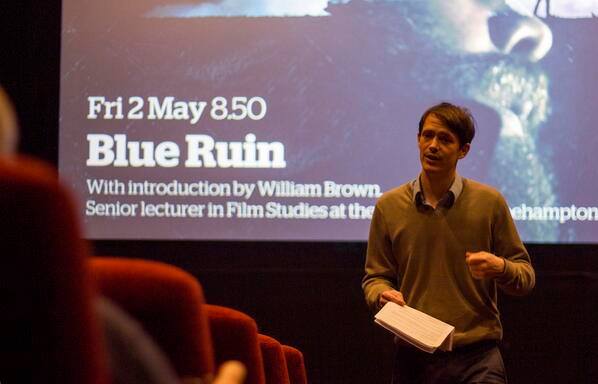
InRealLife (Beeban Kidron, UK, 2013)

Blogpost, British cinema, Documentary, Film reviews

Beeban Kidron’s new film offers a treatise on the internet generation.

This is a generation of boys who prefer porn to real relationships, it is a generation of youths who will sell their bodies in order to get and/or keep a mobile phone, it is a generation addicted to video games, it is a generation with a short attention span, and it is a generation that is happy to give away all and any information about itself to profiling companies that store detailed records of what they have done online and when.

But it is not all downbeat. We also see that the internet can function as a tool for bringing people together, particularly two young gay gentlemen from opposite ends of the UK, and whose relationship would not have started without the electronic devices that dominate our time in the contemporary world.

Nonetheless, in spite of the upbeat nature of the film’s ending, InRealLife is as much as anything a bit of scare-mongering about the internet generation. It features informed vox pops from the likes of Nicholas Negroponte, Sherry Turkle, Norman Doidge and others who have written about the internet and its effects on behaviour, the construction of one’s own identity and the neuronal connections in the brain.

Indeed, to see so many academics – most of whom are associated with MIT – is pleasing, although also a bit frustrating, in that the film offers us soundbites of their work, rather than any of their work. That is, the film does not allow us to get into depth about the issue at hand.

To this end, the film arguably suffers from the very same things that it seeks to criticise. And this is mainly because the film does not seem to acknowledge its own status as a film – and that cinema surely has a major part to play in the acceleration of the contemporary world, the need for endless visual distraction, and the shortening of attention that seems to accompany these things.

There are several examples of this. Firstly, we see this in the film’s overall structure. We go from the porn kids to the girl, Page, who was raped to retrieve her Blackberry, to interviews with various specialists, to dysfunctional gamers, to the gay gents, to others. In other words, the film does not want actually to engage in depth with any one of these figures, but instead offers them up for easy consumption, gets bored, and then moves on.

This is exacerbated by the film’s parallel editing; we move from one storyline to another, back to the first, start a third, back to the second, back to the third, back to the first, and so on. Again, we have before us evidence that it is pleasing for humans to take on multiple pieces of information via story strands in parallel, but Kidron does not even wonder whether this acceleration – following three stories in rather shallow fashion, as opposed to seeing any one story through to the deepest point one can go – is in fact on the same continuum as the intensified version of this that is the screen-filled culture of today.

Cinema, it seems, is exempt from a role in the shortening of attention spans, while the internet, games consoles and mobile phones are the chief culprits. And yet surely this cannot be the case.

The same problem is manifest in the film’s insistent use of the zoom in order to hone in on its subjects. Obviously the image in long or medium shot is too boring for viewers, and so instead we must move in on a particular detail in order to give the image more focus. Heaven forbid that viewers might apply concentration to watching a film image and visually search it; no, instead it is easier for the filmmaker to tell us where to look. And since we are deprived of choice regarding where in the visual field we might look, and since we are via the cuts and parallel story lines, given more information at once than we would have in the ‘real’ world, then naturally the ‘slower’ and real world seems a bit, well, slow, and thus boring in comparison.

It is not, then, that Kidron is necessarily wrong in the points that she seems to make regarding the negative effects that growing up with the internet might have on society, perhaps even on humans as a species.

It is more that in its own way InRealLife contributes to the very problem that it seeks to expose – and it should acknowledge this more clearly (it does not acknowledge this at all).

When I teach Citizen Kane (Orson Welles, USA, 1941) and students sit through it looking at their mobile phone, it is not simply that they cannot sit through 119 minutes of a film with a slow cutting rate that worries me (the cutting rate is important; they can sit through 201 minutes of The Lord of the Rings: The Return of the King (Peter Jackson, USA/New Zealand, 2003) – in part perhaps because the film has a much higher cutting rate).

What concerns me is the possibility – unproven – that people today – adults and youths – cannot sit in the real world and engage with it. To concentrate on the world that surrounds us, and to think about it via concentration, this is the skill that is lacking. The Citizen Kane thing is simply a symptom, and teaching students to engage in film is really an attempt to encourage them to think about reality, to think about all things.

One has to put in effort in order to get anything out of anything – and if one is in a state of permanent distraction, with visual onsets coming repeatedly to us via our engagement with ubiquitous screens, then we shall not necessarily put effort in to find anything of interest. Like the cut, like the zoom, the screens do it for us.

Kidron’s film is relatively interesting, but I think she misses the need for auto-critique as a filmmaker before she casts her stones.

Notes from the LFF: 12 Years a Slave (Steve McQueen, USA/UK, 2013)

American cinema, Blogpost, British cinema, Film reviews, London Film Festival 2013, Transnational Cinema

If I linger on aspects of 12 Years a Slave that I feel do not work, it is because a very moving film might have been – in my humble opinion – an even better film.

I shall take it as read that overall I praise the movie in this blog (because it has things worthy of praise, things that will get mentioned), but the things that grated with this film are three in number: the casting, the use of music and, on a slightly different note, the film’s credits.

With regard to the casting, I can understand that any film can and will use big stars in order to become more commercially appealing. And I can also understand that, when there is a film in production about an historically important topic such as slavery, lots of actors will want to work on that project because it boosts the amount of prestige that they have as actors.

Nonetheless, having avoided reading much about the film before watching it (increasingly my preferred way to see films – as ‘blind’ to pre-hype as possible), to see a procession of fine anglophone acting talent work its way through the film in larger and smaller roles – Scoot McNairy, Paul Giamatti, Benedict Cumberbatch, Paul Dano, Michael Fassbender, Brad Pitt – in fact detracts from the narrative.

For, my experience of the film was along these lines: I am enjoying this film, but now I am faced with Brad Pitt, giving a decent performance as usual (because I think him a good actor), but since he is Brad Pitt (and since his character gets to speechify about the iniquities of slavery) I cannot but think that the he and the film are pushing the ‘worthy’ button a little bit too much.

To be clear: slavery as an historical – and, it cannot be emphasised enough, a contemporary – evil are undoubtedly topics worthy of filmmaking, because filmmaking can and does do all manner of things to raise awareness of slavery, as this film festival in part testifies. As such, the film being ‘worthy’ is not the problem (though a film might want to avoid being too moralising or sentimental in its depiction of slavery – but that is a different issue).

The problem is that one keeps on thinking ‘isn’t Brad Pitt very worthy?’, such that one thinks less about 12 Years a Slave, and more about how morally righteous those people are who made it. Again, this does not make Brad Pitt or anyone a bad person (of course it does not; although the way in which white actors accrue prestige for playing ‘difficult’ and, specifically, racist roles is slightly problematic for me: the white actor’s difficulty in playing a racist potentially occults/keeps out of view both the victims of real slavery and the (again, potential) assumption that black actors playing slaves is somehow ‘easier’).

In conclusion, then, the film can be as worthy as it wants, but the more I am thinking about the making of the film and its actors, the less I am thinking about the film. And slavery should be a topic that is important enough that the film could have no stars in it, and I’d still want to watch it because it should, in effect, speak for itself. The stars stop the film, to my mind, from speaking for itself.

(Furthermore, if the white stars also function to sell the film, then this points to the ongoing issues of race in relation to Hollywood casting. Chiwetel Ejiofor – who gives a fine performance – is relatively famous, but obviously the filmmakers did not want to give this role to Will Smith or various other, more famous black actors because… because he may be too famous for the ‘issue’ of slavery with which the film deals. But it’s fine for Brad Pitt to crop up towards the film’s end, because… I am not sure why (aside from his involvement as a producer in the film). Are these not double standards? And is using white stars to ‘sell’ slavery in cinematic form not also problematic – as if the topic did not speak for itself as important, but instead is only worth thinking long and hard about because a bunch of white actors are involved in the project. In effect, if business comes ahead of morality – stars will bring in the audience, and this is more important than the ‘issue’ that the film portrays – then the film surely is open to criticism.)

My second beef with the film is its use of music. This is not just moments where Hans Zimmer’s score lays down industrial gong sounds to convey the fact that SOMETHING BAD IS HAPPENING. Rather, it is that Hans Zimmer recycles a piece of music in 12 Years a Slave that he used for the magnificent Thin Red Line (Terrence Malick, USA, 1998) fifteen years ago.

Again, this is not necessarily a bad thing, but it does mar the film somewhat. The piece of music the (forgive my lack of knowledge regarding musical terminology) chord progression of which is largely repeated in 12 Years a Slave from The Thin Red Line is called ‘Journey to the Line’ – and it is a beautiful, epic piece of music. However, knowing that McQueen’s film is borrowing from Malick’s film in this way is also slightly jarring.

I could believe that McQueen, being a ‘clever’ artist and all, is pointing to the impossibility to depicting slavery without the use of cliché (with cliché here meaning saying things through terms that other people have used, i.e. repeating someone else’s words or, in this case, music).

Nonetheless, what the Zimmer score does is to give the impression that McQueen aspires to make a Malick film. To do for slavery what Malick does for war in The Thin Red Line, namely to offer a metaphysical treatise on the nature thereof.

But where Malick uses James Jones’ novel to discuss war on a relatively abstract level, McQueen is using a true story potentially to do the same. And true stories do not lend themselves to the abstract in quite the same way: what is slavery? How do some men seemingly desire to be masters and others slaves? (What is this war in the heart of nature? being Malick’s seeming guiding question with The Thin Red Line.) So, again for me, this does not quite work.

Don’t get me wrong; there are moments in 12 Years a Slave when we wonder that Solomon Northup (Ejiofor), a free man cast into slavery by a pair of scheming entertainers, could escape, especially early on when he and the other captives outnumber their captors (although they have all taken a significant beating by this time). And so the film treads that fine line in asking whether men in part desire the conditions that they face, but this is not the same as offering a piece of Malickiana.

The aspirations to Malick perhaps also explain the procession of stars that appear in the film. But, again, one ends up thinking: but Terrence Malick is Terrence Malick and Steve McQueen is Steve McQueen, so why does McQueen piggy-back on Malick? One cannot ‘do’ Terrence Malick (not without comic results). One can only be Terrence Malick. And the Malickiana here – signalled especially through Zimmer’s score – again seem slightly to undermine the film.

Again to be clear: McQueen’s film does have moments that McQueen is famous for, namely scenes that linger and are long in duration, including a powerful moment when Northup is left hanging by the neck from a tree branch, his toes touching the ground and keeping him alive. This protracted sequence – akin in part to the epic confrontation between Bobby Sands (Michael Fassbender) and a Priest (Rory Mullen) in Hunger (UK/Ireland, 2008) – is very powerful, as is a whipping administered on a slave in part by Northup and in part by Epps. But where McQueen and his desire to linger on certain moments is very strong, this strength is hindered at moments when it feels like the director wants to step into someone else’s shoes.

Finally, it is for me a mistake in the final credits of the film to put the name of Lupita Nyong’o a long way down the credit list – and after many of the white stars who have significantly smaller, and certainly less important, roles than she does.

For, Nyong’o plays Patsey, a slave on the estate of Edwin Epps (Fassbender), who is a legendary cotton picker and who also becomes the target of Epps’ amorous advances.

And Patsey is, to my mind, the beating heart of this film. It is she who is whipped by Northup and it is she who, importantly, makes clear that what for Northup is a temporary experience, for others is a lifelong experience.

Don’t get me wrong: 12 years as a slave is a massive amount of time and it is not that anyone should go through a single instant of slavery in their lives. But since we are watching a film called 12 Years a Slave, the clue is in the title that there will be a ‘happy ending’ (forgive the inadequacy of these film terms) for the main protagonist.

And while there is a ‘happy ending’ for American slavery – in that in principle it was abolished in 1865 – this does not make up for c250 years of slavery on what is now known as the North American continent. That is, and no disrespect to Northup, but 12 years pales in comparison to the enormity of North American slavery. And so it is important that the film conveys as best it can how Northup’s experiences are temporary in relation to those of innumerable others.

And this is done through Patsey, in particular the moment when Northup is rescued (*spoiler*?), for she must of course stay behind (the law does not allow her to leave). The moment is deeply moving, and Nyong’o’s performance here, as throughout the film, is remarkable. And so, given the centrality of her part, in that she stands in for that which it is impossible to depict (the size and scale of slavery in the USA in its entirety), it is disappointing that her name disappears at the end until after all of the white stars.

All this in mind, 12 Years a Slave is nonetheless a powerful film, with great performances, as mentioned, from Ejiofor and Nyong’o, and with some excellent McQueenian touches (scenes that linger for longer than most other directors would have them). It is no mean task to try to depict something that is perhaps beyond the bounds of cinema and which can only be suggested rather than shown. On the whole McQueen does an excellent job, but one wonders that a film with fewer stars, less Malickiana, and a desire to recognise upfront the performers involved, might have raised its bar even higher.

Notes from the LFF: Inside Llewyn Davis (Joel and Ethan Coen, USA/France, 2013)

American cinema, Blogpost, Film reviews, London Film Festival 2013

Inside Llewyn Davis feels like a meta-Coens film.

This needs some explaining, since the Coens have always made movies that are in part about movies – making their films a kind of meta-cinema that is about cinema and its influence on society (especially characters who go getting hair-brained scam ideas and who think it’ll work out as per the movies, but for whom things typically go amusingly wrong).

Inside Llewyn Davis, on the other hand, is not just meta-cinematic, but it feels meta-Coen-like. That is, it surveys and reviews Coen films from the past.

Small signs thereof: a cat that we discover latterly is called Ulysses, recalling O Brother, Where Art Thou? (UK/France/USA, 2000), a John Goodman performance that is straight out of The Big Lebowski (USA/UK, 1998), a long, silent car journey as per Fargo (USA/UK, 1996), and the general suffering of a central character that was crystallised by the Coens in their Job film, A Serious Man (USA/UK/France, 2009).

This does not make Inside Llewyn Davis a tired film. On the contrary, it is as ever a pleasant trip into Coenland, as we follow singer Llewyn (Oscar Isaac) from Greenwich Village to Chicago and back again for a week in 1961, surveying the folk music scene of the time (with a hilarious performance from Justin Timberlake as nice guy singer Jim).

Now, the Coens are not exactly without success, having won four Oscars between them, and having been nominated for various more. But Inside Llewyn Davis also seems like something of artistic statement from them.

By which I mean to say, the self-referentiality of the film leads the viewer to suspect that this is quite a personal project for them. Not personal in the sense that it is autobiographical (though I suppose elements of the film could be – not that I am interested/think it important to find out).

Rather, in the sense that the Coens may, like Llewyn, find themselves never quite seeming to make it, unwilling to sell out (except for Intolerable Cruelty, USA, 2003, and The Ladykillers, USA, 2004 – the equivalent of Llewyn’s singing with Jim?), and somewhat on the margins of the film industry in spite of some success (notably, even after the success of No Country for Old Men, USA, 2007, the Coens have had to return abroad – to France and the UK – in order to co-fund their projects).

It is striking that the film is really about Llewyn’s inability to move on from the death of his singing partner, Mike, whom we never see. Llewyn performs repeatedly in the film – and often very well. But his style, while appreciated, is not deemed commercially viable. And, indeed, he is told by those who do not know that Mike is dead that he should find a partner and/or team back up with him.

This is striking, because of course the Coens work as a pair, and yet neither has – and long may it be before such an event comes to pass – has passed away as of yet. And yet there is a sense that while the Coens, like Llewyn, put in some remarkable performances (including winning Oscars), they remain somewhat overlooked – perhaps like Llewyn they feel surrounded by mediocrity, and it is not that they are any better per se, but they are surprised about how everyone settles for mediocrity.

Except that Llewyn ends up playing the same old tracks the whole time – trapped as he is inside himself, as it were. For this reason, the film has a looping structure, which it is not too much of a spoiler to say.

Do the Coens also feel trapped in their own universe? Were it not for the self-referentiality, I would not feel at all inclined to read Inside Llewyn Davis in this way. But it does seem to be working there somewhere under the surface – like Llewyn himself, very honest, but deeply enigmatic for almost precisely the same reason.

It is a joyful journey through Coenland. But Inside Llewyn Davis also seems to be calling out, asking for something more. Maybe the Coens will go really crazy with their next project. Or maybe they are mourning the loss of something dear to them, and which keeps them stuck in Coenland, pleasant though it is to be there with them…

Notes from the LFF: Pardé/Closed Curtain (Jafar Panahi and Kambuzia Partovi, Iran, 2013)

Blogpost, Film reviews, Iranian cinema, London Film Festival 2013

A man (Kambuzia Partovi) arrives at a house with a holdall. He locks the door, closes the curtains, blacks out his windows and then pulls out of the holdall a dog. We discover that he is a writer and from the television that owning dogs is illegal – and that many dogs are being executed when found.

A knock on the door, a couple enters who claim to be fleeing the police. The man (Hadi Saeedi) leaves, the woman (Maryam Moqadam) seems to come and go – as if materialising and dematerialising within the house at different times.

The house is raided, the writer and his dog hide. Then, as the writer leaves frame during one shot, Jafar Panahi walks into frame – and begins to fix up his house, the window to which has been smashed.

The woman and the writer discuss the fact that Panahi is forgetting them – and that they must make themselves enter his thoughts in order to remain alive.

A second woman (Azadeh Torabi) comes looking for her sister, Melika, who is the woman who arrived during the night and who is talking to the writer. Panahi, however, tells the second woman that he has not seen Melika, nor her brother, the man who came with her.

Workers come and go – and we get the impression that we cannot tell who is imagined and who is real in this movie that seems to be a defiant treatise on the creative process.

Jafar Panahi’s second movie made since his ban on filmmaking for 20 years (after In Film Nist/This is Not a Film, Jafar Panahi and Mojtaba Mirtahmasb, Iran, 2011), Closed Curtain similarly revels in interiors that are in fact an ‘externalisation’ of the imagination, and fictional characters that are the contents of Panahi’s head.

As the film progresses and as the seeming-fictional characters inside Panahi’s head decide that they do not wish to be forgotten, or die, as a result of Panahi not remembering them, we get the sense that filmmaking is almost an ethical duty.

That is, these people that the filmmaker – which we can expand anyone creative – has in head (and if we don’t like the idea of ‘people’ living ‘inside our head’, then we can simply call them ‘ideas’) have a life – and one owes it to them, as if they were real, to keep them alive. For, the life of the mind is as important as the physical realm in which our flesh circulates.

Indeed, Panahi’s film makes it clear that we cannot tell these apart: if Melika were simply imagined, why would her sister talk to Panahi? And if the writer were merely imagined, then why would he get into Panahi’s car at the film’s end and drive off with him with his dog (leaving Melika, sadly, in the house)?

Panahi contemplates suicide in the film – walking into the ocean and never coming back (shades of Darbereye Elly/About Elly, Asghar Farhadi, Iran/France, 2009). We see this happening, but then Panahi is back in the house. In a film, what is imagined and what is real are inseparable – and the power of film is to make us question precisely what is real, to encourage us to think.

And even though the Panahi character laments the fact that he cannot be as creative as he wants, ultimately, he must be defiant and carry on creating, since the life of the mind, those ideas that live in our mind, are as much us as our bodies – and we must realise these ideas by making films (the French verb for directing a film is réaliser).

The liminal setting of the seaside is important here: the ocean is our unconscious, with its unseen depths. And as much as Panahi (and Melika in her own way) are lured by the ocean towards death, one also gets the sense that all characters that we see, perhaps we ourselves, have come from the depths of the ocean, the unconscious, where ideas turn and flow in unseen fashion.

Images within images: Panahi filming on his iPhone, a camera crew walking into a shot – replaying a moment earlier when the writer lets in Melika and her brother. As Chuang Tzu says:

Once I, Chuang Tzu, dreamed I was a butterfly and was happy as a butterfly. I was conscious that I was quite pleased with myself, but I did not know that I was Tzu. Suddenly I awoke, and there was I, visibly Tzu. I do not know whether it was Tzu dreaming that he was a butterfly or the butterfly dreaming that he was Tzu. Between Tzu and the butterfly there must be some distinction. [But one may be the other.] This is called the transformation of things.

What is dream? What is reality? The time of the body and the time of the mind become indistinguishable. As, arguably, do Panahi’s films and those of his contemporaries.

I am thinking about oblique references in Closed Curtain to the work of Abbas Kiarostami, who recently has become a migrant filmmaker working in Italy and Japan.

In particular, Closed Curtain seems to speak to Five Dedicated to Ozu (Iran/Japan/France, 2003), a lyrical contemplation of the sea – driftwood on the waves, ducks walking along the beach, humans meeting by the seaside, with a brief lightning flash reminiscent of ABC Africa (Iran, 2001).

I do not think Panahi is offering an implicit critique of Kiarostami here, though potentially he could be. More, I get the impression that movies are memories, even those of/by other people, and that they constitute who we are. As is said in the film, in the end, life is memories.

Lyrical, melancholy but, as mentioned, ultimately defiant, Closed Curtain is another fascinating work by one of contemporary cinema’s finest filmmakers.