A brief note on The Predator (Shane Black, USA/Canada, 2018)

American cinema, Blogpost, Film reviews, Uncategorized

The Predator is old-school Shane Black with smart talk, back chat, banter and gags all amidst an ultra-violent tale of aliens invading Earth.

There are some zeitgeist references, including how the predators are preparing to come to Earth to inhabit it as the human species dies out according to climate change (we may last one, maybe two more generations, the film says).

But really the film is just about sniper daddy Quinn McKenna (Boyd Holbrook) learning to find a meaningful relationship with his autistic son Rory (Jacob Tremblay), whose autism is linked to an ability directly to understand the aliens, something that chimes with Steven Shaviro’s assertion that autism is not solipsism but a kind of democratic vision of the world – in that the autist prioritises no one piece of information over others, but instead sees the world in a flat (if affectless?) fashion.

In addition to being about fathers and sons, then, the film is also a reworking of The A-Team (Stephen J Cannell and Frank Lupo, USA, 1983-1987), except with a slightly larger squad, in that Quinn is Hannibal, Nebraska Williams (Trevante Rhodes) is BA, Coyle (Keegan-Michael Key) and Baxley (Thomas Jane) are combined Murdoch, except that it is Lynch (Alfie Allen) who is on hand to fly helicopters, and then with Quinn himself and Nettles (Augusto Aguilera) being a good and bad Faceman respectively. This then makes Olivia Munn’s expert biologist Casey Bracket the equivalent of Amy.

Indeed, thinking about it as I write, the set-up is also not wholly dissimilar to the Teenage Mutant Ninja Turtles (Kevin Eastman et al, USA, 1987-1996).

With Munn’s role in #metoo in mind, in that she came forward to discuss harassment by director Brett Ratner in late 2017, one wonders that the film might make itself less blokey and perhaps have a more pronounced female presence, as men – both human and alien – beat their chests for the 107 minutes of the film’s duration.

But, all that said, I really only want to highlight one aspect of the film that I found interesting.

The predators bring with them this time some alien dogs. At one point Nebraska shoots one of the dogs in the head at point blank range. However, he fails to kill it – meaning that the alien dog thing recurs throughout the film – but this time as more or less Casey’s pet.

Indeed, it is suggested at one point that Nebraska did not kill, but rather simply lobotomised the beast.

What is interesting, though, is that when we first meet him, Nebraska and the rest of Group 2 are being transferred to a special installation precisely to be lobotomised – each for slightly different reasons, but with Quinn going because he has witnessed a predator in person.

Nebraska’s reason for going is that he shot his commanding officer in a fit of rebellion… only for us subsequently to reveal that he was his own CO, and that the person whom he shot was himself…. in the head. Only he missed.

In other words, not only is a link set up between Nebraska and the dog, in that he shoots both himself and the dog in the head – and yet fails to kill them. But also if Nebraska has already lobotomised himself by shooting himself in the head, then the fact that he is a kick-ass soldier who seems to feel no pain and who ultimately…

SPOILERS

… sacrifices himself by jumping into the jet engine of an alien spacecraft in order to bring it down, suggests that lobotomisations take place not to stop these men from being soldiers, but precisely in order to militarise them.

Indeed, that the Group 2 soldiers all suffer from PTSD, madness and more, The Predator would seem to suggest that these things are not the consequences of war, but the pre-requisites of war.

That the predators do not kill for survival but for sport is mentioned several times as grounds for the name being a misnomer: the predators are not predators but sports hunters.

Meanwhile, Quinn tells his son that he does not enjoy killing… before then confessing – as he kills two fellow American soldiers – that he does. That is, Quinn is a killing machine, while his son also has no qualms about having murdered a punk metal fan who hurls an object at him when he is out trick-or-treating.

Indeed, Rory explains that it is the weapons that do the killing of their own accord when the bearer of the weapons is attacked. Total fantasy of disconnect: I did not kill you, my weapon did.

But more than this.

For, at one point government agent Traeger (Sterling K Brown) describes a dead alien with the n-word, thereby creating a link between soldiers, animals, lobotomised creatures and black people.

Naturally, the film does not explore these associations any further (and it is worth noting that Traeger is himself black).

But if we add in to the mix that actor Rhodes is most famous for his part as homosexual gangster Black in Barry Jenkins’ Moonlight (USA, 2016), then there are yet further associations in the film with oppression, minorities, abuse and violence.

That everyone ultimately subordinates themselves for the reunion of the white father-son dyad… would suggest the sacrifice of these minorities for the purposes of protecting the planet from aliens is really to maintain the status quo of power and not to bring about any social change.

What seems a lost opportunity for an interesting ending, even if unlikely in the face of the film’s conservative heart, is that rather than having the predator-killing technology turn up as a gift from a rogue predator at the film’s climax, the predator should have delivered to Earth an alien as per AVP: Alien vs Predator (Paul WS Anderson, USA/UK/Czech Republic/Canada/Germany, 2004)… in order to unleash a whole new series of chaos that might indeed help defeat not only the predators, but also the dominant white men at the same time…


Towards a natural language of cinema: Island (Steven Eastwood, UK, 2017)

Blogpost, British cinema, Documentary, Film reviews, Uncategorized

Steven Eastwood’s Island is a documentary about death and dying. It is set on the UK’s Isle of Wight, where we follow four main people, Alan, Jamie, Roy and Mary, as they suffer from terminal diseases.

The film is sensitive and beautiful, although surely it may not be for everyone given its subject matter and different people’s experiences of/with death and/or their attitudes towards it.

It is not that one can really give spoilers for a film that is about death and dying; the inevitable is bound to happen. And yet, I shall be discussing the last images of this film later on in this blog, so be warned that it does reveal in some respects how the film ends.

However, I would like to start with the opening image, which is of a ferry emerging from fog as it heads towards the Isle of Wight. For, what I wish to suggest in this blog is that cinema can offer us a natural language, not in the popular sense that everyone can more or less understand it, but in the sense that the world (nature) possesses a kind of language that is there for us to decipher if we so choose to. In this way, not only can cinema help paradoxically connect us to the natural world, but it can show us not just metaphors of the world, but a sense of its natural language. That is, cinema can be a system not just for symbols and meaning, but for a sort of folk or natural wisdom.

In order to take our first steps in this direction, let us consider the opening image. Fog is of course an indicator of mystery, and thus the arrival of the unknown, while the ferry signifies transition as one passes over the sea from one location to the next. Meanwhile, the sea itself suggests a realm that is more or less alien to the human. Yes, we can swim and we have invented submarines, but on the whole the depth of the ocean remains hard for humans to fathom. In this sense, the ocean represents a sort of alien presence, something along the surface of which we can drift, but down into which we cannot descend without often dying.

From its opening image, then, Island suggests the arrival of the unknown, almost invisible because shrouded in fog, and yet which is here perhaps to transport us into a new dimension.

We might say that the film therefore deals in metaphors, or at the very least that it offers us a specifically human perspective on matters (since fog is not necessarily mysterious to fog itself, just as the depths of the ocean are not alien to giant squids; that is, the meaning of fog is different to different species). Nonetheless, the film invites us to connect with the world presented in these images, and to read fog, the sea and a ferry not just in a literal sense, but in terms of what they mean… what they say to us about our own relationship with the world.

There is a discussion of fairies and then angels in the film. As the French philosopher Michel Serres might suggest, angels are evidence of and provide scope for us to perceive hidden dimensions within our world. It is not that we see cherubs with halos as per classical religious iconography. Rather, every encounter that we have and which allows us to see the world anew is in effect an encounter with an angel; marvelling over a gust of wind, overwhelmed by the kindness of strangers, seeing an animal up close. In other words, angels open up new angles of the world, showing us hidden dimensions that lie within plain sight, and yet which often we do not see. To see an otherwise hidden dimension, then, is not suddenly to find secret realities in the sense of popular science fiction film. Rather, it is to realise how limited my vision is of reality when I do not notice animals for what they are, when I do not consider the importance of the wind and when I do not expect strangers to be kind. To be reminded of those things reveals to us the limited nature of our own vision, allowing us to see reality with fresh eyes, renewing us thanks to this encounter with the alien angel that takes us out of our fixed selves and in the process reminds us precisely that we are not fixed, but always changing. In this sense, an encounter with an angel is to experience time, to be in what Alan in the film describes as the now – rather than perceiving reality only in terms of what we want to get out of it (projecting the future on to the present) or in terms of how we have seen it in the past (projecting the past on to the present). To be in the presence of angels is to feel presence.

These hidden dimensions, then, are not hidden from the world; they are simply hidden from us owing to the limitations of our vision, limitations that are not just biological but also shaped by culture. These dimensions are, like the character of Nothing in Boris ‘s In Praise of Nothing (Serbia/Croatia/France, 2017), which also is in cinemas at present and which makes for an interesting companion to Island, around us at all times.

Death itself, then, is also an alien and mysterious other that we typically do not see, and yet which is perhaps always only ever with us. Indeed, if time is change, or becoming, then that which is at any given moment in time must die, and that which was not comes into existence, or is born. Death is everywhere and everywhen – and Island helps us to understand that.

For, humanity may fetishise the dry land of life, but it is only an island surrounded by death. But more than this, as the road leads directly into the sea without a clear cut-off point between the two, so does life lead into death and vice versa.

Indeed, as John Donne famously said, no man is an island. Humans are all porous, consistently excreting liquids and gases via their major orifices and through their very skin. Humans try to close themselves off in many ways – including via the way in which they cocoon themselves away from death. And yet they never succeed, since humans are always being opened up.

To become an island, to separate life from death, to shut oneself off from others is to be closed. To be open, though, is to have open eyes, an open mouth, to cry, to scream, in short to feel and thus to live, to be alive. To be alive is to be open to death. And to live is to be open to others in terms of both giving and receiving, to be an angel to all those around us just as all those around us can be angels to us.

The Greeks described the highest form of love as ἀγάπη, or ‘agape,’ and which consisted of charity: to be open to or to be an angel to others in the form of giving. As Alan dies, his mouth also lies agape; he is open, including being open to death.

More than this. As Alan dies we hear director Steven Eastwood begin to snore as he has fallen asleep in the room with Alan. It is oddly as if as Alan lies agape and breathes his last, Eastwood’s mouth itself falls open and he begins to receive Alan’s breath – as if the latter were an angel opening up Eastwood and the viewer of Island to new dimensions, to seeing that death is normal and everywhere and not a strange, alien object that we relegate to another dimension.

Remarkably, as Alan dies a nurse enters the room and stands in front of the camera, thereby making the film’s frame turn black. Alan’s open mouth has already been a black hole, a void, an impenetrable presence within the film’s frame – and now the whole frame goes black.

The nurse says that Alan is dead – before curiously saying that another breath may yet be drawn. The boundary between life and death is perhaps, like the human, itself porous. And darkness is not what lies beyond the frame or which cinema destroys by shining a light on to it; rather, darkness is within the frame.

Even if only by chance, then Island allows us to see the darkness that is not just there at night (and which through electric lighting we try to relegate and banish from our world, meaning that we cannot see the stars), but which perhaps also is always with us, like the void that is Alan’s open mouth.

That Eastwood sleeps – and perhaps dreams at this moment – also suggests the presence of an alien presence – not just in the sense that we might all be dreaming our lives away, but in the sense that sleep allows the brain unconsciously to store memories and so on, with dream perhaps consciously registering some of this process. As humans who bodies run more or less entirely unconsciously, we have hidden dimensions within ourselves that we do not know, which are alien to us, and yet which dream – in all of dreams’ senselessness – can reveal to us (notably Alan also discusses dreams in the film).

Owls appear at various points in the film. Steven Eastwood suggested that they have no metaphorical function within the film. But not only are they quite literally winged creatures within the film, but they also bear other qualities that bespeak a kind of natural affinity with death which means that humans will perhaps ‘naturally’ become curious about them as death becomes us.

It is not simply that owls are supposedly wise creatures. But owls also are associated with the night and seeing (in) the dark. More than this, the owl in various languages is considered to have an onomatopoeic root (‘owl’ is supposed to be not far from the bird’s call), with that root being a kind of harder ‘boo’ sound in various languages (Greek βύᾱς, Latin būbō, Spanish buhó, French hibou). In other words, as per the idea of shouting ‘boo!’ at someone or the concept of a sonic boom, the owl signals the sudden irruption of a hidden dimension within the world – with owls belonging to the order of strigiformes, with this term itself being derived from στρίγξ, or ‘strinx,’ meaning a screecher (as well as from the Latin strix, meaning a furrow, a channel or a groove, as if the owl clawed out new dimensions in old dimensions). As the Giant (Carel Struycken) says to Agent Cooper (Kyle MacLachlan) in Twin Peaks (David Lynch, USA, 1990), ‘the owls are not what they seem.’

In some senses, Island is a film about more or less unseen women preparing men for death. That is, the primarily women nurses on the Isle of Wight are angels helping men.

In this way, these angels who are open to death help to make men open to death – since it is the world of men that is the world most often closed off from death. The world of closure – man as separate from nature, man as separate from each other, man as wanting to expel darkness and death from existence in order to preserve itself forever rather than to become or to change – is thus also the world of patriarchy and capitalism. The nurses represent a different world, an open and caring world (that nonetheless increasingly in the UK is under attack as healthcare becomes increasingly privatised).

The film ends with shots of a television screen in which a documentary shows soil pushing forward fresh flowers, before the film cuts to Mary, before then ending.

Without necessarily even wanting to, then, Island suggests that with death comes rebirth and that this process is a female one. That openness to becoming is thus a more female process than it is a masculine one, even if men in death are helped by women to become open to what faces them.

(Notably, Mary had not died by the time that filming for Island had stopped.)

Thinking back to the owl, then, Island strictly (strix-ly) channels the reality that surrounds it. In this groove, we see a world in which the boundary between life and death becomes blurred, and in which a female perspective might help us to see through the patriarchal world of division and closure.

A couple of further thoughts remain.

Firstly, cotton plays a key role in the film as we see pyjamas, sheets and various other articles made of cotton covering much of the frame at various points.

What is more, we might reflect upon how if openness is in some senses a more ethical way of being with the world (being open to it, rather than shutting oneself off from it), then the film frame is always closed – a rectangular boundary separating what is in the frame from what is not in it. The frame of the cinematic image in some senses means that film only ever deals with metaphor.

Unless, that is, one breaks the frame – for example when Eastwood shares a cigarette with Alan, his hands coming into frame to hold it for him, or when we hear his voice. And of course when other figures come into frame, and when the participants in Eastwood’s documentary (perhaps including the owls) look directly at the camera and/or acknowledge the presence of their microphones.

What is more, the sheer duration of a good number of the shots – long, slow takes, with the film having only 140 or so shots in its 90-minute running time – also suggests a kind of out of the frame. Or at least an attempt to allow events to unfold at their own pace and not at that of the filmmaker. That is, reality determines the film rather than the film attempting to determine reality. By being open to this, the film does not simply offer us metaphors, but it allows the world to reveal itself and for us in some senses better to understand that world, since we see new and yet real dimensions within it, and thus come better to understand our relationship with it. If this is one of the major powers of cinema, then cinema can only do this by trying to get over or around the natural limit that is its frame – and to get us to think beyond the frame, just as Island wants us to see not just what is behind the fog, but the fog itself, and as it wants us to see not what the darkness conceals, but the darkness itself. A film that does this must be self-reflective or self-conscious, and this is truly the case with Island.

A final two thoughts.

Firstly, Isla is the name of Jamie’s daughter, whom we see singing songs from Frozen (Chris Buck and Jennifer Lee, USA, 2013). One wonders whether Isla, as a female representative of the future, is also a key aspect of the demonstrating that no man is an island, even if men try to make rocks and islands of themselves (as per ‘I Am A Rock’ by Simon and Garfunkel).

4CBD958B-7A81-4CBC-8A94-735C241BE37F

Steven Eastwood (centre, with his name projected on to his head), talks with Island producer Elhum Shakerifar (left) and Chris Harris of Picturehouse Central (right) as Jamie Gunnell looks back from the screen at a preview showing of Island on 10 September 2018.

Secondly, in response to a question at a Q&A screening of Island at the Picturehouse Central on Monday 10 September 2018 and in which a viewer asked why the film did not give intertitles during or at the end explaining to audiences not just who the people in the film are, but what happened to them , Eastwood remarked  that he did not consider markers regarding names, dates and so on as being important to his project. Indeed, dates do not, it would seem, help us to understand a life.

And yet, there is a set of dates that is given in the film right at the end of its credits – those of the late filmmaker Stuart Croft to whom Island is dedicated. Not in the film, one wonders nonetheless to what extent dates are an attempt for us to make sense of the alien nature of death when we have not had a chance to confront it (let us say, to grieve). When we are open to and live through death (when in some senses we expect it), then we can reach a state of presence and of time wherein we do not need dates at all. We can escape from death as a sudden and terrifying boom, instead looking it in the eye, normalising it and finding that mere numbers do no justice to death nor to the life with which it is entangled.

Trying to comprehend Trump, Jacksonville, fake news, the World Cup and Crimea: Gaamer/Gamer (Oleg Sentsov, Ukraine, 2011)

Blogpost, Film education, Film reviews, Ukrainian Cinema, Uncategorized

It is perhaps strange to write a post about a film that is now seven years old.

However, I wanted to discuss Gamer, which I saw this week while staying in Kyiv, the capital of Ukraine, for a number of reasons – a couple of which are complicated by the deaths of three people, including shooter David Katz, at a gaming convention in Jacksonville, Florida, USA, this week.

Gamer tells the story of Alex, or Lyosha, whose gaming nickname is Koss (Vladislav Zhuk). He lives in a small town in Ukraine where he ditches school and shuns the company of others in order to spend his time playing Quake.

He is sufficiently good at the game that he progresses from his small town, Simferopol, to Kyiv and all the way to Los Angeles in the USA, where he comes second in a world championship.

However, this success seems to mean little to Koss, who remains affectless throughout more or less the whole film. As a younger gamer, Kopchick, comes to replace him as the leading gamer in his home town, Koss instead begins to find dignity in helping his mother (Zhanna Biryuk) work in a shop – with one reviewer commenting that this leads him to smile for the very first time in the film.

A movie about a kid who plays truant naturally recalls François Truffaut’s Les Quatre Cent Coups/The 400 Blows (France, 1959), with director Oleg Sentsov being wise to this point of comparison by having his movie end with a freeze frame on Koss – much as Truffaut’s ends with a freeze frame on Antoine Doinel (Jean-Pierre Léaud).

But more than this, the film is also striking for the way in which it, like many a film from the French New Wave, takes to the streets, mixing documentary and fiction as the film involves real gamers and footage taken from real-world gaming tournaments.

Shot on an estimated budget of US$20,000, the film also involves direct sound, long takes in real locations and various other tropes that suggest the economic realism of cinema. By ‘economic realism,’ I mean that the less money one has as a filmmaker, the more one is likely to be pushed into the direction of long takes in order to save on time and money for set-ups.

But this is not a deficiency. On the contrary, it is a strength of the film that it does this, since the resulting intrusion of the real world (hence realism) into an otherwise fictional story is precisely what makes Gamer and numerous other films like it all the more powerful.

Indeed, it is the presence of the real world alongside the fantastic and violent world of Quake, from which we see a few play-throughs, that makes of the film an interesting investigation into the nature of gaming and virtual worlds in the present era – especially in a context like that of the contemporary Ukraine.

It is interesting how in games, the presence of cut-scenes would suggest that the medium aspires in some senses to become cinema. That is, games aspire to have the cultural clout of cinema, even if gaming is a larger industry than cinema worldwide.

Indeed, the cut scene, as well as the exemplary play-through, or the automatic action replay that takes place in some games when one performs a virtuoso bit of skill (or scores a goal) would suggest that the ‘best’ bits of games, and that towards which we should all aspire, become games not for us to play, but videos for us to watch.

In other words, gaming involves a logic of becoming image, or becoming cinema – since to become cinema bespeaks power, elevating the person out of the human realm and into the divine and supposedly eternal realm of the image, or light.

Given the presence of such ‘cut scenes’ in Sentsov’s film, one might suggest that Koss also aspires to become cinema, and to transcend his earthly identity, as marked by his change of names, precisely from Lyosha to Koss.

What is more, since such virtual images are placed alongside ‘mundane’ shots of everyday life, the effect is to suggest that the power of Gamer resides precisely in its not aspiring to be cinematic, but to express something like the outside of cinema, or what in my more academic writings I have termed non-cinema, and which may be something like reality itself.

That is, Gamer as a film charts Koss’ transition from aspiring to being cinematic (even if via gaming), a process that he finds ultimately hollow, and which is set against the smile that he achieves by becoming not cinematic, to his reconnecting with the real world (getting a job in a shop and working with his mum, who herself is also a translator/academic whose job does not pay enough for her to survive, suggesting that critical thinking is undervalued and discouraged in the contemporary world).

Notably, Gamer is also punctuated by other ‘cinematic’ moments during which a brightly lit Koss can be seen turning to the camera as dreamy music plays. A sort of set of fantasy sequences, these moments made me think that Lyosha was dreaming of an absent father – whom we never see and who is not even mentioned during the course of the film.

That is, Lyosha’s aspirations to be cinematic are also about him finding his father: to achieve success, to be famous, to become an image – these are all things that we are encouraged to achieve in our patriarchal and capitalist society (to ‘be someone’/to be ‘a man’ is our father, the thing that we pray for… and not to achieve it is to be a loser, perhaps not even to be human – as many a victim of cyber bullying might testify).

And so, as Lyosha ditches his cybernetic ambitions as Koss, and as he reconnects with the real world by taking a humble and dignified job in a shop as Lyosha, so does he also reconnect with his mother and a more feminine world.

Arguably this means that the film essentialises femininity as earthly and wise or some such. Nonetheless, it still means that the film’s story – together with its ‘realistic’ aesthetic – suggests a rejection of patriarchy and the myth of becoming cinema that lies at the heart of the contemporary capitalist world. Non-cinema is the way forward in a society dominated by the aesthetics and politics of cinema, or the aesthetics and politics of spectacle.

At one point we see Koss look through a window at his school and, using a speck of dirt on the window as a would-be rifle sight, he imagines shooting his fellow pupils.

Notably this moment takes place through the medium of a window. That is, Koss sees the real world through the medium of a separating screen rather than being directly in touch with it. And it is this separating screen that allows him to indulge his violent dreams, with violence itself being part of the logic of the cinematic world, in which we also repeatedly see violent images on screen, especially when playing a game like Quake.

Without wishing to pathologise the deeds of David Katz in Jacksonville this week, it is perhaps precisely because of the warping screen that media create, distorting our vision, that we humans go crazy and carry out violent deeds both in a simultaneous and paradoxical bid to become image (I become famous even if only as a murderer) and to destroy rivals who are seeking also to become image (Katz killing rival gamers, a crime that reveals the way in which the competition to become famous/cinematic perhaps necessarily involves violence, meaning that the murders are oddly and upsettingly a logical extension of the world in which gaming conventions take place – even if of course the absolute vast majority of gamers are wonderful, generous and loving people).

But more than the events of this week, Gamer benefits from a brief comparison with Ready Player One (Steven Spielberg, USA, 2018), another film that is about gaming and gaming culture, and which is one of the biggest box office successes of the year so far.

Indeed, where Gamer reportedly made only US$2,696 at the box office, Ready Player One has made US$582,018,455 worldwide. It is perhaps no coincidence that the film with the major special effects, the fast cutting rate and the conventional hero logic (replete with manic pixie dream girl who is there to help the hero to become a man) should make so much money. For, Ready Player One is patriarchy writ large.

Not only is it patriarchy writ large, but it also is an indulgence in nostalgia for the values of cinema, with a kind of weird fantasy posited at the end that maybe not all humans should spend all of their time playing games (or living in what the film calls the Oasis).

Aside from how closing the Oasis for a day a week would be commercial suicide (as other companies replace it by leaving their virtual worlds open 24:7, which is to say nothing of how to regulate different time zones into this fantasy logic), Ready Player One suggests that the Matrix is not something of which we should be fearful, but that being in the Matrix is great.

More than this, it also indulges a fantasy scenario in which the world of gaming really involves a sort of political activism (even though there are no hackers here), as ‘rebel’ gamers take on the corporate gamers in order to take/retain control of the Oasis.

(Forgive me; I am assuming some familiarity with Ready Player One, rather than explaining everything about it in too much detail. I sort of hope that readers can fill in the gaps if they have not seen the film; it really is all quite predictable.)

The point to make here, though, is that gaming is not rebellious, even if one believes that it is. Indeed, Katz is doing nothing more than committing an act of murder in taking the logic of the game (to ‘win’ by all means possible) outside of the game and into the real world. Indeed, gaming is always to, ahem, play into the hands of power (at least in the way that I am describing it here; I am sure that this view of gaming-as-patriarchy does not and should not always hold – except insomuch as it applies to patriarchal games, which not all games necessarily are, just as not all films are patriarchal; indeed some can be non-cinema, as per my argument above and elsewhere).

Here we come to perhaps the crux of my argument.

For as Gamer presents to us a vision of gaming as separating us from a real world with which we might do well to reconnect, so does Ready Player One suggest to us that gaming and virtual worlds are politically progressive.

To ditch digital culture and to ‘get back to reality’ naturally sounds like a conservative position. It involves a rejection of the novel possibilities that new technologies allow. To embrace those new technologies, meanwhile, sounds progressive, rebellious, young and hip.

And yet I am going to suggest that Gamer is a far more progressive film than Ready Player One. And this is not only because Gamer is not always-already creating spectacles for the purposes of making money/capital. That is, it is not simply because Gamer is not cinema but non-cinema.

However, in order to explain this point properly – and thus to explain the topsy-turvy-seeming logic of a kind of technological conservatism as progressive over a technological utopianism as progressive – we need to think about what has subsequently happened to the director of Gamer, Oleg Sentsov.

If you wander around Kyiv today, you will see numerous posters demanding that Oleg Sentsov be freed.

For, the #SaveOlegSentsov movement started when Sentsov was arrested by the Russian Federal Security Service in 2014 on charges of terrorism against the Russian state and sentenced to 20 years in prison.

Widely purported to be fake charges, Sentsov nonetheless was supposedly, according to Verity Healey, coordinating ‘relief efforts to help Ukrainian soldiers barricaded into their barracks by the Russian military.’

Sentsov’s reasons for doing this are that in 2014, Sentsov’s native Crimea, which includes Simferopol and which at that point in time was part of Ukraine, was ‘annexed’ by Russia – and which move remains to this day the cause of combat between the Ukrainian and the Russian militaries.

In late 2013 and into 2014, thousands of Ukrainians poured into and occupied the Maidan Nezalezhnosti in Kyiv in protest against, among other things, the decision by then-President Viktor Yanukovych to withdraw Ukraine from signing agreements with the European Union – preferring instead to cement ties with Russia.

After police violence against the protestors, which involved c130 deaths (with Ukrainians referring to the victims as the Heavenly Hundred), Yanukovych was toppled and an interim government set up.

During the instability that followed (not least because some Ukrainians would prefer to side with Russia than to join Europe), Russia annexed Crimea – and during this period Sentsov suspended shooting his second feature film, Rhino, in order to take part in the EuroMaidan and then to protest the annexation.

Sentsov has since his arrest allegedly been tortured and ‘left to die‘ by Vladimir Putin after the filmmaker began a hunger strike while the rest of the world decided to forget about reality and to celebrate Russia as a result of its wonderful hosting of the 2018 Football World Cup.

In other words, for Sentsov active participation in the world is more important than filmmaking. Reality is more important than media. And while we watch spectacles like cinema, games and soccer, people are fighting and dying in an unofficial war over Ukrainian territory.

Let’s ratchet this blog up a bit.

As the UK’s England side, with its rather unremarkable Won 3 Drew 1 Lost 3 record, progressed to the semi-finals of the World Cup, numerous memes began to circulate, often accompanied by the song ‘Three Lions’ by Skinner & Baddiel and the Lightning Seeds, and which encouraged England fans finally to ‘believe.’

What they ‘believed’ was that football might – after 52 years – ‘come home,’ in the sense that it has been 52 years since England last won a major international tournament (the 1966 Football World Cup), and in the sense that the English believe that they invented football since they were the first to formalise an enjoyable sport into a violent, money-making spectacle that today leads many human beings to be trafficked (as per Soka Africa, Suridh Hassan, UK, 2011), which is not mention alleged sexual abuse conspiracies within the sport and other human rights abuses that take place as a result of the sport.

It is interesting that the response of England fans to their team’s perceived success and possible chances of winning the tournament were framed by the word ‘belief.’ Football is not about being the better team, but about believing that one can win. But not on the part of the players, but perhaps especially the fans (which is not to rule out some irony in a good number of the memes, suggesting that people did not really believe that a mediocre England team could at all be the best in the world).

More than this, that belief is spurred on not just by the performance of a football team and its fans, but also by the plethora of media artefacts that circulate around it (and I’d like to write a blog at some point about Gareth Southgate’s waistcoat and the role that it played in both creating that sense of belief, but also ultimately in betraying that belief as false).

That is, what we believe – what we consider to be real and true – is shaped by media. Hence it is that the pages and pages of British media covering men in shorts running around a grass field create a sense in which that sport is more important to many human beings than lives in Ukraine, where a covert war is taking place – simply because the British media do not cover it. (Perhaps rather than cover it, they cover it up.)

So while Sentsov was protesting the World Cup, England fans got all excited because they managed to stick six goals past a weak Panamanian side and score a few penalties. Sentsov could, in effect, go hang as far as the England fans were concerned; they were having far too much fun on Russian soil to want to think about serious matters like politics.

Indeed, if anything, the UK with its Brexit vote would seem to side with Yanukovych in wanting to be shot of the European Union.

More than this. The UK, with the involvement of Cambridge Analytica in a bid to shape what American voters consider to be real and true, seems increasingly to be the plaything of Russia, which itself seems increasingly likely also to have been involved in shaping what American voters consider to be real and true, and which thus led to the election of Donald J Trump as the 45th President of the United States of America.

You may think that I am going too far and that this all sounds far too conspiracy theory-like.

But the point that I wish to make is that to embrace technological progress as unthinkingly and uncritically wonderful (Ready Player One) is to lead towards the post-truth world of digital fake news that characterises the contemporary era. Hipster rebellion is not rebellion; giving up games and filmmaking in order to fight for something that one truly believes in… is properly to lead a political life – even if that just means making human connections and working a modest but dignified life in a shop (Gamer).

Note that what I do not mean by evoking fake news is that Russian involvement in American politics is not true. On the contrary, we must critically examine what has happened if we are to work out the truth. But what the world of fake news does politically is that it allows everyone to be precisely uncritical and to dismiss as ‘fake’ that which simply does not please them.

It is to dismiss from view the unpleasant realities of a film director undergoing hunger strike in a Russian prison in order to prefer the spectacle framed by ‘belief’ of a football team doing well at a World Cup.

It is to dismiss from view the unpleasant possibility that we are all being manipulated by media in order to manage our perceptions. It is, à la Ready Player One, to prefer the Matrix to reality – reality not as something that lies beyond our attempts to find out exactly what it is, but reality as precisely our attempts to discover it. Reality as critical thinking and ongoing thought, rather than the matrix of no critical thought, a loss of human connection, a loss of humanity, a world of docile reception in which the only actions possible seem not to be ones of love (making human connections), but ones of violence against other human beings (murder) because one does not believe those humans (or perhaps anything) to be real. We love what we consider to be real, or rather what we love is what we consider to be real, and we love images more than humans. And yet to love should be to love humans (and perhaps images, too – but not only the images that one a priori loves; to love is to love what one does not love; to love is to love unconditionally; to love is only to love and not to love and to hate; to love and to hate is really just an excuse to hate).

In rejecting gaming, Gamer, then, tries unlike Ready Player One to take us back to the human realm (even if the hero of Spielberg’s film gets the one-dimensional girl and takes a day off gaming every week in a pseudo-effort to placate the notion that living in a fantasy world might not be all that it is cracked up to be).

Even if Ukraine cannot officially be at war with Russia, and if in this sense it must always already be complicit with the precedence of images over reality (no country can join NATO or the EU if at war, and so if Ukraine wants to join either of these institutions, it cannot be officially at war), we can nonetheless bear in mind that the fate of a Ukrainian filmmaker in Russia is still connected to Trump, Putin, the World Cup, fake news and the murders that took place in Jacksonville. And that Oleg Sentsov’s Gamer can help us to make sense of how this is so.

Understanding that this is so might be key to helping us not simply to accept by forgetting the corruption and the violence of the contemporary world, but also to believe in and thus to help create a better world. To believe not just that England might once again be ‘great’ (a true conservatism expressed through digital media and in the Brexit vote), but to believe that we can live in a world that ignores the divisive mechanisms of nations and nationality and which is based upon the shared humanity and life of our fellow human (and other) beings. To believe not in the patriarchal matrix of a society of control, but to believe in and to act towards a world of liberty and self-determination.

You can watch Gamer on the website for the International Film Festival Rotterdam for US$4. Money goes towards supporting Sentsov’s case.

The Escape (Dominic Savage, UK, 2017)

Blogpost, British cinema, Film reviews, Uncategorized

A woman is unhappy with her marriage and her children and so becomes depressed and dreams of escape.

Sound familiar?

If you are familiar with the plot of Gustave Flaubert’s Madame Bovary (1856), then maybe you will indeed know this story.

And of course Gemma Arterton, who is the star of The Escape, played a modern-day version (of sorts) of Emma Bovary in Anne Fontaine’s Gemma Bovery (France/UK, 2014), in which Martin (Fabrice Luchini) tries to project on to Gemma the story of Emma after she and her husband (Jason Flemyng) have moved from England to live in the French countryside, where Martin works as a baker (having quit the city life some time before).

So perhaps it comes as no surprise that here Tara (Arterton) lives in an unhappy marriage with Mark (Dominic Cooper) and their two annoying kids somewhere in Kent.

Mark clearly has a decent job, even if we never find out what he does, since the house that they inhabit on their close is pretty big and they have two cars. In other words, Tara is not unhappy because of a lack of material wealth.

Mark, meanwhile, is not without his flaws. He veers between being an ignorant oik who has no interest in art and boring things like that, and actually being quite a sensitive man who wants to make an effort to understand and to improve the lot of his clearly unhappy wife…

However, for whatever reason, he does not quite have the emotional or intellectual intelligence properly to help Tara, as can be signalled by his lack of care for her pleasure when having sex and in the way that he does not let her rest at a barbecue and/or passively-aggressively complains about her not having his dinner ready.

Since Mark is, to put it bluntly, inarticulate (or what we might call ‘a bit thick’), he gets angry when he cannot help Tara, and so he lashes out. Not that he hits her, but he swears at her and puts her down, calling her stupid and deriding her artistic ambitions.

For, Tara is depressed by her repetitive life of getting the kids breakfast, taking them to school, picking them up, being treated like a shag object by Mark and so on. And she clearly dreams of doing something more creative with her time – as signalled by her aspiration to sign up for an art course after taking a day trip up to London, and as signalled by the first part of her ‘escape,’ which involves going to Paris to see tapestries that she also has read about in a book she buys on London’s South Bank.

As a study of depression, The Escape involves some very strong performances – especially from Arterton (although I shall return later to issues of accent – both in relation to her and in relation to Dominic Cooper).

However, The Escape is also not quite a study of depression, be it post-natal or otherwise. For depression does not necessarily go away if one happens to escape one’s milieu; being a psychological disorder, it is something that can follow one around and affect even the most privileged person.

**Spoilers**

In The Escape, though, the film ends with Tara having moved from Kent to London, where she lives in a massive apartment right next to a square that does not look dissimilar to somewhere like Eaton Square Gardens by Sloane Square.

She walks into the square’s gardens and turns to look at some children playing – whom we hear but do not see. It is hard to tell what Tara is thinking and feeling, but Arterton comes close to tears (there is a lot of crying in this film), suggesting that in part she misses her kids (whom, we infer, she has left with Mark).

But at the same time, the film would seem to end on a positive note: Tara has left behind her shitty working class life in Kent and now is more fulfilled, and more in her skin, living in posh ends in London. She may still get sad, but it would seem that she is no longer depressed. Meaning that The Escape is basically a fantasy of becoming (upper) middle class: when you get to live in a ridiculously large apartment in somewhere like Sloane Square, having got rid of your chavvy husband and your screaming brat chav kids, then depression melts away and you are fine.

Note that I explicitly do not want to say anything along the lines of Tara being a terrible mother for abandoning her children. I do not want to make this a critique of her character based upon some predetermined biological role that she as a female is supposed to play.

No – I am happy to take it on face value that Tara is happier without her children, and that this might indeed be the case for many people, even if The Escape would look odd when placed alongside Tully (Jason Reitman, USA, 2018), where post-natal depression gets paradoxically a much more realistic treatment, since the kids there are not depicted as such an unremitting nightmare, but are characters that can do more than just scream (but perhaps this is because they are not ill-educated chavs).

Rather, I am more concerned with how The Escape paints estuary England with such total bleakness that it is hard not to see the film ultimately as a work of complete snobbery, even if it has claims to realism.

Don’t get me wrong. I sometimes wonder how the eloquent and erudite Owen Jones (the author of Chavs) would survive if he had to spend all of his days with Mail-reading Kent and Essex boys rather than with The Guardian and Celebrity Pointless lot that are his contemporary crowd.

That is, there is an element of British society in which a kind of unconscious anti-establishment attitude emerges through wilful ignorance – even if this plays directly into the hands of the ruling classes (problematically to generalise: schools are designed deliberately to discipline working class society members, who then are betrayed by schools that do not help them and/or who betray their class by doing well at school, and who must then choose not to do well at school and/or to ditch school in an act of rebellious ignorance that then consigns them to the working class for the rest of their days, which imprisonment they will fiercely defend, hence a tendency for conservative thinking to flourish in working class areas).

By which I mean that I can sympathise with Tara wanting to do something else with her life other than knock out more kids and begin to drink gin and smoke fags in her close until she withers away.

But The Escape as a film also specifically wants us to share Tara’s desire for escape, and in this it must present to us a relatively specific vision of working class Kent life. Or rather: lower middle class Kent life, which may involve certain material trappings (nice house, two cars, coffee from a cafetières at breakfast, orange juice decanted into a jug – ‘lower’ middle class/’working class’ is not really defined here by money), but which nonetheless lacks any sensitivity or sensibility towards thought and/or art (class defined here by cultural capital, and in particular how one spends not so much one’s money, but one’s time). A life that lacks, if you will, the humanities, and thus, as the film might at times want to have us believe, (a certain type of ‘refined’) humanity.

And in performing this trick, the film becomes (for this viewer) problematic. Since surely there is so much humanity in estuary England that it need not be a world that one can only escape by moving to Paris and/or Sloane Square – as if becoming posh were the only true solution to the class problem in the UK.

Where Flaubert – in his typically misanthropic and misogynistic fashion – makes Emma suffer (and die) for her imprisonment and her aspirations (even if she is married to a dullard doctor rather than a besuited barrow boy), Tara escapes. Not that she should be deprived of any class mobility (for to suggest that we all must know and remain in our place would betray a different kind of conservatism). But her escape involves leaving chav life behind.

The Arterton star persona here becomes important. For, it is as if her physical beauty (as well as her bosom, which Savage allows to play a prominent part in many scenes, even if always covered) is being used here as a tool to help convey that Tara is better than and does not deserve this life. That is, beauty cannot survive in and does not belong to the Garden of England, but a cinematic central London Garden of Eden.

Arterton is loosely associated with Cinderella-type roles. Tamara Drewe (Stephen Frears, UK, 2010), for example, is about the transformation of Arterton from ugly duckling to beautiful swan, while Gemma Bovery also sees Martin project on to her the narrative of social climbing that Flaubert so mercilessly mocks.

That said, Arterton broke through playing a kind of troublesome private school girl in St Trinian’s (Oliver Parker and Barnaby Thompson, UK, 2007), meaning that her star persona sits somewhere uneasily between different class strata – something that also holds for Dominic Cooper, whose breakthrough role was as Dakin in The History Boys (Nicholas Hytner, UK, 2006) – in which his character wins a scholarship to Oxbridge as a result of his academic excellence.

In other words, both actors sort of connote upward mobility – which means that their very chavviness here rings somewhat false. That is, their Estuary English accents seem just a bit forced at times (to this viewer), suggesting that the film involves actors performing downwards in a film that is about a fantasy of moving upwards. While Arterton grew up in Kent and is from a relatively working class family, thereby meaning that she surely has claims to giving an authentic performance, the same performance could have been given without the forced accents. With the forced accents, the film again comes across as slightly disingenuous, condescending even – regardless of whether the emotional range of the performance(s) on offer is superb (which it is).

But more than this. What is equally interesting about The Escape is its formal features.

About halfway through the film, Tara has a conversation with her mother (Frances Barber), who explains that her life is not like a television show.

And yet, in its very domesticity, The Escape is not wholly dissimilar to British soap operas, even if it uses various stylistic features that we typically do not associate with the smaller format (slow motion shots, variable focus, extreme close ups, musical accompaniment, relatively abstract shots of the sun setting and so on).

In this way, The Escape would seem in some senses to be about the escape from television and into cinema – as if these very media were themselves representative of different classes.

It is perhaps no coincidence, then, that Tara heads to the South Bank in order to get a sense of what life might be like outside of the close. For it is on the South Bank that Mark (Michael Maloney) will hop – somewhat embarrassingly – alongside Nina (Juliet Stevenson) in Truly Madly Deeply (Anthony Minghella, UK, 1990). And it is on the South Bank that Charles (Hugh Grant) will talk to his brother David (David Bower) about love in Four Weddings and a Funeral (Mike Newell, UK, 1994). It also is on the South Bank that Alex (Alex Chevasco) will meet Patricia (Hannah Croft) in En Attendant Godard (William Brown, UK, 2009).

There are more examples, but these three will alone suffice to demonstrate that the South Bank is a middle class space that is in some respects associated with cinema – and certainly not with television. Indeed, the stall where Tara buys her book, on the cover of which is The Lady and the Unicorn tapestry from the Musée national du moyen âge in Paris, is right next door to the British Film Institute.

Gemma Arterton must be saved from television and upheld as truly cinematic. Tara, too, must be cinematic. And Tara, too, must therefore not just practice art, but also become art – which is what happens when Tara ditches Kent for Paris and meets Philippe (Jalil Lespert) at precisely the Musée national du moyen âge – after he spots her on the Boulevard St Michel.

(Is Tara suddenly finding herself inside Peter Sarstedt’s ‘Where Do You Go To (My Lovely)?’ – even if that song is a critique of the emptiness of living in a fancy apartment in Paris and hanging out with Sacha Distel?)

For, Philippe is a photographer who cannot but take photos of Tara in front of The Lady and the Unicorn tapestry – because she is to beautiful. Inevitably they sleep together, then, with Tara calling herself Sam (her real self, rather than the fake woman who leads a fake life in Kent?).

(Jalil Lespert is an actor associated with upward mobility, too, owing to his role in Ressources humaines/Human Resources, Laurent Cantet, France/UK, 1999, where he plays a university graduate who must sack his own father and the rest of his workforce from the factory in which they have for many years worked – all in the name of economic rationalisation.)

And yet, this view of Paris is highly romanticised, as is clear from the homeless people that Tara passes and the beer can that nestles on a Gare du Nord cornice as she exits the station. Tara seems not to notice these ‘trash’ details, but instead falls immediately in love with the City of Lights for what it means: escape from dull and grey England.

Cinema is upheld as better than television – and Tara manages to make her life cinematic by leaving behind all that she knows in Kent. This is a far cry from that other relationship between a man and a woman who has artistic aspirations and who seeks to escape an unhappy marriage – and which is perhaps one of television’s finest achievements, namely the relationship between Tim (Martin Freeman) and Dawn (Lucy Davis) in The Office (Ricky Gervais and Stephen Merchant, UK, 2001-2003).

In sum, then, The Escape involves a wonderful central performance from Arterton, with Cooper also being as strong as in anything else in which he features and which I have seen (the film is sympathetic to him as he cries after feeling out of place in a posh London restaurant; but he is also unredeemable, suggesting a sort of hopelessness about his character).

However, the film also would have us believe that the chav classes of the UK are a hellhole from which one must escape – televisual and bleak as opposed to beautiful and cinematic, associated with relentless interiors and small gardens as opposed to clear skies and open space.

Arguably the film stages the way in which public space is not public, but really middle class – with Tara wanting to gain access to these spaces. But she does so by leaving her Kent home behind. A study in depression that is sympathetic both to Tara and to Mark, the film nonetheless posits that the cure for all of this is to escape. And that Brexit Britain is a small-minded and awful place, with a ‘European’ sensibility being the only one that can save us. (Don’t get me wrong – I am strongly anti-Brexit; but how The Escape is quite one-sided just means that it is not the film to give pro-European views the most fair account.)

A Review of Cinema in 2017

Blogpost, Film reviews, Uncategorized

In an essay for Frames Cinema Journal, I once suggested that Sean Baker’s Tangerine (USA, 2015) was as important as, if not more important than, Danny Boyle’s Steve Jobs (UK/USA, 2015). My reasoning was that in its use of the iPhone to make a film about transsexual sex workers in Los Angeles, Tangerine did something more interesting both thematically and formally than Boyle’s fantastically smart biopic enshrining the Great Man behind Apple.

In a year that ends with Star Wars: The Last Jedi (Rian Johnson, USA, 2017) marching rapidly and in very little time towards being the highest grossing movie to be released in 2017 (with much of its gross yet to come in 2018), it would seem that in The Florida Project (USA, 2017), Sean Baker has again made a timely film that offers a critical corrective to the mainstream.

For, as Tangerine uses the iPhone to open up new vistas not offered by the conservative Steve Jobs, so does The Florida Project give us insight into America’s underside, as it tells the story of kids living in motels not far from Orlando, of course the home of Disney World.

Indeed, Baker’s film ends with a fantasy escape by two of its child protagonists (Brooklynn Kimberly Prince and Valeria Cotto) away from the police and care workers who will separate one of them from her mother and towards Disney World, which the kids approach as the film cuts to black and ends.

In this image, Baker surely acknowledges the power of Disney in offering escape from and perhaps solace for real world problems, such as negligent parents, poverty and so on. But Baker also reminds us that what we see in The Florida Project is the kind of reality that rarely features in Disney films… and even if it does, it is one from which escape is typically completed rather than left suspended in mid-flight, as here.

In this sense, The Florida Project challenges the approaching monopoly of Disney on the realm of audiovisual entertainment by reminding us that cinema need not be the colonisation of the imagination via escapism, but that it can find beauty in all manner of things, including six-year old kids spitting on a car, trashing an abandoned house and more.

Indeed, The Florida Project is regularly reminiscent of François Truffaut’s classic The 400 Blows (France, 1959), even if Baker’s protagonists are significantly younger than was Jean-Pierre Léaud when he starred in Truffaut’s French New Wave flagship. And as Truffaut breathed new life into cinema by showing the life of children and their refusal to conform to papa and papa’s old-fashioned cinema, so might Baker also breathe new life into cinema by showing the life of children and their refusal to buy into the fake plastic world of toys and the toyification of life.

My stupid Disney conspiracy theory
But if The Florida Project is going to achieve a rejuvenation of cinema, it certainly has its work cut out. For, if we look at the list below of the highest grossing movies of 2017, we see that half of them are Disney movies, with Universal managing two on the list, and then one apiece for Sony, United Entertainment and Warner Bros (with the Sony property, Spider-Man: Homecoming, Jon Watts, USA, 2017, being a Marvel adaptation, meaning that this franchise might at some point return to Marvel Studios and thus to Disney, as happened recently with X-Men after the acquisition by Disney of Fox).

1 Beauty and the Beast Disney $1,263,521,126
2 The Fate of the Furious Universal $1,235,761,498
3 Star Wars: The Last Jedi Disney $1,056,389,228
4 Despicable Me 3 Universal $1,033,508,147
5 Spider-Man: Homecoming Sony Pictures $880,166,924
6 Wolf Warrior 2 United Entertainment $870,325,439
7 Guardians of the Galaxy Vol. 2 Disney $863,732,512
8 Thor: Ragnarok $848,084,810
9 Wonder Woman Warner Bros. $821,847,012
10 Pirates of the Caribbean: Dead Men Tell No Tales Disney $794,861,794

Now owning Fox, Marvel, the Star Wars universe, Pixar and of course its own back catalogue (Beauty and the Beast, Bill Condon, USA, 2017, is a remake of a 1991 animation), Disney’s stranglehold on contemporary cinema looks set to increase – not least because there can be endless spin-offs and spinouts and reboots and what have you of the Marvel and the Star Wars universes, exploring the everyday life of ewoks on Endor in a bid to get us watching only Disney and to Disneyfy the planet.

It is noteworthy that as per 2016, the highest grossing films are all sequels or remakes or part of a franchise and that basically all of them feature talking animals and/or flying humans. Some of these might have female, foreign and/or quasi-indie directors (Patty Jenkins, Taika Waititi, James Gunn, Rian Johnson), but they nonetheless all peddle fantasy, violence and escapism, as well as an emphasis on hyper-mobility and speed.

Soon after the invention of the lantern, writes Wolfgang Schivelbusch, light was weaponised, in the sense that it was used as a tool for policing behaviour, while also being used to blind enemies while the wielder of the light remains in darkness. In the era of the atomic bomb, the weaponisation of light becomes clear. And it becomes clearer still in Star Wars: The Last Jedi, when light speed is used to tear apart the destroyers of the Empire (or whatever it is now called).

Cinema also uses light in order to attract/distract attention, and thus in some senses is equally a mechanism of control and thus is put to military use. Some of the highest grossing movies gesture towards being politically progressive (postcolonial elements in Thor: Ragnarok and feminist elements in Wonder Woman), but one wonders that they reflect how cinema through its weaponised light is really the militarisation of all aspects of contemporary life, including political engagement (the militarisation of the postcolonial and woman, as opposed to militant postcolonialism and feminism).

But this mention of Wonder Woman allows me to get to my silly Disney conspiracy theory mentioned above. As Warner Bros owns the DC comic adaptations and as Disney owns Marvel, the studios are like the comic book publishers in competition with each other.

With the exception of Wonder Woman, though, all new Warner Bros films get critically panned, while all Disney films get praised to the heavens – perhaps especially the thoroughly mediocre Last Jedi. The opposition is made most clear when we look at how Captain America: Civil War (Anthony and Joe Russo, USA/Germany, 2016) was celebrated while Batman v Superman: Dawn of Justice (Zack Snyder, USA, 2016) was derided, even though the two are basically the same film (one superhero mistakes another superhero for his enemy, when in fact they could work better together). Justice League (Zack Snyder, USA/UK/Canada, 2017) also received a critical drubbing, even though this viewer thought that it distinctly bore the hallmarks of Joss Whedon, the film’s writer and who does no wrong when he is writing scripts for Disney (e.g. Whedon’s Avengers movies).

Dissing Warner Bros films and praising Disney films – even though to this viewer they are all as good/bad as each other – leads me to this thought: no one knows what a good film is – and it is debatable that the criticisms of the Warners films truly dents their commercial appeal, since even if they are not as high on the list as the Disney films, they still make good money. But the perception of what a good film is becomes as stage-managed as cinema itself.

In other words, I sometimes wonder that somewhere behind the scenes, Disney is simply employing bots to tweet negative reviews of Warner Bros films in order to diminish their standing, while tweeting rave reviews of Disney films in order to improve their rating. Faced with the pressure of having to conform with what the kidz on the internets are saying (even though these accounts are as real as the influential accounts set up by the Russians during the recent American elections), flesh world critics end up agreeing with these perceptions (Warners bad, Disney good) in order to continue to look like they know what people like and thus to attract a wider readership. And so what is really going on is a hidden battle for ratings that in turn may or may not help takings played out across the digital media landscape.

I wish just to emphasise that this is a dumb conspiracy theory and not true. But part of me would not be too surprised if parts of it were true. It is cheap and easy to set up fake accounts and also easy to gain good reviews by paying off genuine online influencers. We know that the practice of buying good reviews has been long-standing in print journalism (just look at the Metro newspaper in London, and you will often see a three-star blockbuster given a full-page spread as Film of the Week, while a four-star documentary gets maybe half a paragraph on the next page – even though by definition the four-star film should be Film of the Week over the three-star film). So it would even be surprising if this did not happen to some extent in the twittersphere.

Performances of 2017
Having mentioned Wonder Woman, I might also suggest that Una mujer fantástica/A Fantastic Woman (Sebastián Lelio, Chile/Germany/Spain/USA, 2017) was paradoxically a much more empowered film, even if it is a film about a transexual, and thus someone whom certain people might claim is not therefore a ‘real’ woman. (Although given that she is immortal and that her body achieves blows that far surpass her shape and bone structure, I would find any claims that Wonder Woman as played by Gal Gadot is a ‘real woman’ highly curious, too.) In the year of Weinstein and so on, I would not want to suggest that it is a man (Lelio) who has made a more progressively feminist film than a woman (Jenkins). But since the films bear similar titles, it becomes hard not to compare them, and Una mujer fantástica is much more in alignment with my personal sensibilities than Wonder Woman – although I was sad to miss and hope soon to catch Mrs Marston and the Wonder Women (Angela Robinson, USA, 2017), which may well be the best of the three.

In starring Rebecca Hall, Mrs Marston and the Wonder Women reminds me of her turn in Christine (Antonio Campos, UK/USA, 2016), which I saw in 2017, and which likely remains an easy winner for the best performance that I saw in a film this year. Daniela Vega’s performance in Una mujer fantástica follows.

And then other standout performances would for me include the afore-mentioned Brooklynn Kimberly Prince in The Florida Project, Michelle Williams in Manchester by the Sea (who in a fraction of the time made me want to watch the film about her character and not Casey Affleck’s character), Mahershala Ali in Moonlight (Barry Jenkins, USA, 2016), Pyotr Skvortsov in The Student (Kirill Serebrennikov, Russia, 2016), Ruth Negga in Loving (Jeff Nichols, UK/USA, 2016), Sonia Braga in Aquarius (Kleber Mendonça Filho, Brazil/France, 2016), Ethymis Papadimitriou in Suntan (Argyris Papadimitropoulos, Greece/Germany, 2016), Ellie Kendrick in The Levelling (Hope Dickson Leach, UK, 2016), Jack Lowden in England is Mine (Mark Gill, UK, 2017), Nuno Lopes in São Jorge (Marco Martins, Portugal/France, 2016), Colin Farrell in The Killing of a Sacred Deer (Yorgos Lanthimos, UK/Ireland/USA, 2017) and Timothée Chalamet in Call Me By Your Name (Luca Guadagnino, Italy/France/Brazil/USA, 2017).

I want also to say how much I enjoyed specifically seeing Ewen Bremner return and evolve the character of Spud in the otherwise somewhat mediocre T2: Trainspotting (Danny Boyle, UK, 2017), while I continue to harbour soft spots for Keanu Reeves (in John Wick 2, Chad Stahelski, USA/Hong Kong, 2017), Dwayne Johnson (in Baywatch, Seth Gordon, UK/China/USA, 2017) and Tom Cruise (in American Made, Doug Liman, USA, 2017).

Finally, what with Assassin’s Creed (Justin Kurzel, USA/France/UK/Hong Kong/Taiwan/Malta, 2017), The Snowman (Tomas Alfredson, UK/USA/Sweden, 2017), Song to Song (Terrence Malick, USA, 2017) and, to a lesser extent, Alien: Covenant (Ridley Scott, USA/UK, 2017), it would appear that Michael Fassbender continues to choose complete codswallop. Were it not for his remarkable turn in the equally remarkable Trespass Against Us (Adam Smith, UK, 2016), I’d be worried about chalking Fassbender up as a lost cause. (Trespass Against Us also featured good turns from the ever-reliable Brendan Gleeson, while Barry Keoghan also got about between this film, The Killing of a Sacred Deer and Dunkirk, Christopher Nolan, UK/Netherlands/France/USA, 2017.)

Movie watching in 2017
Listed at the bottom of this blog are 387 films that I saw in 2017. The absolute vast majority of these are films that I saw for the first time.

That said, while normally I do not list the relatively significant number of films that I watch not for the first time, be that because of teaching or research (the total likely would be around 450 if these were included), a couple are listed below – and for slightly different reasons (maybe because I gave a talk about a specific film and so seeing it was tied to a specific event, which is the case with Goodfellas, Martin Scorsese, USA, 1990; or maybe because I went to the cinema to watch the film before realising that I had seen it before, which is the case with All This Panic, Jenny Gage, USA, 2016; or maybe because I am still not sure whether I have seen the film before or not, which is the case for The Patience Stone (Atiq Rahimi, Afghanistan/France/Germany/UK, 2012), which seemed familiar throughout, but I just cannot remember when I first saw it if indeed I had seen it before).

Typically I do not include short films on my end of year list, but I have in fact begun to list short films quite regularly, especially when they are work by ‘artist filmmakers’ and whose œuvre gets showcased on MUBI (e.g. Jay Rosenblatt).

Anyway, of these 387 films, I saw 183 at the cinema, with a further 150 online – mainly on MUBI, although I was beginning for my sins to watch an increasing number of films on Amazon’s rental and buying service. I had rented but did not quite find time to see a few films that I really wanted to watch in 2017, but which I shall now have to watch in 2018, including Marjorie Prime (Michael Almereyda, USA, 2017) and I Am Not a Witch (Rungano Nyoni, UK/France/Germany, 2017).

In addition to these two main sources of film viewing, I saw 34 films on DVD, 18 on an aeroplane and two on television, while I also include on the list Homecoming, Richard Mosse’s video installation at the Barbican, both because much of it was quite remarkable audiovisual work, and because it really is worth seeing if you have not and get the chance.

Clearly, therefore, I have not seen all of the films released in 2017, and thus am not in a particularly strong position of authority to make pronouncements about the best films of the year, etc.

Nonetheless, I shall describe below a few more of my experiences before highlighting the five films that really stood out for me this year, as well as some thoughts on end of year film lists in general.

Particularly pleasurable this year was to see various of the films by Philippine slow cinema auteur Lav Diaz. Thanks to a series of screenings up at the University of Westminster’s campus in Harrow, combined with a season of his films on MUBI, I was able to sit through some c40 hours of Diaz’s work – leaving me I think with a tick against every feature film that he has made.

Following his death in 2016, it was also a great pleasure to be able to see various films by the late Julio García Espinosa at Birkbeck, University of London, where Professor Michael Chanan curated a retrospective of JGE’s work, including the brilliant Son o no son (Cuba, 1980).

MUBI also offered introductions to various other filmmakers whose work I am glad to have come to know, including Sergei Loznitsa, Pia Marais and Oliver Laxe. MUBI also provided an entry into a whole slew of films by El Pampero Cine, a group of filmmakers including Mariano Llinás, Alejo Moguillansky, Verónica Llinás and Laura Citarella, who make very intelligent work out in the Argentine countryside.

A remarkable film that I saw on MUBI, but which would not be in my films of the year because it is too old is Até ver a luz/After the Night (Basil da Cunha, Switzerland, 2013), which together with the above-mentioned São Jorge shows real depth to contemporary Portuguese cinema, beyond the likes of Miguel Gomes, Pedro Costa and João Pedro Rodrigues.

MUBI also allowed me to further my knowledge of the work of Raoul Ruiz (four films), while YouTube provided me with an opportunity to see four films by Rainer Werner Fassbinder (and which I really should have seen beforehand). Furthermore, the double bill of Pere Portabella’s Informe general sobre unas cuestiones de interés para una proyección pública (Spain, 1977) and Informe general II: el nou rapte d’Europa/General Report II: The New Abduction of Europe (Spain, 2015) also felt very timely as a result of Brexit and the recent unrest in Catalonia.

With regard to online film viewing, I am also glad to have encountered the work of Fabrizio Federico, whose Pregnant (UK, 2015) is one of the most remarkable punk and experimental films that I have seen.

The year also started very well with regard to experimental cinema, as in the same week I saw 55 Years on the Infinite Plain by Tony Conrad at Tate Modern, before then also seeing La région centrale (Michael Snow, Canada, 1971) at the Serpentine Gallery. I also got to see some audiovisual work live by Phill Niblock at Tate Modern also relatively early on in 2017.

Before I go on to discuss the films that I thought were strong, I was in particular sad to miss a couple of films, especially Grace Jones: Bloodlight and Bami (Sophie Fiennes, Ireland/UK, 2017) and God’s Own Country (Francis Lee, UK, 2017), which I suspect would have joined The Levelling, Trespass Against Us and England is Mine as strong British movies of 2017, with three of these notably taking place outside of the cities and instead in the countryside. I also wanted very much to watch Bar Bahar/In Between (Maysaloun Hamoud, Israel/France, 2016).

Films of the Year
So, in addition to various of the films mentioned above (perhaps especially The Florida ProjectUna mujer fantásticaThe Levelling, Moonlight and Aquarius), I’d add these films as pretty good and thus as proxime accessunt to a relatively arbitrary bar, but the measure of which is a film that makes me rethink my understanding of something, including life, the universe and cinema itself.

These films include: Get Out (Jordan Peele, Japan/USA, 2017), Neruda (Pablo Larraín, Chile/Argentina/France/Spain/USA, 2016), Grave/Raw (Julia Ducournau, France/Belgium/Italy, 2016), Certain Women (Kelly Reichardt, USA, 2016), Twentieth Century Women (Mike Mills, USA, 2016), Cameraperson (Kirsten Johnson, USA, 2016), The Fits (Anna Rose Holmer, USA, 2015), Prevenge (Alice Lowe, UK, 2016), Homo sapiens (Niklaus Geyrhalter, Switzerland/Germany/Austria, 2016), Miss Sloane (John Madden, France/USA, 2016), Kedi (Ceyda Torun, Turkey/USA, 2016), City of Ghosts (Matthew Heineman, USA, 2017), Step (Amanda Lipitz, USA, 2017), A Ghost Story (David Lowery, USA, 2017), Logan Lucky (Steven Soderbergh, USA, 2017), Brawl in Cell Block 99 (S. Craig Zahler, USA, 2017), Patti Cake$ (Geremy Jasper, USA, 2017) and El auge humano/The Human Surge (Eduardo Williams, Argentina/Brazil/Portugal, 2016).

The latter of these films came closest to being on the list of five below.

That said, the list below is not five because of any reason other than that these films really did kind of ‘blow me away,’ in the sense mentioned above of making me rethink the world/life/the universe. I personally don’t see the point of naming 10 films or 20 or any number for the sake of it. To do so is arbitrary and it leads to adding in and ruling out movies for very imprecise reasons – albeit that these can have real effects (with regard to my own filmmaking, the number of screenings that my films get relates very directly to the number of mentions that they have in various different media; getting a friend even to Tweet or mention one of my films in a blog seems like the biggest task in the world, in that rarely will anyone do me that favour [perhaps because they think that my films are rubbish]; that said, where normally I list my own films in my annual round-up, since technically I have seen them… this year I have not, though I could mention The Benefit of Doubt, UK, 2017, Circle/Line, UK, 2017, Sculptures of London, UK, 2017, and #randomaccessmemory, UK, 2017, all of which I completed this year).

Thinking about end of year lists also makes me think that 1 January is a weird date to start the year. That is, from a UK perspective, why start it 10 days after a solstice and seven days after a major religious festival (Christmas)? Why not start the year on the solstice, such that the year aligns with the sun? (But, then, whose solstice? But, then again, why this solstice?)

Either way, the entire thing seems irrational and so to mark an irrational transition with a list seems… irrational, even if organisationally sensible, I guess.

What also seems irrational is that any year will be better or worse than another.

But finally I’d just like to say that if my list is of films that really opened my mind, then in some senses that list runs the risk of only getting smaller as I get older, experience more and come across fewer novel approaches to the world… This does not necessarily follow (why is there not just an endless stream of new visions from different people and people who become different by virtue of themselves changing?), but it is a risk.

What I want to suggest, though, is that when one sees a film and says ‘yeah, that’s fine,’ but someone else sees that film and goes ‘wow, that blew me away,’ then one simultaneously wonders what they have or have not experienced and one wonders what one must have missed in order for them to find that film so good that you only found fine.

The same can happen with end of year lists, then, but on a grander scale, as one wonders how many films other people must have seen and/or how closely they or I watched the ones that did or did not make it on to their lists such that they get or got named there.

When the lists themselves become predictable (like the selection of films at Cannes, for example), then the films on the list – as well as lists more generally – can looked tired, formulaic, uninspired and uninspiring.

These five films, though, really did inspire me in my thinking, and so I include them not for the purposes of choosing films that are more obscure than thou, but to see if they also can inspire other people – who might otherwise look at me and ask what it is that I have experienced to like these films most from 2017.

This… together with a sense of increasingly liking only films that try to break cinema as I find cinema technologically, industrially, aesthetically and institutionally a problematic medium, and which at times therefore I think should be disbanded…

Here goes:-

Island (Steven Eastwood, UK, 2017)
An incredible documentary about people dying at a hospital on the Isle of Wight. Philosophically very profound.

La región salvaje/The Untamed (Amat Escalante, Mexico/Denmark/France/Germany/Norway/Switzerland, 2016)
A brilliant study of life on Earth and perversion.

Félicité (Alain Gomis, France/Belgium/Senegal/Germany/Lebanon, 2017)
Gomis basically has no fear of making a raw film about life in contemporary Kinshasa.

Work in Progress (Adam Sekuler, USA, 2017)
Had I seen Homo sapiens before this, the two might have swapped places – but this one got there first, even though they are in various respects similar. Nonetheless a brilliant and contemplative documentary that looks at the role of work in the contemporary world.

Good Time (Josh and Ben Safdie, USA, 2017)
The film I feel most uneasy about including because others have included it widely on their lists. I am late to the Safdies (this was my first film by them), but this has much to commend it, including two great performances from Robert Pattinson and Benny Safdie.

As I look at all of these films, I am ashamed at the eurocentrism of my tastes, and in particular by the lack of films from Asia that I have seen/included this year.

But there we go. Hopefully I can do better in 2018.

‘Full’ List of Films Seen in 2017


Key:-
Film Title (Director’s Name)

No marker – seen in cinema
* = seen online (specifically streaming)
^ = seen on DVD or file
+ = seen on aeroplane
” = seen on television
> = seen in a gallery

When see you the entry surrounded by parentheses – as follows: (Film Title (Director’s Name)) – it means that I had already seen the film, or at least I think I may well have seen the film before.

Silence (Martin Scorsese)
A Letter to Elia (Martin Scorsese and Kent Jones)
Hud (Martin Ritt)*
Médecin de Campagne (Thomas Lilti)
Duelle (Jacques Rivette)^
55 Years on the Infinite Plain (Tony Conrad)
La région centrale (Michael Snow)
Manchester by the Sea (Kenneth Lonergan)
(Goodfellas (Martin Scorsese))
La femme du boulanger (Marcel Pagnol)
Railroad Tigers (Ding Sheng)
La La Land (Damien Chazelle)
Dangal (Nitesh Tiwari)
Elegy to a Visitor from the Revolution (Lav Diaz)*
The Train Stop (Sergei Loznitsa)*
Assassin’s Creed (Justin Kurzel)
A Monster Calls (J.A. Bayona)
Le fils de Joseph (Eugène Green)*
Work In Progress (Adam Sekuler)*
America America (Elia Kazan)
The Big Country (William Wyler)
The Settlement (Sergei Loznitsa)*
Jackie (Pablo Larraín)
Lion (Garth Davis)
Split (M Night Shyamalan)
The Nights of Zayandeh-rood (Mohsen Makhmalbaf)
Eye in the Sky (Gavin Hood)*
10+4 (Mania Akbari)
Cairo Station (Youssef Chahine)^
Christine (Antonio Campos)
Cameraperson (Kirsten Johnson)
Triple Agent (Eric Rohmer)*
Victoria (Justine Triet)
T2: Trainspotting (Danny Boyle)
Buddies in India (Wang Baoqiang)
Chinese Roulette (Rainer Werner Fassbinder)*
Hacksaw Ridge (Mel Gibson)
Zero Day (Alex Gibney)*
Loving (Jeff Nichols)
Marguérite et Julien (Valérie Donzelli)*
Baraka (Ron Fricke)
Samsara (Ron Fricke)
(Toni Erdmann (Maren Ade))
Twentieth Century Women (Mike Mills)
(Heremakono (Abderrahmane Sissako)^)
Moka (Frédéric Mermoud)*
Portrait (Sergei Loznitsa)*
Death in the Land of Encantos (Lav Diaz)
Factory (Sergei Loznitsa)*
Zootropolis (Byron Howard, Rich Moore and Jared Bush)^
Ten Meter Tower (Maximilien Van Aertryck and Axel Danielson)*
Billy Lynn’s Long Halftime Walk (Ang Lee)
Prevenge (Alice Lowe)
Tiya’s Dream (Abderrahmane Sissako)*
Lovetrue (Alma Har’el)
Fences (Denzel Washington)
Batang West Side (Lav Diaz)
Moonlight (Barry Jenkins)
A Lullaby to the Sorrowful Mystery (Lav Diaz)
Ruined Heart: Another Love Story Between a Criminal and a Whore (Khavn de la Cruz)^
An Investigation on the Night that Won’t Forget (Lav Diaz)*
The Great Wall (Zhang Yimou)
Patriots Day (Peter Berg)
Hidden Figures (Theodore Melfi)
Blockade (Sergei Loznitsa)*
Logan (James Mangold)
Bunny Lake is Missing (Otto Preminger)*
Letter (Sergei Loznitsa)*
The Woman Who Left (Lav Diaz)
Trespass Against Us (Adam Smith)
Thumbsucker (Mike Mills)*
Certain Women (Kelly Reichardt)
The Fits (Anna Rose Holmer)*
Kong: Skull Island (Jordan Vogt-Roberts)
Le parc (Damien Manivel)*
Rostov-Luanda (Abderrahmane Sissako)^
(La vie sur terre (Abderrahmane Sissako)^)
The Student (Kirill Serebrennikov)
Elle (Paul Verhoeven)
Le jeu (Abderrahmane Sissako)*
Miss Peregrine’s Home for Peculiar Children (Tim Burton)*
Le roi de l’évasion (Alain Guiraudie)*
Microbe et Gasoil (Michel Gondry)*
The Love Witch (Anna Biller)*
Domitilla (Zeb Ejiro)*
Sexto aniversario (Julio García Espinosa)^
Dancer (Steven Cantor)
Viceroy’s House (Gurinder Chadha)
Aventuras de Juan Quinquin (Julio García Espinosa)
Son o no son (Julia García Espinosa)
In memoriam (Paul Leduc)
Les aventures d’Arsène Lupin (Jacques Becker)
La región salvaje (Amat Escalante)
Get Out (Jordan Peele)
(All This Panic (Jenny Gage))
My Old Lady (Israel Horowitz)*
100 Mile Radius (Environment III) (Phill Niblock)
T H I R (aka Ten Hundred Inch Radii) (Environments IV) (Phill Niblock)
The Age of Shadows (Kim Jee-Woon)
Aquarius (Kleber Mendonça Filho)
Life (Daniel Espinosa)
The Lost City of Z (James Grey)
Ghost in the Shell (Rupert Sanders)
Filmfarsi (Ehsan Khoshbakht)
Lettre de Beyrouth (Jocelyne Saab)
Beyrouth, jamais plus (Jocelyne Saab)
Beyrouth, ma ville (Jocelyne Saab)
Free Fire (Ben Wheatley)
Viva (Anna Biller)*
Demain on déménage (Chantal Akerman)*
Grave (Julia Ducournau)
For Ellen (So Yong Kim)*
I Am Not Your Negro (Raoul Peck)
The Merchant of Four Seasons (Rainer Werner Fassbinder)*
Graduation (Cristian Mungiu)
Florentina Hubaldo CTE (Lav Diaz)*
Neruda (Pablo Larraín)
The Sense of an Ending (Ritesh Batra)
Twentieth Century (Howard Hawks)*
incoming (Richard Mosse)>
The Trip to Spain (Michael Winterbottom)”
Los colores de la montaña (Carlos César Arbeláez)
Los cuerpos dóciles (Diego Gachassin and Matías Scarvaci)
El futuro perfecto (Nele Wohlatz)
Na sua companhia (Marcelo Caetano)*
Beauty and the Beast (Bill Condon)
The Happiest Day in the Life of Olli Mäki (Juho Kuosmanen)
The Transfiguration (Michael O’Shea)
Their Finest (Lone Scherfig)
Clash (Mohamed Diab)
Guardians of the Galaxy Volume 2 (James Gunn)
Lady Macbeth (William Oldroyd)
Suntan (Argyris Papadimitropoulos)
Effi Briest (Rainer Werner Fassbinder)*
Young Love Lost (Xiang Guoqiang)
Mr Donkey (Liu Lu and Zhou Shen)
Nights and Weekends (Greta Gerwig and Joe Swanberg)*
Pleasure Love (Huang Yao)
Félicité (Alain Gomis)
The Road to Mandalay (Midi Z)
Re:Orientations (Richard Fung)
Fox and His Friends (Rainer Werner Fassbinder)*
Mindhorn (Sean Foley)
The Promise (Terry George)
Honor and Glory (Godfrey Ho)*
Homo Sapiens (Nikolaus Geyrhalter)
Atomic: Living in Dread and Promise (Mark Cousins)*
Harmonium (Koji Fukada)
The Levelling (Hope Dickson Leach)
Frantz (François Ozon)
(Stalker (Andrei Tarkovsky))
The Queen of Katwe (Mira Nair)+
City of Tiny Lights (Pete Travis)+
Alien: Covenant (Ridley Scott)
Maman(s) (Maïmouna Ducouré)+
Dear Zindagi (Gauri Shinde)+
Homme au bain (Christophe Honoré)*
Baywatch (Seth Gordon)
The Other Side of Hope (Aki Kaurismäki)
The Red Turtle (Michaël Dudok de Wit)
Miss Sloane (John Madden)
Wonder Woman (Patty Jenkins)
A Century of Birthing (Lav Diaz)*
Les hautes solitudes (Philippe Garrel)*
Fahrenheit 451 (François Truffaut)^
The Mummy (Alex Kurtzman)
Tom of Finland (Dome Karukoski)
The Road Movie (Dimitrii Kalashnikov)
Island (Steven Eastwood)
El rey tuerto (Marc Crehuet)
Plato’s Phaedrus (dn rodowick)
Kedi (Ceyda Torun)
Les gouffres (Antoine Barriaud)*
Song to Song (Terrence Malick)
A Man Called Ove (Hannes Holm)
The Beguiled (Sofia Coppola)
Edith Walks (Andrew Kötting)*
Baby Driver (Edgar Wright)
Dunkirk (Christopher Nolan)
City of Ghosts (Matthew Heineman)
I Am Not Madame Bovary (Feng Xiaogang)
Una mujer fantástica (Sebastián Lelio)
Détour (Michel Gondry)*
Today (Reza Mirkarimi)
Portrait of Madame Yuki (Kenji Mizoguchi)
Kóblic (Sebastián Borensztein)
Voyage of Time (Terrence Malick)
Inversion (Behnam Behzadi)
Visages Villages (Agnès Varda & JR)
Anarchy in the UK (Jett Hollywood)*
Transformers: The Last Knight (Michael Bay)
The Big Sick (Michael Showalter)
War for the Planet of the Apes (Matt Reeves)
Valerian and the City of a Thousand Planets (Luc Besson)
England is Mine (Mark Gill)
Pregnant (Fabrizio Federico)*
The Perks of Being a Wallflower (Stephen Chbosky)^
The ABCs of Death (Various directors)^
Atomic Blonde (David Leitch)
Step (Amanda Lipitz)
Maudie (Aisling Walsh)
A Ghost Story (David Lowery)
An Inconvenient Sequel: Truth to Power (Bonni Cohen and Jon Shenk)
Eldorado XXI (Salomé Lamas)*
The Italian (Andrei Kravchuk)^
Whisky (Pablo Stoll and Juan Pablo Rebella)^
From Greece (Peter Nestler)*
Arunoday (Partho Sen-Gupta)+
Crosscurrent (Chao Yang)+
Gbomo Gbomo Express (Walter ‘Waltbanger’ Taylaur)+
Vers Mathilde (Claire Denis)*
Rhine River (Peter Nestler)*
Death and Devil (Peter Nestler)*
The Event (Sergei Loznitsa)*
The Ferry (Attia Amin)+
Om Shanti Om (Farah Khan)+
Night Train to Lisbon (Bille August)+
Sisterhood (Tracy Choi)+
Nieve negra (Martín Hodara)+
Logan Lucky (Steven Soderbergh)
Detroit (Kathryn Bigelow)
Dilwale (Rohit Shetty)+
The Young Karl Marx (Raoul Peck)+
Kingsman: The Secret Service (Matthew Vaughn)+
The LEGO Batman Movie (Christian McKay)+
Balnearios (Mariano Llinás)*
Away With Me (Oliver Mason)*
Souvenirs d’un montreur de seins (Bertrand Mandico)*
Historias extraordinarias (Mariano Llinás)*
La impresión de una guerra (Camilo Restrepo)*
Underground Fragrance (Song Pengfei)*
Kontra Madiaga (Khavn de la Cruz)*
It (Andy Muschietti)
American Made (Doug Liman)
El auge del humano (Eduardo Williams)*
Description d’un combat (Chris Marker)*
Castro (Alejo Moguillansky)*
Vive la baleine (Mario Ruspoli and Chris Marker)*
Y a-t-il une vierge encore vivante? (Bertrand Mandico)*
El loro y el cisne (Alejo Moguillansky)*
Maelström (Denis Villeneuve)^
Dev.D (Anurag Kashyap)^
El escarabajo de oro (Alejo Moguillansky and Fia-Stina Sandlund)*
The Hitman’s Bodyguard (Patrick Hughes)
Volta à Terra (João Pedro Plácido)*
Soul Food Stories (Tonislav Hristov)
A Run for Money (Reha Erdem)*
Ostende (Laura Citarella)*
La mujer de los perros (Laura Citarella and Verónica Llinás)*
Notre Dame des Hormones (Bertrand Mandico)*
Miséricorde (Fulvio Bernasconi)*
Stronger (David Gordon Green)
Kingsman: The Golden Circle (Matthew Vaughn)
Yenish Sounds (Karoline Arn and Martina Rieder)*
Juana a los 12 (Martín Shanly)*
Damiana Kryygi (Alejandro Fernández Mouján)*
Depressive Cop (Bertrand Mandico)*
A Respectable Family (Massoud Bakshi)*
Regeneration (Raoul Walsh)*
Europe, She Loves (Jan Gassmann)*
La León (Santiago Otheguy)*
Flatliners (Niels Arden Oplev)
Pueblo en vilo (Patricio Guzmán)*
Victoria and Abdul (Stephen Frears)
La ville des pirates (Raúl Ruiz)*
Mark Felt: The Man Who Brought Down The White House (Peter Landesman)
Risk (Laura Poitras)^
Le bonheur (Agnès Varda)*
Point de fuite (Raúl Ruiz)*
The Foreigner (Martin Campbell)
Blade Runner 2049 (Denis Villeneuve)
Agua fría de mar (Paz Fábrega)*
Blade Runner Black Out 2022 (Shinichiro Watanabe)*
Blade Runner 2036: Nexus Dawn (Luke Scott)*
Blade Runner 2048: Nowhere to Run (Luke Scott)*
The Law in these Parts (Ra’anan Alexandrowicz)^
Scialla! (Francesco Bruni)
Santouri – The Music Man (Dariush Mehrjui)^
Project X (Henrik Moltke and Laura Poitras)*
Le concours (Claire Simon)*
You Are All Captains (Oliver Laxe)*
Napolislam (Ernesto Pagano)
The State I Am In (Christian Petzold)*
Loving Vincent (Dorota Kobiela and Hugh Welchman)
The Man Who Left His Will on Film (Nagisa Oshima)^
The Snowman (Tomas Alfredson)
Blessed Benefit (Mahmoud Al Massad)
Porcile (Pier Paolo Pasolini)^
Paraísos artificiales (Yulene Olaizola)*
The Great Wall (Tadhg O’Sullivan)*
A Simple Event (Sohrab Shahid-Saless)*
Trois vies et une seule mort (Raúl Ruiz)*
The Traveler (Abbas Kiarostami)^
mother! (Darren Aronofsky)
Human Flow (Ai Weiwei)
Geostorm (Dean Devlin)
Eva no duerme (Pablo Agüero)*
Naissance des pieuvres (Céline Sciamma)*
Ce jour-là (Raúl Ruiz)*
Into a Dream (Sion Sono)*
Burn! (Gillo Pontecorvo)^
N’oublie pas que tu vas mourir (Xavier Beauvois)*
El vendedor de orquídeas (Lorenzo Vigas)*
Smell of Camphor, Fragrance of Jasmine (Bahman Farmanara)^
El mar (Agustí Villaronga)*
Brawl in Cell Block 99 (S. Craig Zahler)
La sirga (William Vega)*
Only the Brave (Joseph Kosinski)
Suburbicon (George Clooney)
Thor: Ragnarok (Taika Waititi)
Impolex (Alex Ross Perry)*
Spring (Justin Benson and Aaron Moorehead)*
Kapò (Gillo Pontecorvo)^
No sucumbió la eternidad (Daniela Rea Gómez)*
At Ellen’s Age (Pia Marais)*
When Monaliza Smiled (Fadi Haddad)
Layla Fourie (Pia Marais)*
Informe general sobre unas cuestiones de interés para una proyección pública (Pere Portabella)*
General Report II: The New Abduction of Europe (Pere Portabella)*
Villegas (Gonzalo Tobal)*
Tem Gringo No Morro (Marjorie Niele and Bruno Graziano)*
The Void (Jeremy Gillespie and Steven Kostanski)*
Mafioso (Alberto Lattuada)
The Pornographers (Shohei Imamura)^
The Dresser (Peter Yates)*
White Ant (Chu Hsien-che)*
Restricted (Jay Rosenblatt)*
Murder on the Orient Express (Kenneth Branagh)
Justice League (Zack Snyder)
The Living Corpse (Khwaja Sarfaraz)^
Até ver a luz (Basil da Cunha)*
Las horas muertas (Aarón Fernández)*
Bye Bye Brazil (Carlos Diegues)^
Sérail (Eduardo De Gregorio)*
Worm (Jay Rosenblatt and Caveh Zahedi)*
Goodbye Solo (Ramin Bahrani)^
São Jorge (Marco Martins)*
Okja (Joon-ho Bong)*
Sight (Eran May-Raz and Daniel Lazo)*
Waves ’98 (Ely Dagher)*
La pesca (Pablo Alvarez-Mesa and Fernando López Escriva)*
Camp de Thiaroye (Ousmane Sembène and Thierno Faty Sow)^
Cidade Cinza (Guilherme Valiengo and Marcelo Mesquita)*
The Conspiracy (Christopher MacBride)*
Wonder (Stephen Chbosky)
Wonderstruck (Todd Haynes)
The Mountain Between Us (Hany Abu-Assad)
A Viagem de Yoani (Pepe Siffredi and Raphael Bottino)*
Good Time (Josh and Ben Safdie)
[The Silence (Mohsen Makhmalbaf)^]
Xenos (Mahdi Fleifel)
A Man Returned (Mahdi Fleifel)
A Drowning Man (Mahdi Fleifel)
La cuerda floja (Nuria Ibáñez)*
Sharp Tools (Nujoom Al-Ghanem)
Mary Shelley (Haifaa al-Mansour)
Under Electric Clouds (Aleksei German Jr)*
L’illusion comique (Mathieu Amalric)*
Into the Arms of Strangers (Mark Jonathan Harris)*
Sofía y el terco (Andrés Burgos)*
Céline et Julie vont en bateau (Jacques Rivette)^
Beats of the Antonov (hajooj kuka)*
Star Wars: The Last Jedi (Rian Johnson)
Nine Lives (The Eternal Moment of Now) (Jay Rosenblatt)*
[The Patience Stone (Atiq Rahimi)*?]
Prayer (Jay Rosenblatt)*
Coco (Lee Unkrich and Adrian Molina)
I Used to be a Filmmaker (Jay Rosenblatt)*
Comet (Sam Esmail)^
Queen of Earth (Alex Ross Perry)*
Hanna (Joe Wright)*
Uncle Kent 2 (Todd Rohal)*
The Twilight (Mohammad Rasoulof)^
The Killing of a Sacred Dear (Yorgos Lanthimos)
The Sheik and I (Caveh Zahedi)*
Patti Cake$ (Geremy Jasper)+
The Other Land (Ali Idrees)+
Whitney: Can I Be Me (Nick Broomfield and Rudi Dolezal)*
Assistance mortelle (Raoul Peck)*
Heaven Knows What (Josh and Ben Safdie)*
Brave (Mark Andrews, Brenda Chapman and Steve Purcell)^
John Wick: Chapter 2 (Chad Stahelski)”
The Disaster Artist (James Franco)
Death of Stalin (Armando Iannucci)
Call Me By Your Name (Luca Guadagnino)
The Florida Project (Sean Baker)
Happy End (Michael Haneke)
White Christmas (Michael Curtiz)
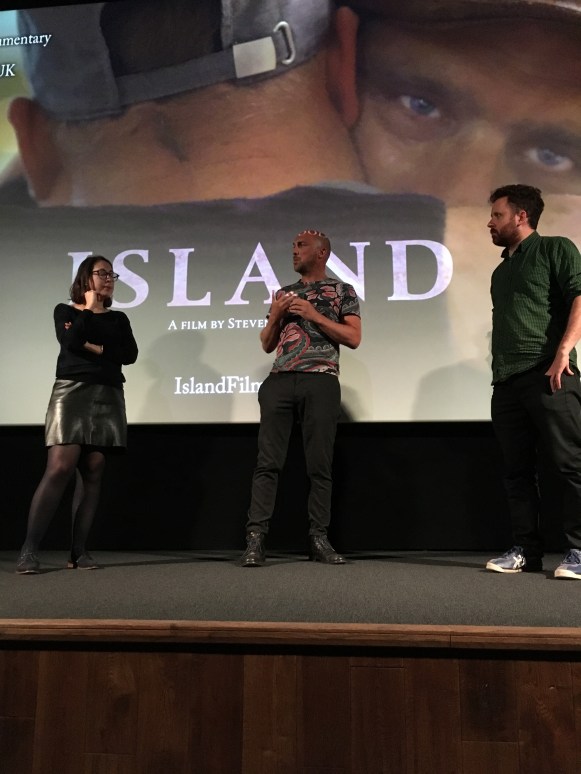
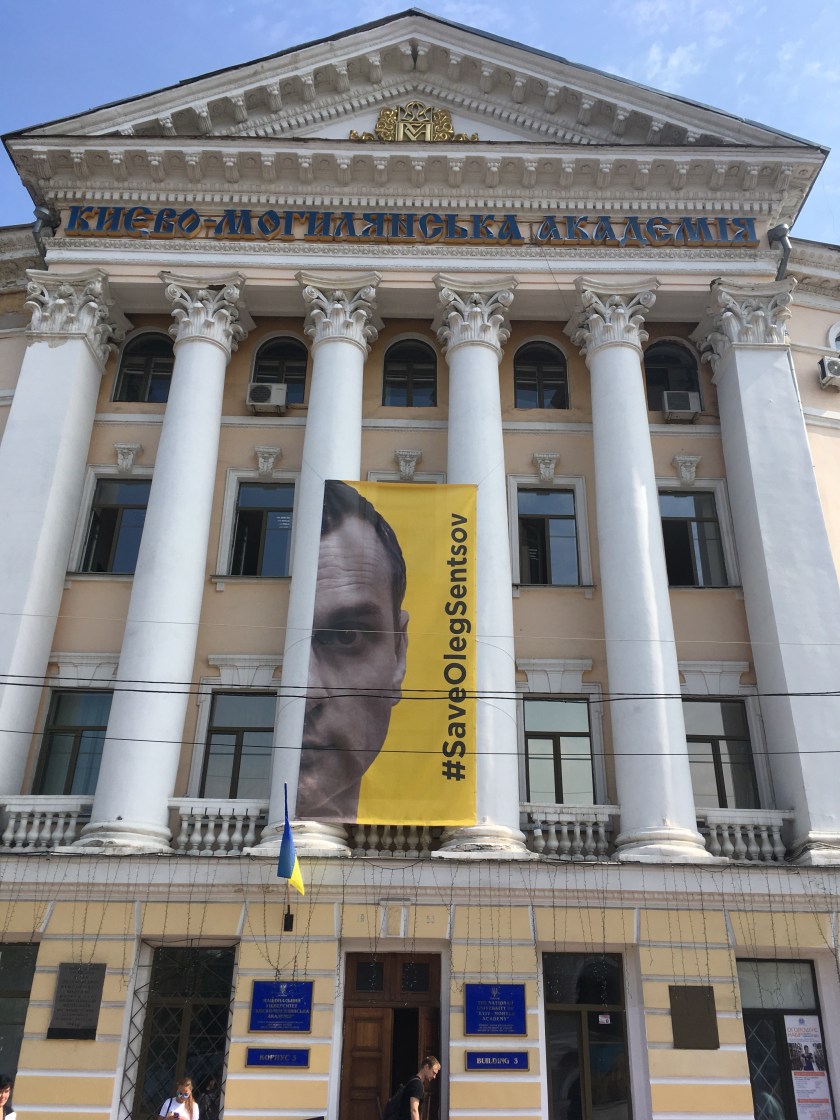
F for Fake: Murder on the Orient Express (Kenneth Branagh, Malta/USA, 2017)

American cinema, Blogpost, Film reviews, Transnational Cinema, Uncategorized

One of the key scenes in Murder on the Orient Express involves Hercule Poirot (Kenneth Branagh) exposing Gerhard Hardman (Willem Dafoe) as a fake Austrian scientist as a result of his failure correctly to pronounce Turin. Hardman – if that is his real name – pronounces it TURin, whereas a genuine Austrian, as Poirot reminds us, would have pronounced it TurIN.

Given the importance that the film places upon pronunciation as a sign of authenticity, it is notable that on two occasions we hear the Belgian sleuth incorrectly pronounce the plural of the French word for eggs. The singular, œuf, involves the pronunciation of the f: ‘urf.’ However, when said in the plural, French speakers drop the f sound and say ‘uh’: des œufs (‘des uh’). Poirot, however, on both occasions persists incorrectly with the f and says ‘urfs.’

If it is an incorrect pronunciation that exposes Hardman’s act, then by the same token Poirot’s incorrect pronunciation exposes his own act. That is, if it is because he cannot correctly pronounce words that Hardman is revealed as not Hardman, then because he cannot correctly pronounce words, Poirot is similarly revealed as not Poirot. In other words, it is because of an f that the Poirot of Murder on the Orient Express is revealed as a fake.

What are we to make of this?

On a primary level, we can simply say that it is an error that any actor (here, Kenneth Branagh) might make when saying words in a language that is not his own. That is, the slip is meaningless – the sort of slip that should not be the basis of an entire argument about the film.

But, given that the film itself involves sleuthing based upon such slips, then by the film’s own standards, we can mount a case against the film as a result of its linguistic inaccuracies. If Hardman’s slip is deliberate, in the sense that it provides a clue as to the real nature of what it is that we are witnessing, then so must we read Branagh/Poirot‘s slip as deliberate.

[SPOILERS.]

Hercule Poirot finds himself on a train where 12 people have gathered ritually to murder a man (Edward Ratchett/John Cassetti, played by Johnny Depp) who himself abducted and killed a child in the USA some time prior to the titular train journey taking place. Each has a link to the victim and the victim’s family – and each is sufficiently devastated by the original murder that they are willing to take part in the murder from which the novel – and subsequently the film – takes its name.

The film presents to us as if it is by chance that Poirot happens to be on the titular train. Indeed, the murderers would have gotten away with it, too, were it not for the pesky Poirot’s presence – and an avalanche that happens to keep the train stuck for a day or more near Brod, in what at the time of the film’s setting (1934) was the recently formed Kingdom of Yugoslavia, and which today finds itself in the Muslim-majority country of Kosovo.

But what are the odds that all of these people with a connection to Cassetti happen to be on the same train – at precisely the same time that the world’s greatest detective happens to be there, too?

As the odds are extremely slim that so many people with connections to Cassetti can be on the same train as him by chance, so, too, are the odds slim that Poirot would be on the same train as all of these people and as Cassetti by chance.

Indeed, as it is not by chance that all of these same people are on the same train as Cassetti (they are here specifically to murder him), so might it also not be by chance that Poirot is on the same train. For, as Hardman is not Hardman, so is this Poirot not Hercule Poirot.

Instead, as indicated by his fake f, this Poirot is in fact an actor playing the part of Hercule Poirot – the world’s greatest detective – precisely so that he can uncover the crime and then use his credentials as a great moral arbitrator in order to excuse those who commit the murder of Cassetti.

That is, this Poirot is not on the train by chance, but, like all of the 12 perpetrators, he is equally on the train as a result of engineering. This Poirot is there not just to uncover the murder, but to justify the murder. He is part of the plot to allow murder to happen justifiably. For if the world believes that even Hercule Poirot allows these people to get away with murder, then everyone will allow these people to get away with murder. It is necessary to fake Poirot’s presence in order to justify murder.

But why do this?

On one level, this must be done in order to keep the train’s owner, Bouc (Tom Bateman), at bay. Where Bouc might otherwise blow a whistle about the murder, thanks to Poirot’s presence and his condonement of the killing, Bouc will keep quiet and let the killing happen ‘in peace.’ Bouc thus is a kind of bouc émissaire, or scapegoat, for the murder – not because Bouc literally takes the rap for what happens, but because Bouc’s naïve belief in the fake Poirot reconfirms (the fake) Poirot’s (fake) verdict that the killers are justified in their actions.

Except that Bouc specifically invites Poirot to take the train when Poirot is called to London to investigate the Kassner case. That is, Bouc is necessary in order to corroborate that this curious man whom we see is Hercule Poirot, while at the same time providing the necessary setting for the murder to take place. Bouc is in on it, too.

It is not simply that Poirot is part of the plot to murder Cassetti, then. It may even be that Poirot – this fake Poirot – is the mastermind behind the plot, a man playing the role of the Belgian detective in order to allow a murder to happen that he himself will expose and then condone precisely so that it takes place without consequence.

What evidence do we really have that Ratchett is Cassetti? None. That is, we have 12 liars who insist that this man is Cassetti, a child murderer who was never caught and the evidence for whose crime is never revealed to us. And then we have the word of a fake Poirot, whose explanations of the crime may be ingenious – but they explain to us neither who has been killed nor why.

Murder in Yugoslavia, or more specifically Kosovo, is therefore justified by the word of a fake authority. Indeed, because of the authority of a fake Belgian who justifies it, it becomes the perfect murder. Collective murder is perfect.

At the outset of the film, we see Poirot asking for the eggs that are the centre of this argument. Four minutes, he says, which presumably means that Poirot likes his eggs with a bit of unboiled snot in them given that five minutes is in my experience the best time to achieve a soft-boiled egg – give or take 30 seconds depending on the size of the egg.

(Furthermore, the boiling point of water falls with decreasing atmospheric pressure, and so it takes longer to cook an egg when one is at a higher altitude, since the boiling water there is not as hot and thus not as speedy a cooking medium as it would be at sea level.)

Having received two eggs that simply by appearance he does not like, the fake Poirot dismisses them and demands two more, which duly arrive.

Poirot (the fake Poirot) then takes out a ruler and measures the eggs, even though the eggs are visibly not the same size.

What is more, having dismissed the initial pair of eggs, he now accepts the second set of eggs, even though they are visibly disparate – and even though measuring them will not help him to know whether they have been boiled for the four required minutes.

In other words, first the insistence, then the refusal and then the nonsensical measurements are carried out in order to convince those around him (and we viewers) that this man is Hercule Poirot, the sort of man who would do such nitpicking. But of course, this is simply a performance by an impostor.

When Poirot makes it on to the Orient Express, he is served two much more equally-sized eggs for breakfast by the train steward Pierre Michel (Marwan Kenzari). How Michel knows to prepare the eggs this way is not revealed to us – and this is Poirot’s first experience on the titular train. In other words, Michel would seem already somehow to know Poirot. And Michel will eventually be revealed as yet another part of the plot to kill Ratchett, whom the murderers also claim to be Cassetti.

What is more, when Ratchett endeavours to employ Poirot to protect him from what he senses is imminent danger, Poirot (the fake Poirot) refuses – in part because he does not like Ratchett’s face.

In other words, not only would it seem that Poirot (the fake Poirot) is known in advance to at least one – but perhaps more – of the criminals who murder Ratchett. But it would also seem that Poirot himself has something against Ratchett. Perhaps it is for this reason that this detective who jumps up and who leaves his berth upon the slightest sound also somehow manages to sleep through 12 humans piling into a berth, stabbing a man and leaving again… because he also was a part of it.

But then who is this fake Poirot?

When the fake Poirot arrives at Istanbul train station with Bouc, he is told that there is no room left on the train – and that he therefore cannot travel in spite of his friend Bouc’s promise that he can.

At the last minute, however, someone suggests that an Englishman named Harris has not made it on time to catch the train. Passengers must arrive 30 minutes before departure, otherwise they forfeit their right to travel – and Harris has not arrived before departure and therefore cannot travel.

What has happened to Harris? Harris may have forgotten or missed his train. Or, given that Harris was otherwise booked on to a train where all of the passengers and even some of the staff members know each other, as an outsider he has been conveniently forced to miss the train – so as not to disrupt the murder that is about to take place (Harris is the victim of a second, earlier murder?).

Or, more simply, Harris does take the train. For the man who claims to be Hercule Poirot is really an Englishman called Harris, hence his inability correctly to pronounce the plural for eggs in French (des œufs/des ‘uh’).

Perhaps it is for this reason that MacQueen (Josh Gad) initially expresses surprise at seeing Harris/Poirot – for he does not recognise his friend in disguise, prompting Harris/Poirot to express his own dismay at MacQueen’s appearance. That is, Harris is indirectly expressing his own disappointment at having to look like Hercule Poirot.

Everything that follows is persiflage, pure show, or simply noise like the whistle of a train (per-siffle-age), including a somewhat nonsensical ‘action’ sequence in which Poirot chases MacQueen along a wooden bridge.

Indeed, this would explain the highly theatrical opening of the film, too, in which the fake Poirot supposedly solves the case of a missing treasure of which a rabbi (Elliot Levey), a priest (David Annen) and an imam (Joseph Long) are accused of stealing.

The fake Poirot himself points out that this is almost a joke scenario to the assembled crowd, who for some reason accept that a trial can or should take place in the open air and under the authority of a fake detective hired by the British government. That is, the trial is indeed a joke.

For, it becomes immediately obvious that there are not just the three religious men involved in this case, since the fake Poirot quickly explains to us that the last person to see the triumvirate was the British Police Chief Inspector (Michael Rouse).

We are told that Poirot (the fake Poirot) solves this crime as a result of a mark left by a shoe on a painting that lines the wall beneath the treasure. But far more simple a solution is to include among the suspects the very man who has known to accuse these three religious figures in the first place.

In other words, the ‘trial’ at the film’s opening is a pure show, a sham that is also put on in order to convince the assembled crowd and we viewers that this fake Poirot is the real Poirot.

The Chief Inspector supposedly steals the treasure, but it seems more logical to this viewer that the crime itself is a set-up so that the trial can be staged and so that the fake Poirot can be inserted into the story world.

That is, the fake Poirot is really engineered by the British – not to sort out who is responsible for the looting of valuables in Jerusalem (where the film opens), but in order to justify the British looting of valuables from Jerusalem and elsewhere in the Empire.

Supposedly called to London for the Kassner case, the British have in fact set Harris up as Poirot so that he can go on to the Orient Express to mastermind and then to justify the murder of Ratchett.

Why do this? Because Ratchett, too, is involved in the business of buying and selling antiques, including fake ones. That is, Ratchett wants to get involved in the very same racket that the British are operating throughout their Empire: stealing antiquities and replacing them with fakes that are sold at high cost.

As an upstart possible competitor, Ratchett must naturally be neutralised – otherwise the claims to power of the British will be exposed as fake. The Empire will be exposed as fake, its pretences to power merely an illusion staged to fool the assembled crowds that its figures of authority (the so-called Poirot) are in fact more powerful than their religious authorities (the rabbi, the priest and the imam).

Only two people will know the identity of the murderer, says the fake Poirot: God and Hercule Poirot. But if Hercule Poirot does not exist, then God may not exist. Or if Hercule Poirot is fake, then God may also be fake. That is, all who claim to be authorities on this Earth are fake, actors in a spectacle that is put on in order to create the illusion of power and in order to convince the spectators to believe in that illusory power.

(It is by this token important that the fake Poirot exposes corruption among the occupying British forces – the supposedly criminal Chief Inspector. In doing so, the fake Poirot would claim to show that the British bring their own people to justice – in the process covering over how the system of Empire will itself never be brought to justice. That is, the small crime is used as a mask for the massive crime that is taking place in broad daylight: the undermining and replacement of the local figures of authority for the purposes of ransacking the territory that the forces of Empire are infiltrating.)

Given the presence among the perpetrators on the train of three to five further Americans – MacQueen, the fake Hardman, Dr Arbuthnot (Leslie Odom Jr), the fake Countess Elena Andrenyi (Lucy Boynton) and the fake Caroline Hubbard (Michelle Pfeiffer) – it would appear that the British are not alone in ransacking the rest of the world.

Let us not also forget the Russians, including Princess Dragomiroff (Judi Dench) and Count Rudolph Andrenyi (Sergei Polunin), who seems expressly to take pleasure in the murder (as well as being prone to violence in general).

The group is rounded out by naturalised Americans Biniamino Marquez (Manuel García-Rulfo) and Pilar Estravados (Penélope Cruz), as well as British citizens with strong American ties, including Mary Debenham (Daisy Ridley) and Edward Masterman (Derek Jacobi), as well as Jewish émigrée Hildegarde Schmidt (Olivia Colman).

In other words, the major world powers are all united in a front to frame and to justify the murder of a man, Ratchett, whose crime is to seek to get involved in their game. Whose crime is to seek also to be a criminal. And who for his effrontery is branded a child abductor and murderer such that his assassination for theft and the peddling of fakes becomes morally justified.

When the fake Poirot performs his charade of egg inspection before a young boy (Yasine Zeroual), the fake Poirot explains that the disparity in size is not the fault of the eggs, but of the chicken. Or rather, that it is an inexplicable mystery.

To what end this prologue, which does not appear in the novel?

Perhaps Branagh is trying to tell us that as no two eggs are the same, so are a film and a novel not the same. That is, one can never get the original to match the copy. And so Branagh is suggesting from the very beginning that this is a fake version of Agatha Christie’s story that we are watching – and that it would be pointless to try to get the one to match the other.

Similarly, the film’s opening by the Wailing Wall in Jerusalem does not happen in the novel, which rather opens in Aleppo, and which sees Poirot travel by train (on the Taurus Express) to Istanbul, rather than by boat (as happens in this film).

We have already established how the film’s opening takes place simply for show – in the sense that it is a show designed to convince the world that this fake Poirot is the real Poirot and that the British are thus justified in their dominion over Jerusalem (which of course the British celebrate as being theirs whenever they patriotically sing the hymn ‘Jerusalem,’ as written by William Blake, to whom we shall return shortly).

But here the opening, with its overhead shots and its supposedly reliable flashbacks to the dispute between the rabbi, the imam and the priest, are all designed to convince us not just of the authority of the fake Poirot, but of the authority of the film.

This is especially clear in the fake Poirot’s illusory ability to predict the movements of the Chief Inspector. Firstly, he sends a guard to stand at the south gate in advance of denouncing the supposedly corrupt policeman, while also placing in the wall his walking stick, which eventually the fleeing Police Inspector will run into.

But this miraculous ability to predict the future is not so much magic as simply stage management: it is easy to seem to predict the future when it has been prearranged in advance for the policeman to go to the south gate and then to run into the walking stick.

In other words, the film wants us to believe in the power and authority of the film, when all of this is really staged, a fake that is a far cry from Christie’s novel. This is not Murder on the Orient Express that we are watching, but a fake film created by an impostor.

Put differently, cinema as a whole is an illusion machine that is used to give authority to those who peddle it. Like Ratchett, of whom the fake Poirot and his friends must get rid, cinema passes off fakes as if real, making handsome profits in the process while also stealing real local treasures via Empire, and as rendered here through the use in this film of Jerusalem’s Wailing Wall.

Which of course is not the real Wailing Wall, but a fake filmed in Malta.

More than this. As the fake Poirot is put into motion in order to justify the murder of Ratchett, so is cinema put into motion in order to justify murder more generally. As the disappearance of Ratchett is a conspiracy between the British, the Russians, the Americans and various naturalized Americans, so is the disappearance of Aleppo, for example, a conspiracy that is made to look like a struggle between the major world powers.

The point that I wish to make is not specifically about Aleppo, nor Palestine which was the nation in which Jerusalem resided at the time in which the film is set.

Rather, I am using Aleppo and Palestine here as examples of Empire and the role that cinema plays in the continuation of Empire. In bringing this fake magic trick to the world, the power of those who create cinema is justified.

The film regularly features extended sequences filmed from the exterior of the train, such that the train itself becomes a ‘character’ in the film. We might venture further yet, though, and suggest that it is not simply as if the train itself were a key player in the events that are unfolding, but as if the train demanded these events.

That is, the train is like cinema a tool for the creation of modernity. And what is modernity? Modernity is the creation of a system of power whereby some use the trickery of technology in order to demonstrate their power over others, whom they then ransack in order to consolidate their power – a perfect feedback loop of empowerment.

But this empowerment of some over others also involves the disempowerment of others for the benefit of some. This disempowerment is in effect murder. As a human seeking to become god kills others in order to use their life force and blood in order to prolong, increase and perhaps render permanent their own, so does modernity involve the sacrifice of many to sate the claims to divinity that a few are trying to make.

Naturally, anyone who sees through this fakery and who aims to achieve their own power must be removed – hence the murder of Ratchett. Revolution, or not to believe the proclaimed divinity of those who would have power, and to seek to establish via the same means one’s own power, similarly requires suppression, or else power will not be consolidated but distributed.

(It would seem all too human for humans to seek to become gods.)

In order for power to take on magic qualities that reinforce its power (power as appearance), power also seeks to hide its origin. As the projector from which images originate is hidden in the cinema, so is the provenance of power generally hidden. Power comes as if from nowhere, via sleight of hand. It is magical. And thus its authority is not to denied since it is beyond the ken of other, uninformed humans.

The status of Murder on the Orient Express as a Maltese-American co-production, then, functions as a means to hide the film’s own source of power (and that of cinema more generally). This is a film that comes from a ‘small’ place (Malta), but which really just reaffirms the big interests of cinema (Hollywood) – with Malta itself a screen enabled by the tax breaks that drew the production to it in the first place, and which tax breaks function as an invitation to under-pay local, Maltese workers, thereby justifying under-payment and exploitation as a whole.

What is more, as Malta functions as the home of an infamous Masonic order, and as small islands generally function as tax havens, or what the recent leak of documents would confirm to be ‘paradises’ on Earth (or what Nicholas Shaxson further defines as islands of [stolen] treasure), so does the presence of Malta in this production function as a means of burying treasure, turning theft into an illusion – something the reality of which cannot be proven, and which therefore is both godly and not real. To believe in it is to be an insane conspiracist. To be part of it is never to be discovered.

This is how Empire functions: power is nominally regulated through the creation of taxation systems, with the powerful then placing themselves outside of the jurisdiction of such regulation. Regular humans who are too stupid to be crooks are punished for their honesty (their money is stolen from them, and they receive next to nothing in return), while the so-called gods are never punished for breaking the rules that they impose upon other people.

(Europe/the West must be defended from Islam by the Knights Templar of the Order of Malta, a specifically Christian group that aims to put down the revolutionary religion of Mohammad, who is not divine but human, and so who threatens to undermine the claims to divinity of other humans. Murder in Kosovo is justified.)

And what of William Blake? The fake Poirot is called to London for the Kassner case. To what might this refer? Perhaps it refers to the work of author Rudolf Kassner, the man who translated Blake into German and who also was influenced by Laurence Sterne, whose Tristram Shandy is a novel in which fabulation becomes impossible to tell apart from truth as we are presented with illusion after illusion.

(Tristram Shandy as a deconstruction of power, and as a deconstruction of cinema avant la lettre/avant la caméra. In famously featuring a black page, Tristram Shandy renders itself antithetical to cinema, which relies upon darkness, but which cannot make darkness visible since this would be to bring to light and to humanise its otherwise invisible and would-be divine workings.)

(And so the ‘Jerusalem’ of Empire is not the real Jerusalem; it is a fake, builded elsewhere in England. But in building that fake Christian as opposed to that multi-faith Jerusalem, so are the dark Satanic mills of Empire put into motion.)

It is a kind of Blakean demonic energy that Ron Rosenbaum attributes to Adolf Hitler in a bid to explain his ascent to power – as if Hitler were the ultimate revolutionary little man born to rob power back from the gods in which he did not believe, and who thus provoked global war as the gods naturally demanded his blood to prove that Hitler was human as Hitler demanded blood to transcend his humanity and to become a god. With their nuclear light, the winners of the war demonstrated that they verily were gods.

The fake Poirot is perhaps, then, called to investigate the rise of Hitler and the role that literature, translation and perhaps even cinema played in that rise. Hitler is one more upstart, like Ratchett, whom the fake Poirot and his British, American and Russian friends must help to put down in order to perpetuate the balance of power as is. America, Britain and Russia may squabble over who has most power between them, but these squabbles merely cover over the bigger question of why they have power at all. They are a cinematic show that plays out so that people believe in their divinity as they rob the world of its treasures, selling back fakes to make yet more money and to consolidate all power in their own hands.

So for the sake of an f, Murder on the Orient Express is revealed as fake.

Or perhaps a simple show of ignorance on the part of Kenneth Branagh (he does not know how to pronounce his œufs) sets in chain a conspiracy theory that nonetheless reveals the very humanity and not the divinity of the world’s systems of power – and the role that cinema plays in creating and maintaining them.

Or perhaps this is just idle conspiracy theoretical fabulation, patterns where there only is chaos, and to be disproved in an ongoing apocalypse of false idols.

Fifteen thoughts about Flatliners (Niels Arden Oplev, USA, 2017)

American cinema, Blogpost, Film reviews, Uncategorized
1. Resuscitated films end up being haunted and made to feel bad by their past. Kiefer Sutherland is on hand to ensure that this is so.

2. In the contemporary age, suicide becomes the logical extension of the pressure to work oneself to death (and not to be a loser who simply works and goes home at the end of the day).

3. Computers are the urns in which we are always placing our remains.

4. Rich kids are not really haunted by feelings of guilt for their past sins. They in fact love their demons and accept even the most insincere of apologies – because they never really needed one.

5. The future of medicine is the preserve of the already-rich. They will play god with the lives of the poor who come to visit them. Medicine becomes like sport as doctors compete with each other to satisfy their narcissism.

6. “Why do you like me?” asks Nina Dobrev to Diego Luna after they have just boned. “Because you’re really hot,” he answers. Dobrev, her head on Luna’s chest, looks away with a satisfied glint in her eye: yes, I am, she is thinking. And even though Luna then adds that he was joking and that he likes her because she really cares about people, we all know that she does not care about anyone but herself and the only reason that he likes her and the only reason why anyone would like this film is because… she is really hot.

7. If the film is really a celebration of Hot People Boning, this all gets censored out in the UAE (where I saw this film). Meaning that the even less sense that the film makes… actually highlights precisely the senselessness of the film.

8. Death involves seeing oneself as if from outside one’s own body: death is basically the selfie stick/the selfie stick basically offers us a glimpse of death.

9. The fact that death comes back into life after the kids flatline would suggest that really these kids are already dead (inside).

10. People drive cars way too young in the USA. In being a film in which a woman (Ellen Page) is haunted by her sense of guilt after killing someone while answering her phone at the wheel, then it is not just a remake of a 1990s mediocrity, but it is also a remake of Lucrecia Martel’s Mujer sin cabeza/Headless Woman (Argentina/France/Italy/Spain, 2008). As we shall see, as that film is an expression of bourgeois guilt (or a lack thereof) for centuries of exploitation, so, too, is this film (although this does not make it any good).

11. As selfies are a channel through which we can see our own dead bodies, so are mobile phones a channel through which we speak to the dead. That is: mediation takes us away from direct human contact as we prefer instead phantom contact, or contact with phantoms.

12. The Mexican does not need to flatline – because as per Octavio Paz and the character who comes from the place where they celebrate El Día de los Muertos, he is basically already dead, too.

13. Privilege is based upon geopolitical exploitation and murder. But if you have it within you to forgive yourself, then it is okay to be a Nazi.

14. This recalls Slavoj Žižek‘s old observation that it is only when captured that Nazis tended to kill themselves – thereby exemplifying the public nature of shame, which is unbearable, versus the private nature of guilt, with which we can live. The film would seem to suggest a renewed era of shamelessness: I am shamed, but I basically can live with it – because I do not care (and because I am Really Hot). With the ongoing interest in figures like Eva Mozes Kor in mind (hat tip to the wonderful film scholar Leshu Torchin), one wonders that the forgiveness of victims only adds to the sense of shamelessness. Odd though this may sound, perhaps it is not for victims to forgive. Only God forgives. And if we do not think that this is so, then we are opening the door to new fascisms.

(And if there is no God, then we need a Law that can forgive. And if we have no universal Law as the guilty walk free, then who knows what is to happen? As the oppressed forgive their oppressors, then either we live in a world in which the oppressors are correct to oppress the oppressed, since neither God nor Law will judge them, and really there is no human equality, but only entitled superhumans and subjugated subhumans – many species as we cling to the illusion that really we are one species… or we must invent equality, change the Law, invent God, and give those self-proclaimed homines dei something really to be afraid of. The thing that the homo deus fears most in his belief that he is the summum of evolution… is revolution.)

15. Sex is a theme that runs throughout the film: slut-shaming; being a slut for having a one-night stand; paying for an abortion after a liaison with a working-class woman. Having a sexuality appears as more shameful than anything else, and at least on a par with murder – even though sex is designed to create and not to end life. Sex is shameful because it reveals mortality and failure in an era when one is supposed to live forever. In this way, sexuality has become death, an admission of mortality and of a body – as opposed to being an image, a selfie taken from outside one’s own body – about which one ought to be ashamed (it is only after flatlining that the Really Hot People can bone).

Pretty Vacant: Song to Song (Terrence Malick, USA, 2017)

American cinema, Blogpost, Film reviews, Uncategorized

A Malickian montage of thoughts about Song to Song, the latest film from Terrence Malick.

Kill your gods
There may be a God. There may even be Gods. But there is no god who is a human. And for many years I thought Malick something akin to a god after various films that I enjoyed enormously: BadlandsDays of HeavenThe Thin Red Line. I am even one of a few people whom I know who liked To The Wonder.

Things began seriously for me to fall apart with Knight of Cups. Christian Bale moping around his privileged world, standing over homeless black people and moaning on about how tough his life is. A punch in the face and a few gulps of shut the fuck up were what I thought Bale’s character merited upon seeing the film.

And here, with Song to Song, the same trend continues.

More on this below. But the initial point is that Malick – together with director of photography Emmanuel Lubezki, whom filmgoers also feel can do no wrong… are mortal. Utterly and thoroughly mortal. To this extent: Song to Song made me believe that I am a better filmmaker than Terrence Malick and that my cinematographer, Tom Maine, is as good as Emmanuel Lubezki. And we work wonders from a position of relative poverty. Letters to Ariadne says as much as if not more than Song to Song. And Tom’s images are every bit as beautiful as El Chivo’s.

But this bit of flexing aside, let us look at the film…

Pretty Vacant
Of course latter day sell-out Johnny Rotten turns up to collect his fee by being in Song to Song, thereby evoking the whole history of punk that he has turned his back on as he takes role after role in advert after advert.

And yet this Sex Pistols song, ‘Pretty Vacant,’ effectively sums up Malick’s film: ‘Oh we’re so pretty / Oh so pretty / We’re vacant.’

For we basically get Rooney Mara (actually quite good in this), the Gos, Fassbender and a collection of other, typical Malickameo stars turning up to give us their thoughts and feelings about life, the universe and everything. That is: everyone is beautiful and everyone is ‘Troubled’ because they have, like, you know, relationship and daddy and self-absorption issues.

Real estate and empty parking lots
Song to Song has loads of shots of empty parking lots. America has been constructed around and for the car. What is the car? A machine for travel, of course. But specifically a machine that one uses to travel only in small groups or alone; a private form of transport, increasingly taking on the bulk and the aggression of a tank.

Space is dedicated for the temporary housing of these vehicles. They are often empty. Pretty. And vacant.

Song to Song also features lots and lots of empty apartments. These also are pretty. And vacant. We have real estate for cars and we have real estate for stars. Malick’s film insists upon such spaces so much. The emptiness no doubt reflects the inner emptiness of the characters that we see onscreen. Well done, Terrence, for using ‘Symbolism.’ Repeatedly. But to what end?

Whenever anyone calls anything ‘real,’ they are making a claim about the nature of reality. That is, they are labelling one thing as real at the expense of other things. The real (so say I) effect of the phrase ‘real time,’ for example, is not that we watch things unfold at the pace that they would in the ‘real world.’ On the contrary, the effect of the phrase ‘real time’ is to justify only one particular temporality or rhythm – the rhythm of the media that deliver ‘real time’ footage, which in turn is the rhythm of capitalism – as real. All other temporalities and rhythms are thus demoted to a realm outside of reality. This is a political manoeuvre.

And so it is with real estate: to say that only these estates are real is to consign to unreality those other estates that people occupy: the hovels, the slums. There is no room for these really in Malick’s film; offscreen, they are unreal. Instead, the only reality that he offers is the pretty and vacant world of lavish apartments.

Glass houses and the attention economy
How many windows and glass fronts are there in Song to Song? In the pretty and vacant estates that are passed off to us as real, we see glass house after glass house. ‘Transparency’ is the ‘Symbolic Meaning’ of that: all of our lives are on show, for people to see, constantly under scrutiny from others and our selves.

Oh, how tough it must be to be a star we find ourselves thinking: always being watched, it must So Hard.

Don’t get me wrong: I am not sure that I would care to be Famous particularly (I have not experienced it so I would not know). For, I am sure that being Famous is not such a Good Thing as we are led almost always to believe.

But here we have Famous People being Pretty and Vacant on screen for 129 minutes. They are Pretty, for sure. But to what end is this being shown to us?

Malick’s film is filled with scene after scene of people Acting Out. Look, a Pixie Woman cannot but do a Pixie Dance as she crosses a road because Pixie Women are Free, and Free People do Free Things like Pixie Dances.

But what is the Pixie Dance really about – and why is Song to Song filled with Pixie Dance after Pixie Dance?

Pixie Dances are about Getting Attention. And the reason why people want to Get Attention is so that they can Be Seen, which in turn allows them to Make Money from Being Seen and Getting Attention and doing Pixie Dances. That is, the Pixie Dance is a capitalist performance that feeds into the attention economy.

Is Malick critiquing the attention economy? Or is he really reinforcing it by showing Pixie Dance after Pixie Dance? Why is there basically no dialogue in this film – but instead a relentless collection of solipsistic inner monologues? Look at me! Give me money!

Men handling women
Watching Song to Song, you will notice that the film is also filled with scene after scene of Men handling Women. Gripping, grabbing, tying up, covering over. The film is a relentless demonstration of how men consider women to be property.

Rooney Mara at one points ties up the Gos – but two things: he pulls her along as she holds on to the rope used to tie him up; and then we see her untying him.

Men want to possess women. But does this mean that Malick is critiquing this tendency? Is that why Rooney Mara is only billed third in the end credits, despite having the largest monologue and occupying the most amount of screen time?

And what is the deal with that lesbian relationship with the Unbelievably Pretty (and Vacant) Parisienne who turns up part-way through the film? Oh, that’s not there for the titillation of the male viewer (like the insistence of Lubezki to film Natalie Portman at breast height and for the camera to be on Mara’s waist at every available opportunity)… that is Mara’s character Discovering Herself.

So where is the scene of the Gos sucking off Fassbender? Fassbender connotes Shame. And where McQueen was trying to replicate Malick with the use of thoroughly Hans Zimmer-like music in Shame, it would seem here that at least McQueen has bettered Malick with Shame, while Song to Song remains utterly prurient, even oddly innocent, while trying to give us some sense of Desire as understood by someone who seemingly Does Not Fuck On First Dates.

Indeed, the Gos asks Mara longer than halfway through the film whether she has slept with Fassbender. Are you serious? In my world, I’d have asked her that about three minutes into our relationship… and what does it fucking matter anyway? Of course people can do what they want. But not these ones: they are Troubled and Alone. Ah, the burdens of being Pretty and Vacant.

Montage of the mind and Patti Smith
But you have to understand that Malick is making a New Form of Cinema. Because his movies are not narrative, but rather Montages of the Mind. They are, as they say, Film-Philosophy, because they show that film can ‘think’ and that the Brain is a Screen is a Brain.

Okay. Sure. But then why insist on characters and narrative – even if the montage is choppy, fragmented, and clearly as much concerned by space (and the location of Austin) as it is by story?

Patti Smith turns up a few times to tell us a few pearls. And one cannot but think of Jean-Luc Godard’s Film Socialisme, where Smith rocks up on the Costa Concordia, too. But where JLG pushes for a radical montage that basically says Fuck You to story in a bid to democratise the image, Malick just offers Pretty Vacant Image after Pretty Vacant Image. There is no democracy here, for there is no critique of the rich, even if it is Democratic to explore how they might be Troubled by their Prettiness, too. This is just the Rich and their Troubles. Be Democratic, Terrence and get out of the Privilege – otherwise you are simply blinded by the limitations of your own world and showing us your blindness. No hermophroditic and fortune-telling Tiresias here, though; this is the blindness of the Powerful, who do not see that their own empty Real Estate is about to crumble.

Another Godard touch: an interview with a prostitute, whose pock-marked face perhaps reminds us that not everyone is So Pretty As A Star. She would have been a more interesting film than Song to Song, but Song to Song basically forgets her, just as it stuffs a few dollars into the hand of an old Mexican woman so that we can look at her face for a moment and Remember The Poor People – before going back to being Pretty and Vacant.

No one works
In the world of Austin, Texas, where Song to Song is set, apparently everyone is working on some music. Except that no one ever does any work. Ever.

Maybe the Gos and Mara pluck a few chords – because we all know the Gos can Play Piano after LaLaLand.

But basically No One Works in this world.

Because people basically drive around, park up, and then do some Pixie Dancing in or around Empty Real Estate, before driving on to a different Empty Lot where they do a bit more Pixie Dancing, they have nothing to fill their time or their minds but their worries about Love and Love Things.

But wait… at the end – more shades of a LaLaLand alternative ending montage – we see the Gos working for about two minutes. And we are told by Mara about how he dreamed of the simple life.

Because being an honest, hard-working American is a Simple Life, whereas being Pretty and Vacant is Difficult and Hard and brings with it many Troubles. Oh, to be poor and ugly. Life would be so much easier. And yet, we must carry our burden, and we are so burdened by it that we build glass houses so that everyone can see it. So that we can make ourselves gods, so that people will worship us as we demand their attention and thus earn money so as not to work but to worry about Love and Stuff.

And what work is it that the Gos does?

Of course it is drilling. So he is basically reminding us of how the USA is built upon energy for cars, so that the solipsism can continue. The destruction of the planet as fracking becomes increasingly common and we destroy nature even though we look at Birds and Dogs and Llamas and Deer and Horses and the various other Animals that feature in Malick’s film – along with Water and Air to remind us that there is a world out there and that the Privileged feel So Connected With Nature.

And America is not built upon genocide and slavery. And land grabs. And the claim that the estate created is real.

There is a rumour that Terrence Malick loves Zoolander and quotes it quite regularly. Maybe Song to Song is his Zoolander. But the speed of his Montage of the Mind would suggest more an ADHD editing style that is about Getting Attention as the film itself does Pixie Dance after Pixie Dance to convince us of its Prettiness and Worthiness (because it, too, is Heavy and Troubled). Indeed, for a film that is supposed to go from Song To Song, it seems odd that the film never in fact allows a song to play in completion.

The World Reduced To Symbols. A World Reduced To Cinema. To Be Consumed. And the poor, and women and other estates: they may feature as the playthings of the Rich – so in some senses they are in the film. But why not just commit to rejecting cinema and the values of the capitalist attention economy more thoroughly and make a film that really takes us into a human, even post human democratic or socialist vision of the world?

Even Zoolander, let alone Film Socialisme, manages to do that.

Hymyilevä mies/The Happiest Day in the Life of Olli Mäki (Juho Kuosmanen, Finland/Sweden/Germany, 2016)

Blogpost, European cinema, Film reviews, Finnish cinema, Uncategorized

Spoilers – although since this film is based on a true story, revealing its outcome should not be too traumatic for readers (if there are any).

The Happiest Day in the Life of Olli Mäki is about a boxer, Olli (Jarkko Lahti), who in 1962 has a world title fight against Davey Moore (John Bosco Jr) in Helsinki. He loses. Easily.

I shall return to the final fight itself.

But really I only want to talk about a couple of things that feature prominently in this film, the main one of which is moments of play.

Olli is in love with Raija (Oona Airola) – and while he is keen on fighting, he is perhaps more interested in being with her, even ditching his training at one point in order to travel home to Kokkola, his hometown, in order to be with her.

This, together with Olli’s lackadaisicalness in general, exasperates his coach, Elis (Eero Milonoff), who has a lot of money riding on bringing a world title fight to Finland, having himself also been a competitive boxer and who travelled to the USA (where he claims he became friends with Frank Sinatra).

This is not, though, a tale of how preferring to be with women destroys the boxer’s competitive edge. Or if it is, then Juho Kuosmanen’s film certainly does not condemn Olli for this. Rather, The Happiest Day… is about not just about how love for a woman is perhaps more pleasing than fame and fortune obtained via pugilism. It is also in some senses about a more general kind of love that is characterised by play.

There are two key moments that signify Olli’s love of play. The first is when he skims stones across a lake with Raija and the second is when he discovers a kite stuck up a tree while on a run. We see Olli climb over a fence and begin to try to shake down the kite – before the film cuts to a long shot of a smiling Olli running through a field, the kite flying not far behind him.

These moments signal play because there is ‘no point’ to them. Olli is not trying to skim his stones further than Raija, and the flying of the kite is not for any reason than some sort of childish enjoyment of simply flying the kite.

In other words, play here is defined as a moment when one steps outside of the demands of capital, and instead enjoys things not for the purposes of making money, but the sheer joy of it.

Play is in this sense very different from sport, which is play subsumed for the demands of capital: play is not now playing for no good reason, but it is playing to win, with winning itself equalling economic and other benefits.

Play is a form of love because it expects nothing back from what it encounters – much as love itself should be disinterested and not so much about possession (capital) as about sharing, enjoyment and fun. Nothing is demanded in return in order to close off a deal; it is open and open-ended.

Sport, meanwhile, is about returns and about control. Indeed, Olli is no longer allowed to be who he is now that he is a professional boxer. Instead, he must modify his appearance, be that by purging his body of excess weight in order to achieve the appropriate size for a featherweight (57 kilograms), or standing on a stool in order to advertise a suit (Olli is shorter than the female model, played by Pia Andersson, who accompanies him in the photo, thereby clearly demonstrating the constructed nature of patriarchy as superior in the system of profit-seeking capital).

In an early scene, we see how Olli literally would not hurt a fly, while he also storms away from his training after Elis gets him to beat up a sparring partner against his will. It is not that he is without boxing skill; but he lacks the killer instinct.

What is more, during a sequence in which Elis has to find more money ahead of the bout in order to keep his life – and Olli’s title campaign – solvent, he goes to a sort of Masonic institution, where the sponsors of the campaign question that Olli might be a communist.

It is not that Olli need be a card carrying party member; rather, his is a world defined not by work, but by play, but a sense of equality in life, and also by associations with nature. Indeed, Olli seems happiest when training without the attention of the media and just for himself.

Widely reported for being shot on 16mm, the film would also seem in its form to suggest that it is playful: using equipment that is now obsolete, The Happiest Day… would want to tell us that filmmaking itself should be ‘useless.’

That said, the film nonetheless constructs a somewhat romantic or mythological version of Olli’s life and of Finland more generally. While Elis and others are clearly in life for the money, Olli and Raija are smiling, peace-loving characters who never seem to get too angry, while Olli’s most successful training seems to take place not just in nature, but also in a specifically Finnish sauna. That is, the film suggests that play, nature, communism and a lack of competitive, capitalist edge, is somehow a core and rural Finnish value.

While it is admirable that the film suggests that no one is a failure (since success and failure mean nothing) in the realm of play, it nonetheless provides us with a canny performance of failure, which in turn conceivably undermines the reliability of the film in terms of its moral message: the film wants to perform failure as actually success, but really this is a deliberate strategy, along with the nostalgic use of 16mm black and white photography, in order to give to the film a paradoxical use- and exchange-value, i.e. so that it can make money and thus serve the purposes of capital.

Nonetheless, perhaps at this point we can return to the final bout itself. It is so heavily anticlimactic that Olli’s naïveté is thoroughly exposed. But more than this: Moore’s ‘killer instinct’ does not seem to come from his arch-desire to make money (even if this was in real life the case), but more born from an understated sense of the suffering and anger experienced by a black American in 1962.

That is, Olli gets his arse handed to him in the fight as his comfortably Finnish life is confronted by the reality of trying to escape life under historical slavery – where the ‘escape route’ is not a retreat back into the country, but by explicitly hardening and disciplining one’s body in order to become a fighting machine that destroys Olli with ease. For, fighting is not for this boxer fun or play (and the film’s Moore seems to have none of the performed enmity for Mäki that we might expect from contemporary belligerents). As a result, Moore’s body becomes precisely a weapon in order to escape a reality in which there is no room left for either fun or play.

This in some senses also involves an occultation of history. For, Moore went on to be killed within a year of his fight with Mäki in a contest against Cuban-Mexican boxer, Sugar Ramos. Meanwhile, Mäki went on to have a relatively successful and certainly a long career as a boxer.

The Moore’s death at the hands of Ramos suggests that Moore is to Ramos as Mäki is to Moore. Where Mäki is too privileged a westerner really to be any good at fighting, so might Moore be not violent enough in his bid to break American history when faced with the fighter who expresses the extended violence of the continent that lies to the south of the USA. Read this way, Moore might fight to free himself from a history of slavery, but Ramos fights in order to try to break the monotony of capital world wide. That said, Moore’s death (and the violence of Ramos, who killed more than one boxer in the ring during his career) suggests the sad logic of boxing as a spectacle of pugilism, a latter day gladiatorial combat in which most participants fight for ‘freedom’ (riches) because they are not otherwise free to play, coming instead from deprivation and thus attuned to an everyday violence the suddenness of which takes Mäki completely by surprise. The film’s Olli has never experienced anything like it – and is not cut out for this violent world, even  as the classed violence of the fighters is brought under the control of spectacle as opposed to contributing to a genuine revolution.

In other words, at its edges and in its framing of history, The Happiest Day… cannot help but betray its own privilege: the world of play is beautiful and in some senses outside of capital, and in a world full of love and play. But it is also a world of love and play that is precisely inside capital since only certain people can afford it.

In this way, the film’s performance of failure – the Olli Mäki of the film is not cut out for boxing – is really an expression of power – as perhaps the film’s circulation in art house cinemas rather than in multiplexes (where we get to see the boxing fantasies of the Rocky franchise and/or films like Bleed for This, Ben Younger, USA, 2016, regardless of whether they like The Happiest Day… are based on true stories or not). This does not make the film any less charming, nor any less valid in its critique of sport and its praise of play.

Nonetheless, we might bear in mind some of these contradictions that are – pun perhaps intended – at play as we watch this otherwise beautiful film.

Neruda (Pablo Larraín, Chile/Argentina/France/Spain/USA, 2016)

Blogpost, Film education, Film reviews, Latin American cinema, Uncategorized

There are numerous pleasures to be had watching Neruda, including some fantastic performances, an excellent script and some stunning cinematography. Up until now, I have basically enjoyed all of Pablo Larraín’s films (of those that I have seen)… but Neruda seems to function on a whole different level.

For this post, though, I am going to limit myself only to a few comments, which will focus primarily on a key moment that takes place towards the end of the film (although I would not consider anything that I am going to say as really constituting a spoiler).

The film is about the impeachment and then the flight into exile from Chile of the poet and politician Pablo Neruda (Luis Gnecco). In this process, Neruda comes to be pursued by Óscar Peluchonneau (Gael García Bernal), a policeman who may or may not be a figure of Neruda’s imagination.

After various attempts to leave Chile, the film ends with Neruda leaving for the south of the country with Peluchonneau in pursuit. There follows a continuation and a culmination of the cat-and-mouse game that has begun between the two – even though Delia del Carril (Mercedes Morán), the then-wife of Neruda, has told Peluchonneau before he leaves for the south that he is simply a fictional construct of Neruda’s mind.

I mention this because the journey south constitutes an important trope in Latin American fiction, especially in the writing of Jorge Luis Borges, a writer who himself was obsessed with detective fiction, as well as with a sort of postmodern blurring between fantasy and reality (about which more later). Indeed, the spirit of Borges seems to haunt Neruda on many levels, even though the film is about the Chilean poet and not the Argentine poet and short story writer.

Now, you will have to forgive my poor memory and the fact that I seem not to be able to find a ready answer to the identity of the author on the usual search engines, but I remember many years ago reading an essay about Borges, in which the journey south was understood to signify the journey away from reality and into fiction.

For many years, I have wondered what this really means: why does a journey south constitute a journey into fiction? It is only while watching Larraín’s film that I feel that I can make some sense of this idea – as Peluchonneau heads south in pursuit of Neruda.

For, hoping not to say anything too idiotic, in Larraín’s film we get a sense of how Latin America is defined by ‘southernness’ as a counter to its relationship to the American (or what we refer to nowadays as the global) north. That is, Chile under Gabriel González Videla (Alfredo Castro) was a country that ended up cementing ties with and economic dependency on the north. If to be Latin American was to be anything, then, it was to be not-northern, i.e. to be southern. And so the journey to the south was to be the journey into the ‘real’ Latin America, here Chile.

But what does this journey south mean?

Neruda declares that the chase that we are to see, as Peluchonneau follows him south, will be salvaje, or wild. And, indeed, in contradistinction to the the ordered space of the city (Santiago) that we see in much of the film, the south is ‘wild’ – defined by snow, coldness, trees and other natural phenomena.

(Perhaps this appeal to the salvaje thus also helps us to understand the relevance of this term as ‘southern’ – or as non-northern – in films like Relatos salvajes/Wild Tales, Damián Szifrón, Argentina/Spain, 2014, and La región salvaje/The Untamed, Amat Escalante, Mexico/Denmark/France/Germany/Norway/Switzerland, 2016 – even if a wilful promotion of ‘wildness’ runs the risk of being deliberately ‘exotic’ for the purposes of pleasing western audiences.)

If the journey south is also a journey into ‘fiction,’ then what does this journey south mean when it is also a journey into the wilderness?

I shall propose that the link between ‘fiction’ and ‘wilderness’ can be understood as follows. The global north is defined by a history of dryness, reason, order and control. In short, then, it is a history of quantification and science, one that is determined not by things like fiction, but by facts, which are hard, permanent and immutable.

If the history of Empire in the twentieth century is a history of the imposition of the hard, and the imposition of the idea that this hardness is permanent and unchanging, then in order to resist this, one must embrace the soft, the ephemeral and the mutable. One must reject ‘science’ and ‘facts’ and instead embrace fiction.

By this rationale, no wonder it is that the Latin American ‘boom’ authors like Gabriel García Márquez and Carlos Fuentes (with Borges coming earlier still) basically invented postmodernism some 20 years before Robert Venturi and his colleagues started writing about the term in relation to architecture in Learning from Las Vegas (1972), and some 25 years before Jean-François Lyotard spoke of The Postmodern Condition (1979) in France.

That is, if the postmodern is a sort of aesthetic blend between fact and fiction – such that the two become hard to tell apart – when it is written about as an oppositional movement in the global north, it is conversely a kind of political reality in Latin America, where to create an identity that rejects the north, and an identity that therefore ‘heads south’ is precisely to create self-conscious works that blur fiction and history, fantasy and reality, as per the deeply political rejection of the north and its values, which increasingly come to be imposed upon a country like Chile as it heads towards the ‘rational’ extermination of dissidents under Augusto Pinochet.

As Neruda and Peluchonneau head south, then, fiction and history begin to blur, as the ‘chaos’ and ‘insanity’ of the wilderness come to take over from the order and ‘sanity’ of the city. Life becomes art here, as opposed to life as business – just as reality when not controlled takes on a poetic dimension, in that things grow in unexpected directions, rather than in readily established, preordained directions (poiesis, meaning ‘making’ or ‘formation’).

(Perhaps it is no coincidence that a writer like Paul Auster, also a postmodernist of sorts, is himself named after the south, auster being the term for south from which the austral, as in Australia, takes its name.)

There is probably more to say about the ‘south’ and its links also to ideas like communism (a common thread in Neruda), animal logics, and the ethos of connection and change as opposed to that of separation and control.

Nonetheless, this foray into how the Chilean south plays a political role in Neruda serves not just to help us to understand an aspect of Larraín’s film – namely that in its blurring of fiction and history and in its journey south in a rejection of the ‘north’ – but also perhaps to understand Latin America more generally, an understanding that we can reach through one of Neruda‘s clear cinematic intertexts.

For as Neruda heads south, Peluchonneau (who stands for the rigid law) is as mentioned told that he is a fictional character by del Carril. However, this scene is not the first time that Gael García Bernal and Mercedes Morán have interacted in cinema.

Indeed, Morán played García Bernal’s mother in the earlier Diarios de motocicleta/Motorcycle Diaries (Walter Salles, Argentina/USA/Chile/Peru/Brazil/UK/Germany/France, 2004), a film that involves a young Ernesto Guevara heading north from Argentina on his way to realising the pernicious effects of the north on Latin America, and thus taking part in various independence struggles as he transitions from Ernesto to ‘Che’ Guevara.

In particular, that film involves a sequence as Ernesto and best friend Alberto Granado (Rodrigo de la Serna) cross Lake Temuco from Argentina and into Chile. “Chile!” Alberto shouts as they make the journey. “¡Que viva, Chile, bo!”

Cut to sequences of Alberto and Ernesto in the Andes as they ride on their titular motorcycle, which eventually breaks down, meaning that they have to push it across the border (with Ernesto and Alberto getting into an argument as the latter accuses the former of being a Yankee stoolie as he will travel to Miami to buy American nickers for his girlfriend – a journey that, needless to say, Ernesto never completes).

The iconography of these moments is repeated with some exactitude in Larraín’s film, as Neruda crosses a lake (not identified as Temuco) in his journey towards exile (an exile that will then be ‘documented’ in Michael Radford’s film, Il Postino, Italy/France/Belgium, 1994) – and as Peluchonneau pursues them on a motorbike that eventually breaks down, and which he pushes, before finally ending up travelling through the snowy Andes on foot. Larraín’s film also involves a kind of joyful shouting out at the vast expanses that surround Neruda and Peluchonneau, much as Alberto shouts out in Salles’ film.

It is not simply that Neruda offers a reversal of The Motorcycle Diaries, in that Neruda and Peluchonneau are heading south while Ernesto and Alberto are heading north. Indeed, such a comparison would only reaffirm the australity/southernness of Latin/South America: Neruda heads south to escape the north, while it is only by going north that Ernesto becomes aware of what it means to be from the south.

More than this, though, is the idea that if the journey south is a journey into fiction, and if García Bernal is indelibly associated with Guevara (whom he has played on several occasions), then it is not simply that Peluchonneau discovers that he is a fictional character, but that Guevara might well be one, too.

This is not a denial of the reality of Che Guevara. But hopefully what we can gain from this analysis is that the creation of an independent Latin America involves the creation of an identity that in some senses does not exist yet, and which being non-existent is therefore in some senses fictional. This is also reflected in the transition of Ernesto Guevara (a real person) into Che Guevara (an icon). It is not that one is more real than the other, but that part and parcel of Latin American independence involves the rejection of a strict insistence on a single and unified identity, like that demanded of the north as people who do not ‘fit’ with the dominant vision of what Chile is supposed to be are forced into exile.

The ability to invent one’s own identity – to create a Latin American identity rather than to have Latin American identity imposed by the north – and perhaps even to challenge the very notion of identity, is therefore part of the political struggle involved in independence. No wonder that Neruda, too, switches identities several times, especially between Neruda and Ricardo Eliécer Neftalí Reyes Basoalto, his birth name.

This switching between fiction and reality is also reflected in Larraín’s editing and mise-en-scène: the film repeatedly shows scenes that cut between different takes, creating not jump cuts exactly, but rather a sense that many different versions of each scene exist and that they are all, therefore, somehow real (rather than there being one final and ‘true’ cut of a scene or of the film more generally).

This is also reflected in how the film involves various scenes that cut between different locations, even as the characters continue to talk as if no time had elapsed and no jump in location had taken place. Finally, it is also reflected in Larraín’s insistent use of rear projection, especially during travel sequences involving cars and motorbikes: space is not single and unified, but multiple and full of ambiguity.

This rejection of a unified space and time is also a rejection of the conception of the world imposed by the north. ‘We shall eat in the bedroom and fornicate in the kitchen,’ says Neruda (or words to that effect) to a female fan in a restaurant in Santiago. That is, he will not do what he is supposed to do in spaces the meaning of which and the things to do in which are determined from without. We can do whatever we want in whatever space we want and even to be dirty (‘improper’) is to reject the northern notion of cleanliness (in French propre), which in turn is tied not to the connection of spaces and wilderness but to the separating off of spaces in the form of property.

In this way, Larraín’s film counters the official history of Neruda by blurring history with fiction – not least because to write official history, or to believe that there can be an official history, is not a southern but a north American concept. Perhaps this also helps us to understand the disruption of history that Larraín has undertaken in both Jackie (Chile/France/USA/Hong Kong, 2016) and No (Chile/France/Mexico/USA, 2012), as well as the way in which fiction influences reality in a film like Tony Manero (Chile/Brazil, 2008).

By showing us a kind of reversal of The Motorcycle Diaries, Larraín’s film nonetheless shows us how being southern, heading south, and rejecting the fixed world of fact, preferring instead to embrace the malleable world of fiction mixed with fact, is a political gesture that aims to establish something like a Latin American identity, or non-identity, and to elude control/to achieve independence in an era when a country like Chile was under the ongoing control of the north and split between those factors within the country that sought control through violence (à la Pinochet) and those that sought freedom from control.

It is not that Larraín’s film does not chart some of the contradictions of the educated and well-travelled poet who nonetheless somehow connects with ‘the people.’ Nonetheless, as Larraín blurs fiction and history in his playful and beautiful (re?)telling of Latin America’s past, he does this not so much to know the future of Latin America in general and perhaps Chile in particular, but in order to create a future that remains a future precisely because it is not known and perhaps not knowable (for to know the future is to destroy the future, since to render the future as in effect having already happened is to make the future like the past, thereby depriving it of its very futurity).

If anyone knows the name of the writer on Borges who discusses the role of the south and fiction in his stories, then do please let me know. Otherwise, I hope that this blog has given something to think about in relation to Larraín’s film. It is really thought-provoking and well worth watching.